 6 min read
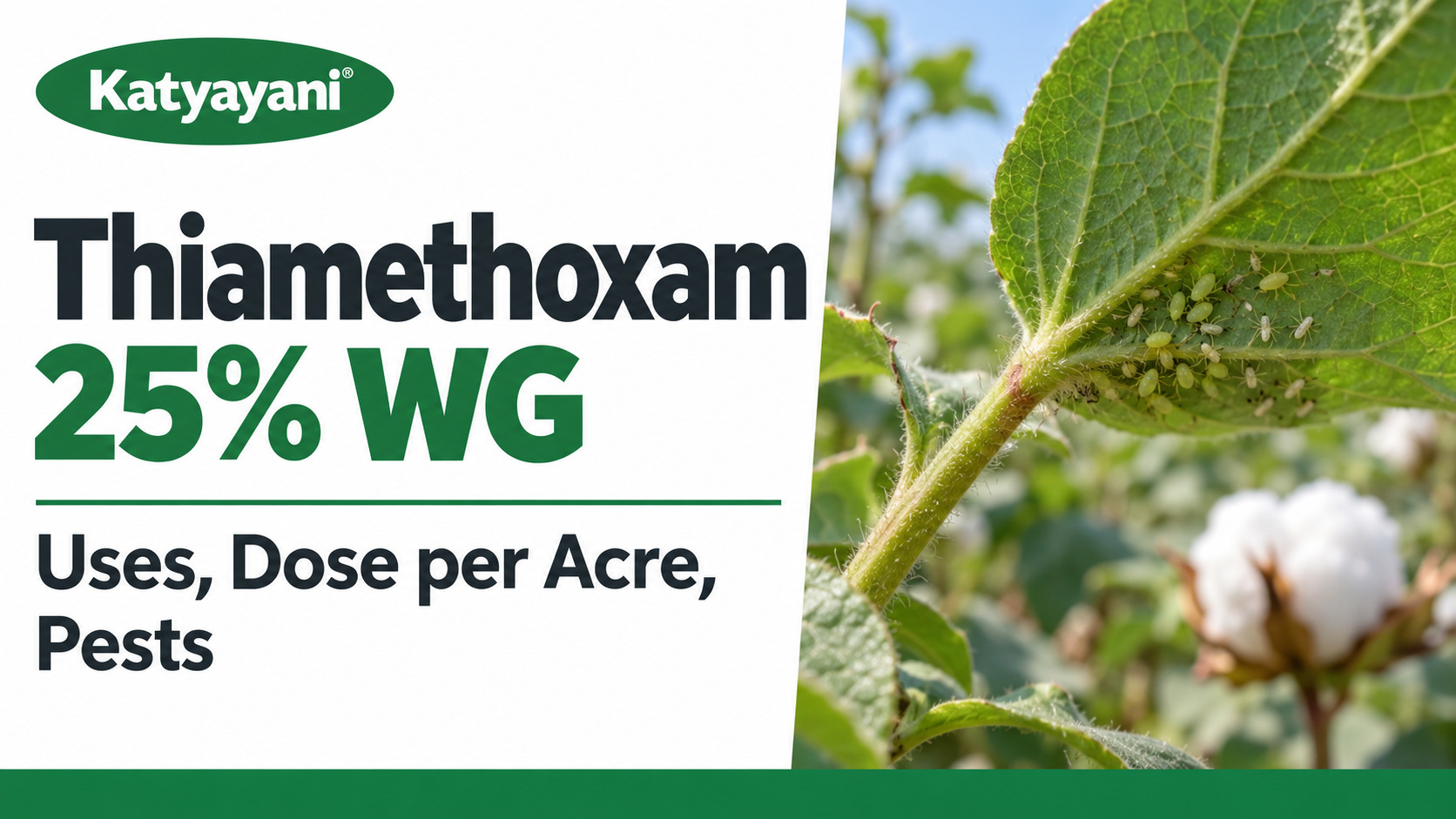
Thiamethoxam 25% WG is a systemic insecticide for sucking pests like aphids, jassids, whitefly, thrips and hoppers. Common foliar dose is 40-80 g per acre in 150-200 litres of water.
What is thiamethoxam 25% WG?
Thiamethoxam is a neonicotinoid insecticide. "25% WG" means 25% active ingredient in a water-dispersible granule that dissolves easily in the spray tank. It moves inside the plant, so insects that feed on leaves, stems or sap are affected even on parts you did not spray.
Katyayani's Thioxam Thiamethoxam 25% WG lists paddy, cotton, okra, mango, wheat, mustard, tomato and potato.
How does thiamethoxam kill insects?
It attacks the insect's nerve cells (nicotinic acetylcholine receptors). The pest stops feeding, gets paralysed and dies. Because it works inside the plant, new growth is protected for some time after spraying.
Which pests does thiamethoxam control?
| Pest | Crops |
|---|---|
| Brown plant hopper, green leafhopper, stem borer, leaf folder | Paddy |
| Aphids, jassids, whitefly, thrips | Cotton, okra, chilli, tomato, brinjal |
| Mango hopper, mealy bug, flower gall midge | Mango |
| Aphids, jassids | Mustard, wheat, potato, citrus |
What is the thiamethoxam 25% WG dose per acre?
| Crop | Dose per acre (foliar) |
|---|---|
| Paddy | 40 g |
| Cotton | 80 g |
| Okra (bhindi) | 40 g |
| Mango | 50 g |
| Mustard | 40 g |
| Tomato, brinjal, potato | 80 g |
| Citrus, cumin | 40 g |
These per-crop figures come from a retailer's table for a 25% WG brand. A manufacturer label from Albaugh gives 40-80 g per acre for foliar use, and Katyayani's listing gives 200 g per hectare (about 80 g per acre) for foliar use. For mango flower gall midge a trade guide advises 0.3-0.5 g per litre. Use 150-200 litres of water per acre and follow your pack.
How to apply thiamethoxam safely?
- Spray when pests first appear, not after heavy damage.
- Spray in early morning or evening. Do not spray flowering crops when bees are active.
- Keep away from silkworm rearing areas and mulberry. Neonicotinoids are toxic to bees and silkworms.
- Allow a dry spell after spraying so it is absorbed.
- Check the pre-harvest interval on the pack for vegetables and fruit.
How to avoid resistance to thiamethoxam?
After two sprays of a neonicotinoid, change the group. Options: Katyayani Emathio (Emamectin 3% + Thiamethoxam 12% WG) as a mixed product, or a different molecule. For an organic-style first line use Katyayani Activated Neem Oil early in the season.
Thiamethoxam vs imidacloprid: which is better?
| Point | Thiamethoxam | Imidacloprid |
|---|---|---|
| Generation | Second-generation neonicotinoid | First-generation neonicotinoid |
| Typical use | Foliar, drench, seed treatment | Foliar, drench, seed treatment |
| Resistance | Often still works where imidacloprid has weakened | Resistance reported in some pest populations |
| Katyayani option | Thioxam 25% WG | Imidacloprid 17.8% SL (see range) |
Which Katyayani insecticide should I choose?
| Need | Product |
|---|---|
| Plain thiamethoxam for sucking pests | Thioxam 25% WG |
| Sucking + chewing pests together | Chakrawarti Thiamethoxam 12.6% + Lambda-cyhalothrin 9.5% ZC |
| Borers and sucking pests | Emathio Emamectin 3% + Thiamethoxam 12% WG |
Dealers and exporters can read more about agrochemical trade in how to import pesticides and agrochemicals from India.
Conclusion
Thiamethoxam 25% WG gives fast, systemic control of sucking pests when used at the right dose and time. Spray early, protect bees and silkworms, rotate the insecticide group after two sprays, and always keep to the label.
Why trust this guide
Written by Team Katyayani, Editorial Team at Katyayani Organics. Cross-checked against published research and university extension programs.

Leave a Comment