

 9 min read
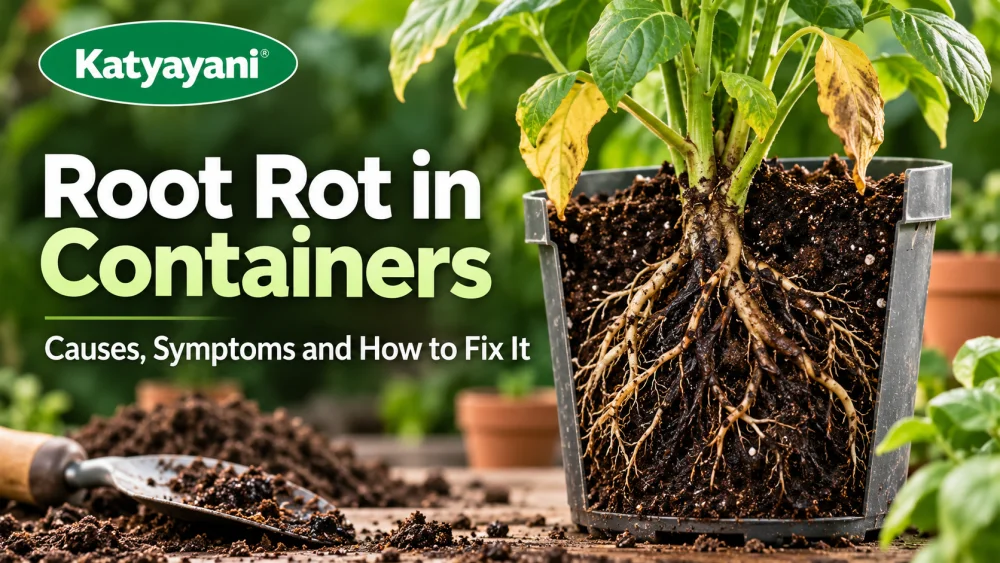
Healthy roots are white or cream, firm, and smell of soil. Rotted roots are brown or black, soft enough to squash between two fingers, and smell sour. If the outer layer slips off leaving a thin thread, that root is dead. Cut away everything rotted, repot into fresh dry mix, and do not water for several days.
Root rot kills more container plants than every insect pest combined, and it is nearly always caused by the owner rather than by bad luck. The pathogens involved, mostly Pythium and Phytophthora, are already present in most growing media. They only become destructive when the mix stays wet long enough for oxygen to run out around the roots.
That is the important part. Root rot is a drainage problem that a fungus takes advantage of. Treating the fungus without fixing the drainage just delays the next round.
Confirming it is root rot
The symptoms above ground are unhelpfully similar to drought: wilting, yellowing, dropping leaves, stalled growth. A plant with dead roots cannot take up water, so it wilts exactly like a thirsty plant. Many gardeners respond by watering more, which is why root rot often accelerates once it is noticed.
The only reliable diagnosis is to look at the roots. Slide the plant out of the pot and check.
Seedlings show a different version of the same problem. Damping off collapses the stem right at the soil line while the top of the seedling still looks green. Once it topples, that seedling cannot be saved.
The rescue sequence
Work quickly once you have confirmed it. A plant with half its roots gone can usually be saved. A plant with almost none cannot.
- Take the plant out of the pot and remove as much of the old mix as you can. Rinse the root ball gently under slow-running water so you can see what you are dealing with.
- Cut away every soft, brown or blackened root with clean scissors. Cut back into firm white tissue. Be ruthless here; leaving rotted tissue behind restarts the problem.
- Trim the top of the plant back by roughly the same proportion as the roots you removed. A reduced root system cannot support a full canopy.
- Let the remaining roots air-dry for one to two hours in shade. This alone kills a large share of the surface pathogen.
- Repot into fresh, dry, free-draining mix in a clean pot. Do not reuse the old mix, and wash the pot if you reuse it.
- Water lightly once, then leave it alone. The next watering should not come until the top few centimetres are dry.
Keep the plant out of direct sun for the first two weeks. A damaged root system cannot supply a plant that is transpiring hard.
Treating the pathogen
Once the plant is in fresh mix, biological treatment does more good than a chemical drench in a container, because you are trying to recolonise the root zone rather than sterilise it.
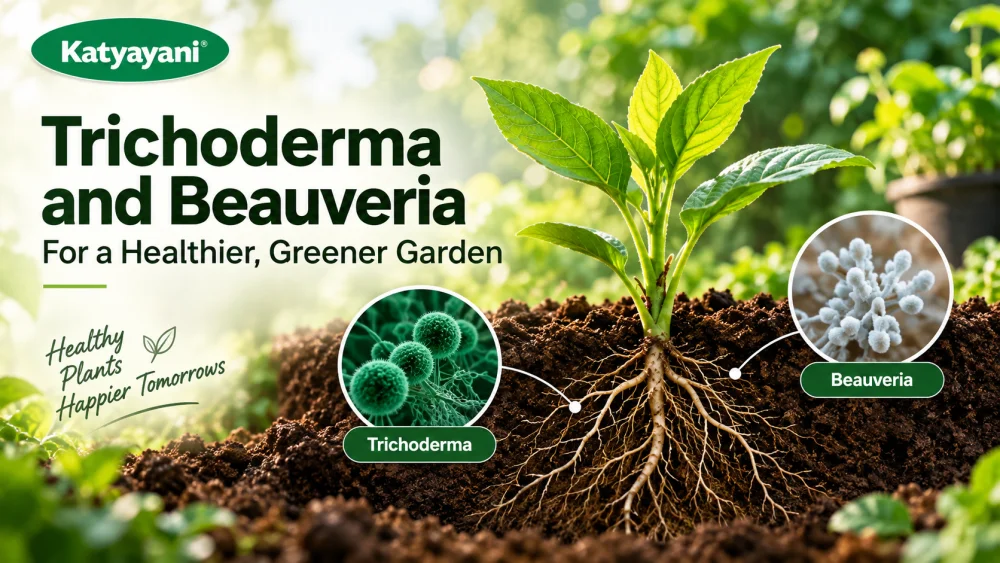
Trichoderma is the standard choice. It colonises the root surface and physically crowds out Pythium and Fusarium. A Trichoderma viride powder mixed into the fresh potting medium at planting, or Trichoderma harzianum as a soil drench, both work for this.
For a bacterial approach, Striker (Pseudomonas fluorescens) colonises the root zone quickly and is particularly useful as a preventive drench on seedlings and cuttings. BAXIL (Bacillus subtilis) covers a broader range of soil and foliar pathogens.
Apply these to moist, not soaked, medium, and keep the treated pot out of strong sunlight for a day. These are live organisms and they need reasonable conditions to establish.
A seaweed extract at low rate once new growth appears helps push root development. Use it after the plant shows signs of recovery, not during the first fortnight.
Why it happened, and stopping it happening again
The pot
No drainage holes, or holes blocked by a compacted layer, is the most common single cause. A decorative outer pot holding standing water does the same thing. Empty saucers within thirty minutes of watering.
Oversized pots are the second cause. A small plant in a large pot cannot use the water in that volume of mix, so the outer region stays wet for weeks. Pot up gradually rather than in one jump.
The mix
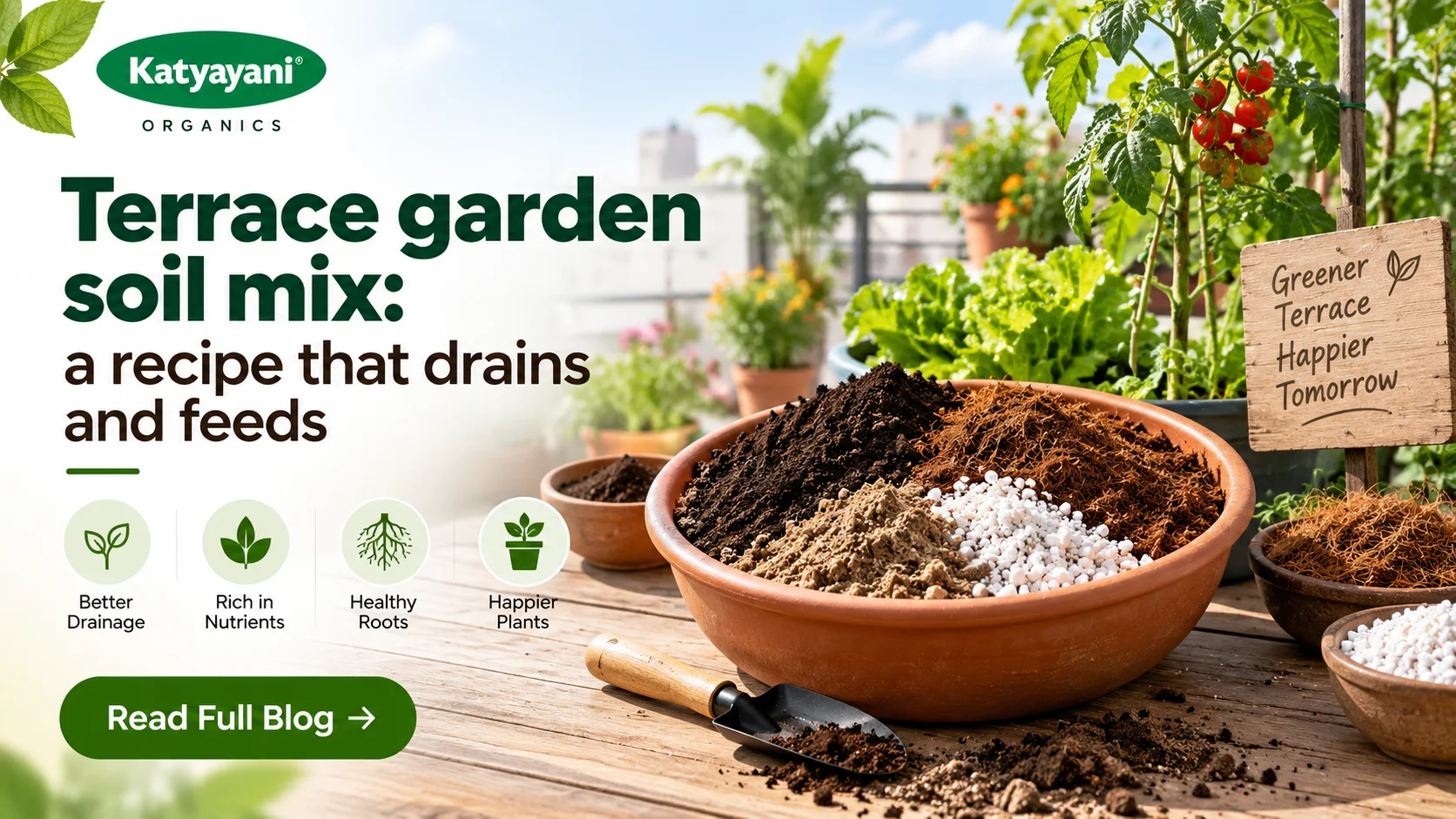
Garden soil in a container compacts and holds water. Old potting mix breaks down over two or three years and loses its air spaces. Both create the low-oxygen conditions that root rot needs. A mix with perlite, coarse sand or bark keeps air pockets open. Iowa State University Extension covers the mix and watering side of this well.
Well-decomposed organic matter in the mix helps too, because it supports competing microbes. Enriched vermicompost at around 20 percent of the mix is a reasonable proportion for most container plants.
The watering habit
Watering on a schedule rather than by checking the mix causes most cases. Plants use dramatically different amounts of water in different weather. Check with a finger, or lift the pot and judge by weight.
Watering little and often is worse than watering thoroughly and less frequently. Shallow watering keeps the surface wet and the lower root zone dry, which is the worst combination.
How to tell whether the rescue worked
Give it three to four weeks. Signs it is recovering: firm new growth at the tip, no further leaf drop, and the mix drying at a normal rate because roots are drinking again.
Signs it is not: continued wilting despite moist mix, blackening moving up the stem, and mix that stays wet for a week. At that point the crown is affected and the plant is unlikely to come back.
If you have several plants and one has advanced rot, keep it away from the others while you decide. Water splashing between pots spreads these pathogens easily.
Michigan State University Extension has a useful description of how Pythium behaves in container production, including why it appears after periods of overwatering. Their note is here.
Frequently asked questions
1. What does root rot look like?
Rotted roots are brown or black, soft enough to squash between your fingers, and often smell sour. The outer layer slips off when pulled, leaving a thin thread. Healthy roots are white or cream and firm.
2. Can a plant recover from root rot?
Yes, if enough healthy root remains. Cut away all the rotted tissue, trim the top growth back to match, repot into fresh dry mix, and hold off watering for several days. A plant with almost no white root left will usually not recover.
3. How do I tell root rot from underwatering?
Both cause wilting. Check the mix: if it is wet and the plant is still wilting, the roots cannot take up water and root rot is likely. Slide the plant out and look at the roots to confirm.
4. Should I water a plant with root rot?
No. Watering more makes it worse. The plant is wilting because the roots are damaged, not because the mix is dry. Repot into dry mix and water lightly only once.
5. Can I reuse the potting mix after root rot?
No. Discard it. The pathogens survive in the old medium and will reinfect the plant. Wash the pot before reusing it.
6. What causes damping off in seedlings?
The same soil pathogens, mainly Pythium and Rhizoctonia, working on very young stems. The seedling collapses at the soil line while the top still looks green. Sowing in sterile mix, avoiding overwatering and improving air movement prevents it.
7. Does Trichoderma treat root rot?
It works as a preventive and as part of recovery. Trichoderma colonises the root surface and competes with the pathogens for space and food. It will not revive roots that are already dead, so it goes in alongside cutting away the rotted tissue.
8. Do I need drainage holes in every pot?
Yes. A pot without drainage holes will eventually kill almost any plant, however carefully you water. If you like a decorative pot without holes, keep the plant in a plastic pot inside it and lift it out to water.
9. Is a layer of stones at the bottom of the pot useful?
It does not improve drainage the way people expect. It raises the saturated zone rather than removing it. A free-draining mix and a drainage hole work better than a stone layer.
10. How long should I wait before fertilising after root rot?
At least three weeks, and only once you see new growth. Fertiliser salts damage new root tips, and a plant with a reduced root system cannot use the nutrients anyway.
SOURCES CITED
Iowa State University Extension — Root Rots of Houseplants — https://yardandgarden.extension.iastate.edu/article/2014/02-14/rootrot.html
Michigan State University Extension — Pythium Root Rot on Ornamentals — https://www.canr.msu.edu/news/pythium_root_rot_on_ornamentals
| Category | Global Garden |
|---|---|
| URL slug | /blog/gardening/root-rot-in-containers |
| Primary keyword | root rot in container plants |
| Secondary keywords | how to save a plant with root rot, overwatered plant recovery, root rot symptoms houseplant, Pythium Phytophthora container, damping off in seedlings, brown mushy roots treatment |
| Search intent | Problem-solving, urgent — plant owner suspects root rot and needs a diagnosis and rescue sequence now. |
| Meta title | Root Rot in Containers: Diagnosis and Recovery (46 chars) |
| Meta description | Healthy roots are white and firm. Rotted roots are brown and mushy. Here is how to confirm root rot, save the plant, and stop it returning. (139 chars) |
| Word count | ~1,700 |
| Internal links | Striker Pseudomonas fluorescens | Tyson Trichoderma viride powder | Hattrick Trichoderma harzianum | BAXIL Bacillus subtilis | Seaweed Extract | Enriched Vermicompost |
| External sources | Iowa State University Extension (root rots of houseplants) | Michigan State University Extension (Pythium root rot) |
| Healthy | Rotted | |
|---|---|---|
| Colour | White, cream or light tan | Brown, grey or black |
| Texture | Firm, springs back | Soft, squashes, may be slimy |
| Outer layer | Stays attached | Slips off, leaving a bare thread |
| Smell | Earthy | Sour, stagnant, sometimes like drains |
| Mix condition | Damp, loose, airy | Waterlogged, compacted, sometimes green on top |
| Do not fertilise a plant recovering from root rot for at least three weeks. Fertiliser salts damage new root tips, and the plant cannot use the nutrients anyway. What it needs is oxygen at the roots and time. |
|---|
Leave a Comment