 5 min read
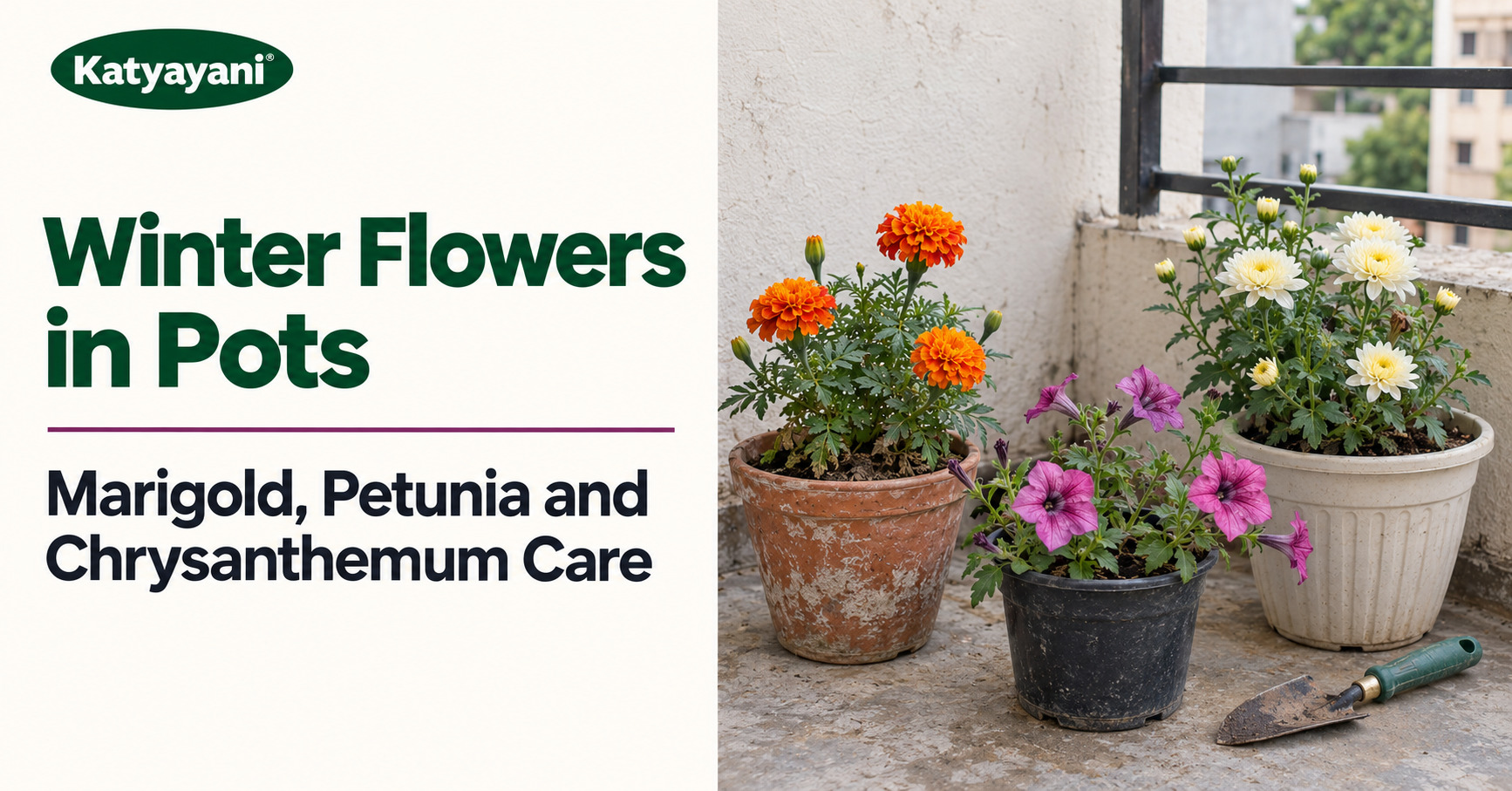
Quick answer: Marigold, petunia and chrysanthemum are the easiest winter flowers for pots in India. Give them 5 to 6 hours of sun, a free-draining mix with compost, 8 to 12 inch pots, and a potassium-rich feed once buds form. Pinch marigold and petunia early for bushy plants and deadhead spent blooms weekly.
Key Takeaways
- Marigold flowers about 60 days after transplanting and keeps blooming for weeks if you pinch it once and deadhead regularly.
- Petunia needs full sun and a light mix; trim leggy stems by a third in January for a second flush.
- Chrysanthemum is a short-day plant: it flowers as nights lengthen, so street lights or balcony lights at night can delay buds.
- Stop heavy nitrogen once buds appear and switch to a bloom-focused feed at the label dose.
- Aphids, thrips and red spider mites are the main winter pests; a weekly check and neem oil spray keep most of them away.
Which winter flowers grow well in pots in India?
Marigold, petunia and chrysanthemum are the three most reliable winter flowers for pots in India, followed by calendula, dianthus, pansy, alyssum and dahlia. They like cool nights of 8 to 18°C and mild sunny days, which most of the plains get from November to February.
November is a good month to act. In north and central India you can still transplant nursery seedlings of marigold, petunia, calendula and dianthus, and you can buy chrysanthemum plants that are already in bud. In south India and coastal areas, where winters are mild, sowing and planting can continue into December.
| Flower | Pot size | Sun | Plant or sow in (plains) | Bloom period |
|---|---|---|---|---|
| Marigold (genda), French | 8 in | 6+ hours | Sep to Nov (seedlings) | Nov to Feb |
| Marigold (genda), African | 10 to 12 in | 6+ hours | Sep to Oct (seedlings) | Dec to Feb |
| Petunia | 8 in or hanging basket | 5 to 6 hours | Oct to Nov (seedlings) | Dec to Mar |
| Chrysanthemum (guldaudi) | 10 to 12 in | 5 to 6 hours | Jun to Jul (cuttings); buy budded plants in Oct to Nov | Oct to Dec |
| Calendula | 8 in | 5 to 6 hours | Oct to Nov | Dec to Mar |
| Dianthus | 6 to 8 in | 5 to 6 hours | Oct to Nov | Dec to Mar |
| Pansy | 6 in | 4 to 6 hours, cool spot | Oct to Nov | Dec to Feb |
Bloom periods are for the north Indian plains and shift by a few weeks with your local weather. Hill towns flower later and hot coastal cities finish earlier.
What pot size and potting mix do winter flowers need?
Most winter annuals do well in an 8 inch pot, while African marigold and chrysanthemum need 10 to 12 inches. The mix should drain within seconds of watering and still hold some moisture.
A dependable mix is 50 percent garden soil, 25 percent cocopeat and 25 percent compost or vermicompost. Add a handful of sand for petunia and dianthus, which dislike wet roots. Make sure each pot has open drainage holes; winter watering dries slowly and soggy roots are the most common reason flower plants collapse.
- Sieve the garden soil to remove stones and roots.
- Mix soil, cocopeat and enriched vermicompost in a 2:1:1 ratio.
- Add 1 tablespoon of neem cake per 8 inch pot to discourage soil pests (optional).
- Place a few broken clay pieces over the drainage hole so mix does not wash out.
- Plant seedlings at the same depth they grew in the nursery tray and water gently.
How to care for marigold in pots
Marigold needs full sun, moderate watering and one pinch about a month after transplanting. With that, a potted plant flowers for two to three months.
According to TNAU's marigold production guide, seedlings are transplanted about four weeks after sowing, the growing tip is removed 30 days after planting to encourage branching, and flower harvest starts around 60 days after planting. The same timings work in pots.
French vs African marigold
French marigold (Tagetes patula) is compact, 20 to 40 cm tall, with small flowers and a long bloom period. It suits 8 inch pots and window boxes. African marigold (Tagetes erecta) grows tall with big pom-pom flowers; Indian varieties include Pusa Narangi Gainda and Pusa Basanti Gainda. Give it a 10 to 12 inch pot and a stake.
Watering, pinching and deadheading
- Water when the top 2 cm of mix is dry; marigold hates wet feet and gets root rot in soggy pots.
- Pinch the top 2 to 3 cm of the main stem once the plant has 6 to 8 leaves, or about 30 days after transplanting.
- Cut off faded flowers every few days so the plant puts energy into new buds.
- Dry a few mature flower heads on the plant to save seed for next year.
How to care for petunia in winter
Petunia needs 5 to 6 hours of direct sun, a light well-drained mix and regular deadheading. It blooms from December to March in the plains and fades as the heat builds.
Petunia seed is dust-fine, so most home gardeners buy seedlings. Plant one seedling per 8 inch pot or three in a 12 inch hanging basket. Grandiflora types give big flowers but suffer in rain and wind; multiflora and wave or spreading types are sturdier for balconies.
- Pinch young plants once at 10 to 15 cm height for more side shoots.
- Water at the base in the morning; wet flowers and leaves at night invite grey mould.
- Remove spent flowers along with the small green seed pod behind them.
- If plants turn leggy in January, cut stems back by a third and feed; a fresh flush follows in 2 to 3 weeks.
- Yellow leaves with green veins often point to iron deficiency in alkaline or overwatered mix.
For that interveinal yellowing, a mixed micronutrient fertilizer for home gardens at the label dose usually corrects it within a couple of weeks, provided drainage is also fixed.
How to care for chrysanthemum in pots
Chrysanthemum (guldaudi or shevanti) is a short-day plant that flowers when nights become long, which in India means October to December. Care in November is mostly about steady water, a bloom feed, support and pest checks.
Penn State Extension's chrysanthemum care guide advises pinching mums when they reach about 6 inches, repeating at about 1 foot, and stopping fertilizer once flower buds form. In Indian gardens, the growing season runs from June to September, with the last pinch usually done by late August or early September so buds can set in time.
If you bought a budded plant in November
- Shift it from the nursery bag to a pot 2 inches wider, without breaking the root ball.
- Keep it in 5 to 6 hours of morning sun and away from lamps that stay on at night.
- Water when the top 2 cm of soil is dry; do not let the pot dry out fully while in bloom.
- Tie stems loosely to a bamboo stick so heavy flowers do not snap them.
- For larger flowers, remove the small side buds around the main bud (disbudding).
- Remove faded blooms to keep the plant tidy and flowering longer.
After flowering
Once flowering ends in January, cut stems down to 10 to 15 cm, reduce water and keep the pot in a sunny corner. New shoots called suckers appear at the base from February. These are the start of next year's plants.
How and when to feed winter flowers
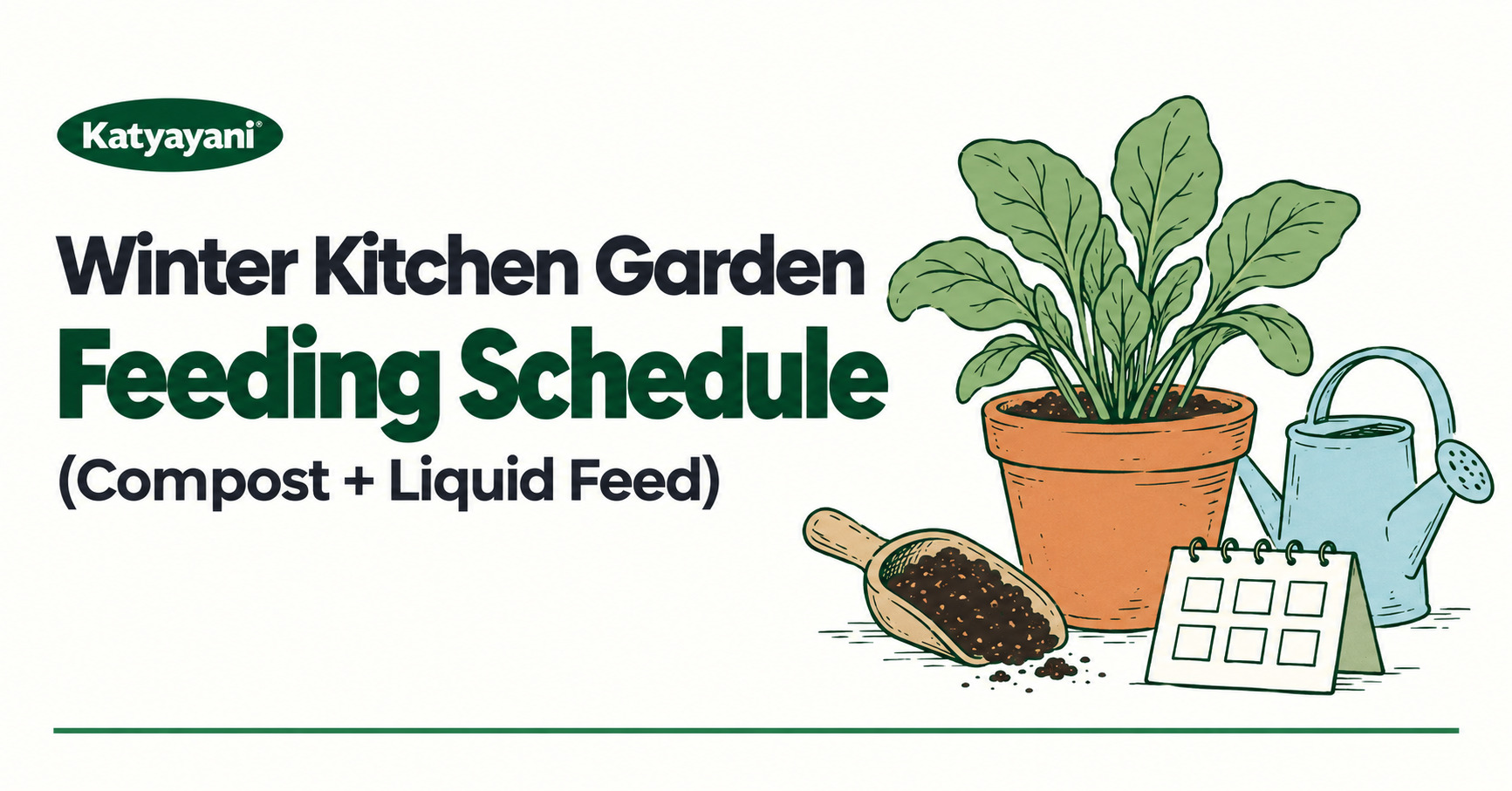
Feed winter flowers with compost at planting, a light liquid feed every 10 to 15 days during growth, and a potassium and phosphorus rich bloom feed once buds show. Too much nitrogen gives lush leaves but few flowers.
| Stage | What to give | How often |
|---|---|---|
| At planting | Compost or vermicompost mixed in the potting mix | Once |
| Vegetative growth (first 3 to 4 weeks) | Top-dress 1 handful vermicompost per 8 inch pot | Every 3 to 4 weeks |
| Bud formation | Bloom booster type fertilizer at label dose | Every 10 to 15 days |
| Full bloom | Light feed only; keep watering steady | Every 15 to 20 days |
| Chrysanthemum after buds form | Stop feeding, as advised by Penn State Extension | Not needed |
A water-soluble flowering and bloom booster fertilizer is convenient for pots because you can mix it with the watering can. Always follow the product label, and water the pot lightly before feeding so roots are not burnt by a concentrated solution on dry soil.
Common pests and diseases of winter flowers
Aphids, thrips, mealybugs and red spider mites are the most common winter pests on potted flowers; powdery mildew and root rot are the common diseases. TNAU also lists thrips, mealybug and spider mites as key marigold pests.
- Aphids: clusters of small green or black insects on buds and tender tips, common on chrysanthemum and calendula.
- Thrips: silvery streaks and distorted flowers; common on marigold and chrysanthemum.
- Red spider mite: fine webbing and speckled, dull leaves in dry weather, especially on marigold.
- Powdery mildew: white powder on leaves in humid, still air; common on calendula, dahlia and chrysanthemum.
- Root rot: sudden wilting with wet soil; caused by overwatering and poor drainage.
- Check leaf undersides and buds twice a week.
- Wash off light aphid or mite infestations with a jet of water.
- Spray an activated neem oil insecticide at the label rate every 7 days, in the evening, covering leaf undersides.
- Remove badly infested flowers and leaves and throw them away, not in the compost.
- Improve spacing and air flow for mildew, and water only at the soil level.
If pests keep coming back despite these steps, follow the product label and local agriculture officer advice before using any stronger product on plants you handle every day.
Why are my winter flowers not blooming?
The usual reasons are too little sun, too much nitrogen, or, for chrysanthemum, light at night. Fix the cause and most plants start budding within two to three weeks.
- Less than 5 hours of direct sun: move the pot to the brightest spot you have.
- Lots of leaves, no buds: stop urea or nitrogen-heavy feeds and switch to a bloom feed.
- Chrysanthemum with no buds in November: check for a balcony bulb or street light falling on it at night.
- Pot-bound roots circling the pot: shift to a pot one size bigger.
- Plants sown too late: petunia and calendula sown in December bloom later and for a shorter time in the north.
What to do next
If you have no winter flowers yet, buy 4 to 6 healthy seedlings of French marigold and petunia this week, plus one budded chrysanthemum. Get the pots and mix ready first so seedlings go in the same day.
Put a reminder on your phone for a weekly 10 minute round: deadhead, check for pests and feed if it is due. That small routine is what keeps pots flowering from December to March.
Why trust this guide
Written by Team Katyayani, Editorial Team at Katyayani Organics. Cross-checked against published research and university extension programs.

Leave a Comment