

 9 min read
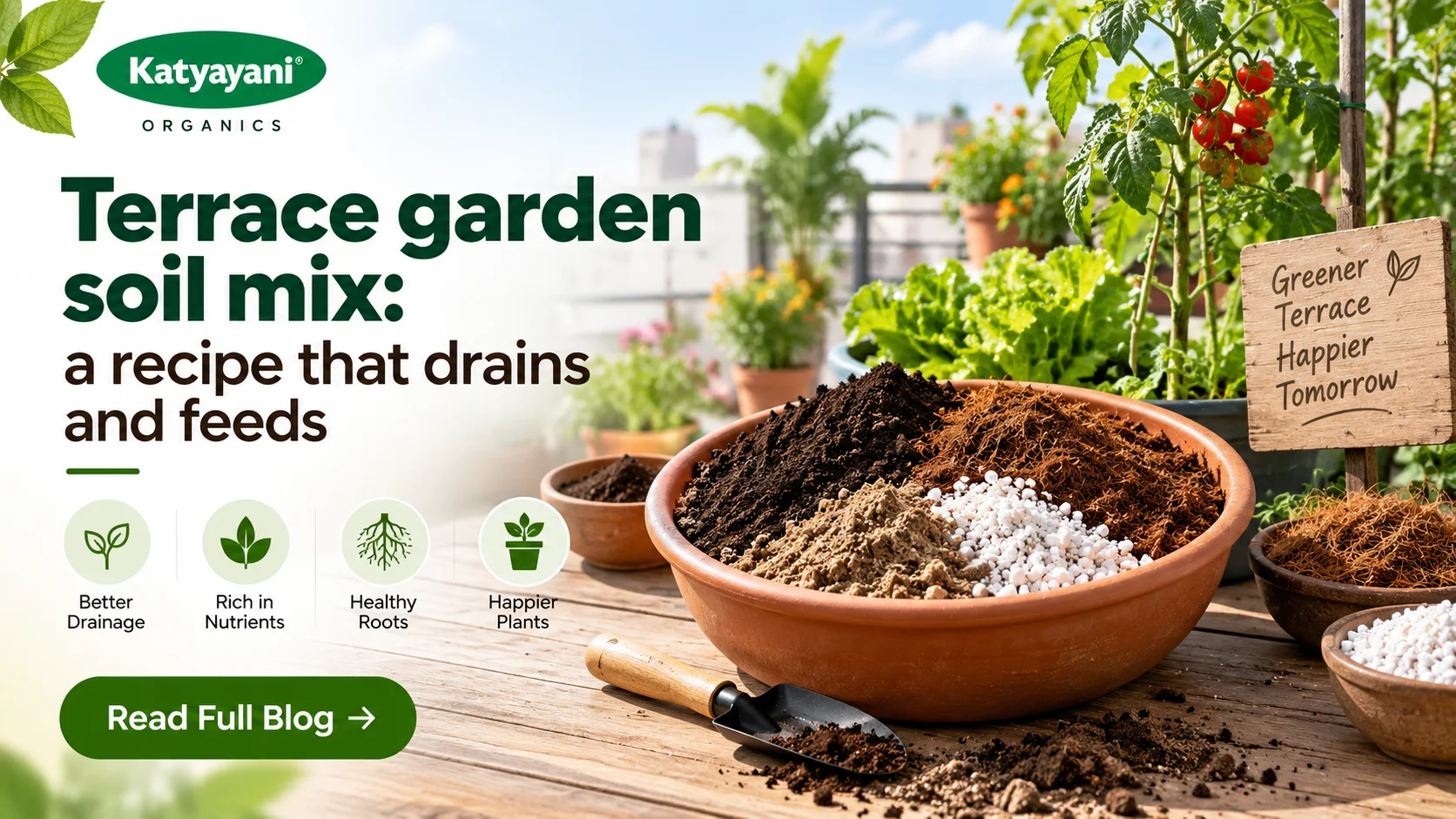
A working terrace mix is roughly 40 percent coco peat for water holding, 30 percent compost for nutrition and biology, and 30 percent perlite or coarse sand for drainage and air. Garden soil should be no more than a quarter of the total, and can be left out completely. The mix must drain within a minute of watering and still feel damp the next day.
A container is a hostile place for roots. There is a fixed volume of medium, no water table below, no earthworms rebuilding structure, and every irrigation flushes nutrients out of the bottom. Garden soil evolved for none of that. Put it in a pot on a rooftop and it compacts into a brick within a season.
Weight matters too. A rooftop has a structural limit, and wet soil is heavy. A well-built container mix is roughly half the weight of wet garden soil, which is not a small consideration when you have thirty grow bags.
What each component does
Perlite and coarse sand do the same job differently. Perlite is far lighter, which matters on a terrace. Sand is cheaper and heavier. Fine sand is useless here; it fills the pores instead of opening them.
Coco peat must be washed before use. Untreated coir carries high sodium and potassium that will damage roots. Soak it, drain, and repeat two or three times until the runoff is clear. The University of Maryland Extension has a good summary of why container media differ from soil.
The base recipe
For a general vegetable and herb terrace garden, by volume:
- 4 parts washed coco peat
- 3 parts well-decomposed compost or vermicompost
- 3 parts perlite or coarse sand
- A handful of neem cake per 10 litres of mix, as a mild soil insect deterrent
Use a genuinely mature compost. Half-decomposed material continues breaking down in the pot, pulls nitrogen out of the mix while it does, and heats the root zone. Enriched vermicompost is stable and carries beneficial microbes, which is what you want in a fresh mix.
Adjusting for what you are growing
What to add at mixing time
A granular mycorrhiza biofertilizer mixed in at planting extends the root system's reach for phosphorus and water. In a container that translates directly to better drought tolerance, which is the main daily problem on a hot terrace.
A Trichoderma viride powder at around 5 g per kilogram of moist mix sets up root disease protection before anything is planted. This is the cheapest insurance in the whole setup.
For phosphorus, a phosphate-rich organic manure releases slowly through the season rather than flushing out with the first few waterings, which is what happens to soluble phosphorus in a container.
On an exposed rooftop where pots dry out within a day, a starch-based super absorbent mixed through at a low rate holds extra water in the root zone and reduces watering frequency noticeably in peak summer.
Why garden soil alone fails
In the ground, soil structure is maintained constantly by roots, earthworms, fungi and freeze-thaw or wet-dry cycles. Inside a pot, none of that happens at any useful scale. Repeated watering settles the particles, the air spaces close, and within a few months you have a dense block that holds water at the bottom and repels it at the top.
Garden soil also brings soil-borne disease and weed seed into a system that has no natural predators to balance it.
A quarter garden soil in a mix is fine and adds useful mineral content. Beyond that it starts to work against you. The University of Illinois Extension covers this trade-off clearly.
Refreshing the mix between seasons
A container mix is not permanent. Organic matter breaks down, structure collapses, and salts accumulate from fertiliser and hard water. Most mixes need refreshing every year and full replacement every two to three.
- Empty the container and break up the old mix.
- Pick out old roots, which do not decompose usefully in a pot.
- Add one part fresh compost and one part fresh perlite to every three parts of old mix.
- Add Trichoderma again, because the previous population will have declined.
- If there is a white crust on the surface or on the pot rim, salts have accumulated. Flush the mix thoroughly with plain water before reusing it.
- Leave the refreshed mix moist for a week before planting so the biology re-establishes.
A humic and fulvic acid applied with the first watering after refreshing improves nutrient availability in older medium, where much of what is present has become bound up and unavailable.
Common mistakes on a terrace
- A layer of stones at the bottom of the pot. It does not improve drainage. It raises the saturated zone and reduces usable root volume.
- Using unwashed coco peat. The sodium and potassium in raw coir stunt seedlings.
- Filling pots with fresh, still-hot compost. Let it mature first.
- Deep pots for shallow-rooted crops. The unused lower region stays wet and turns sour.
- Dark plastic pots in full sun. Root zone temperature climbs well past what roots tolerate. Light colours, or shade the pot sides.
The University of Florida IFAS guide on container media is a useful cross-check when you are settling on ratios for a specific crop. It is here.
Mix a small batch first and grow one crop in it before you commit to filling thirty containers. A mix that works on your terrace, with your water and your climate, is worth more than any recipe.
Frequently asked questions
1. What is the best soil mix for a terrace garden?
Roughly 40 percent washed coco peat, 30 percent mature compost or vermicompost, and 30 percent perlite or coarse sand. Garden soil can make up to a quarter of the total but is not required.
2. Can I use garden soil in containers?
Only as a minor component, up to about a quarter of the mix. On its own it compacts, drains badly and brings in disease and weed seed. Container mixes need far more air space than garden soil provides.
3. Do I need to wash coco peat before using it?
Yes. Raw coir carries high sodium and potassium that damage roots and stunt seedlings. Soak, drain and repeat two or three times until the runoff is clear.
4. Perlite or sand, which is better?
Both open up air spaces. Perlite is much lighter, which matters for rooftop weight limits. Coarse sand is cheaper but heavy. Fine sand should not be used at all; it clogs pores instead of opening them.
5. How often should potting mix be replaced?
Refresh it each year by adding fresh compost and perlite, and replace it fully every two to three years. Organic matter breaks down, structure collapses, and fertiliser salts accumulate over time.
6. Should I put stones at the bottom of the pot?
No. It is a persistent myth. A stone layer raises the saturated zone rather than draining it and reduces the usable root volume. A free-draining mix and a working drainage hole do the job.
7. How do I know if my mix drains well enough?
Water a filled pot thoroughly. Water should stop draining from the bottom within about a minute. The next day the mix should feel damp and hold together loosely when squeezed, then crumble when poked.
8. What is the white crust on my pot surface?
Accumulated fertiliser and hard-water salts. Flush the pot thoroughly with plain water until it runs freely from the bottom, and reduce feeding rates. Persistent crusting means the mix needs replacing.
9. Is a heavier mix better for windy rooftops?
A very light mix does let tall plants topple. Rather than making the whole mix heavier, use wider-based containers or add a layer of gravel on the surface as ballast, which also reduces evaporation.
10. Can I make potting mix without compost?
You can, but then all nutrition has to come from liquid feeding, and you lose the microbial life that keeps a mix healthy. Compost is what makes the difference between a growing medium and an inert one.
SOURCES CITED
University of Maryland Extension — Growing Media for Containers — https://extension.umd.edu/resource/growing-media-potting-soil-containers
University of Florida IFAS — Vegetable Gardening: Container Media — https://gardeningsolutions.ifas.ufl.edu/plants/edibles/vegetables/container-media.html
University of Illinois Extension — Container Gardens: Soil — https://extension.illinois.edu/container-gardens/soil
| Category | Global Garden |
|---|---|
| URL slug | /blog/gardening/terrace-garden-soil-mix |
| Primary keyword | terrace garden soil mix |
| Secondary keywords | potting mix recipe, coco peat perlite compost ratio, container soil mix for vegetables, lightweight soil for rooftop garden, how to make potting soil at home, best soil for grow bags |
| Search intent | How-to — gardener is building or refreshing a rooftop growing setup and needs a mix recipe that works. |
| Meta title | Terrace Garden Soil Mix: A Recipe That Drains and Feeds (55 chars) |
| Meta description | A lightweight terrace garden mix recipe with ratios by crop type, why garden soil fails in containers, and how to refresh a mix between seasons. (144 chars) |
| Word count | ~1,800 |
| Internal links | Enriched Vermicompost | PROM | Bhumiraja Mycorrhiza granular | Tyson Trichoderma viride powder | Water Hold super absorbent | Humic + Fulvic Acid | Carbon Black |
| External sources | University of Maryland Extension (growing media) | University of Florida IFAS (container media) | University of Illinois Extension (container soil) |
| Component | Job | Share of mix |
|---|---|---|
| Coco peat | Holds water and releases it slowly; keeps the mix light | 30 to 40% |
| Compost or vermicompost | Supplies nutrients and microbial life; improves structure | 25 to 30% |
| Perlite or coarse sand | Creates air pockets so roots can breathe; speeds drainage | 25 to 30% |
| Garden soil (optional) | Adds mineral content and buffering | 0 to 25% |
| Rice husk or bark | Slow-breaking bulk that keeps structure open longer | 0 to 10% |
| Crop type | Adjustment | Reason |
|---|---|---|
| Leafy greens | More compost, less perlite | Shallow roots, high nitrogen demand, likes steady moisture |
| Tomato, chilli, brinjal | Standard recipe, deeper container | Needs both moisture holding and free drainage |
| Root vegetables | More sand, remove any lumps | Obstructions cause forked or stunted roots |
| Herbs | More perlite, less compost | Most culinary herbs prefer lean, sharply drained conditions |
| Succulents | 50% coarse sand or grit | Any water retention risks rot |
| Test the mix before you plant. Fill a pot, water it thoroughly, and time the drainage. Water should stop running from the bottom within about a minute. Squeeze a handful the next day: it should feel damp and hold together loosely, then fall apart when poked. If it stays soggy, add more perlite. If it is dry within hours, add more coco peat. |
|---|

Leave a Comment