
 10 min read
Short answer
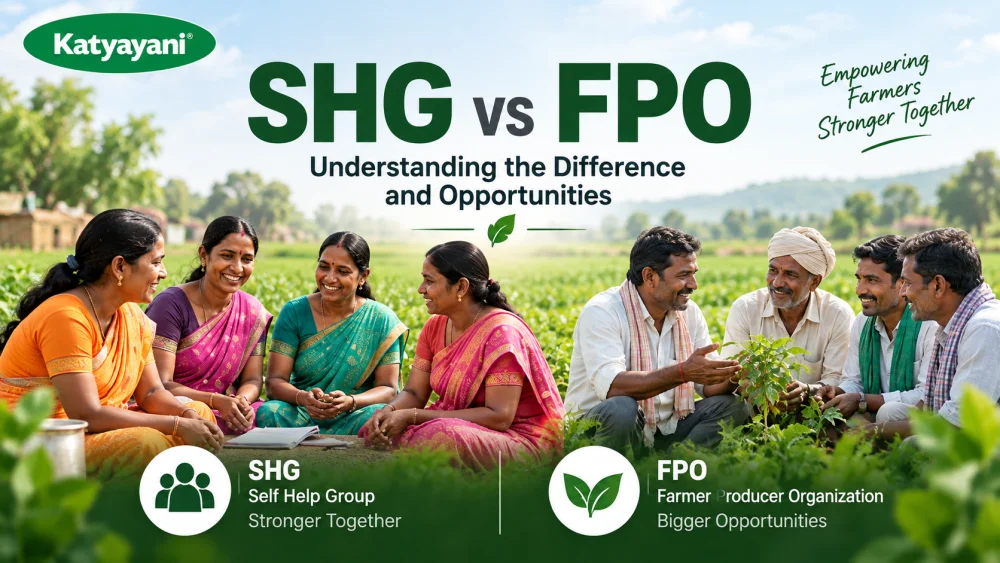
Neither is better. They solve different problems. An SHG solves your credit problem: ten to twenty members, savings first, collateral-free loans up to Rs 20 lakh, no registration needed. An FPO solves your price problem: at least 300 farmers, registered as a company or cooperative, buying inputs and selling produce in bulk, with project loans up to Rs 2 crore backed by a credit guarantee. You can belong to both, and many farmers do.
The comparison, side by side
Choose by the problem you actually have
Work out which sentence describes your situation.
If your problem is that you need Rs 20,000 for seed and you have no land papers, you need an SHG. Nothing an FPO does will get you that money faster.
If your problem is that you produce a good crop and still sell it to the same trader at the same price every year, you need an FPO. A bigger loan will not fix a price problem.
If your problem is that inputs cost too much because you buy small quantities at retail, either can help, but an FPO helps more because the order size is larger.
If nobody in your village can keep books, run board meetings and file returns, do not register an FPO yet. A dormant FPO with no business and pending filings is worse than no FPO, and there are a lot of them.
Can you be in both
Yes, and it is common. A woman can be a member of her SHG and hold shares in the FPO that covers her cluster. There is no rule against it and the two do different work for her.
In fact the strongest FPOs in many districts were built out of existing SHG federations, because those federations already had the two things a new FPO lacks: members who trust each other, and people who know how to keep accounts.
Can an SHG become an FPO
An SHG cannot convert into an FPO by filing a form. The two are different legal creatures. An SHG of fifteen women cannot become a producer company that needs 300 members.
What happens in practice is a build-up. Several SHGs form a village organisation. Village organisations form a cluster level federation. Once the federation covers enough farmers, the members register a separate producer company and become its shareholders. The SHGs continue to exist and continue to do their savings and credit work.
So the path is SHG to federation to FPO, and it takes years, not months. Anyone offering to convert your SHG into an FPO quickly is selling registration paperwork, not a business.
What each one costs you
An SHG costs time. A weekly meeting, a small saving, and honest bookkeeping. There is no registration fee and no professional fee.
An FPO costs money and management. Registration, a CEO and an accountant, statutory audit, ROC filings, GST returns. The scheme's management cost support of up to Rs 18 lakh over three years is designed to carry exactly these costs, which tells you how real they are. After year three the FPO has to pay for them out of its own business margin. An FPO that has not built a trading margin by then usually goes quiet.
Where the money actually is
The headline numbers make an FPO look far stronger. Rs 2 crore against Rs 20 lakh is not a close comparison.
The delivered numbers are different. As of February 2025, credit guarantee cover of Rs 453 crore had gone to 1,900 FPOs out of 10,000 formed, which is an average of about Rs 24 lakh per FPO and reaches around a fifth of them.
On the SHG side, as on 31 March 2024, 77.42 lakh SHGs had loans outstanding of Rs 2.6 lakh crore, with an average of Rs 3.82 lakh per group. Under DAY-NRLM, 90.90 lakh SHGs had accessed Rs 12.18 lakh crore of institutional credit since 2013-14, with repayment above 98 per cent.
So SHG credit is smaller per group but far more likely to actually reach you. FPO credit is larger but concentrated in the FPOs that have real turnover to show.
What each one is bad at
An SHG cannot get you a better price for your crop. It is not built to aggregate produce, negotiate with buyers or run a processing unit. Groups that try to do this without the structure usually end up with one member carrying the risk personally.
An FPO cannot give you a small personal loan for a household need. It is a business, and its credit is project credit. If your requirement is Rs 15,000 for school fees or a medical bill, the FPO is not the place.
An SHG also cannot help a member who has stopped attending meetings. An FPO cannot help a shareholder who never sells produce through it. Both depend entirely on participation.
If you are starting from zero
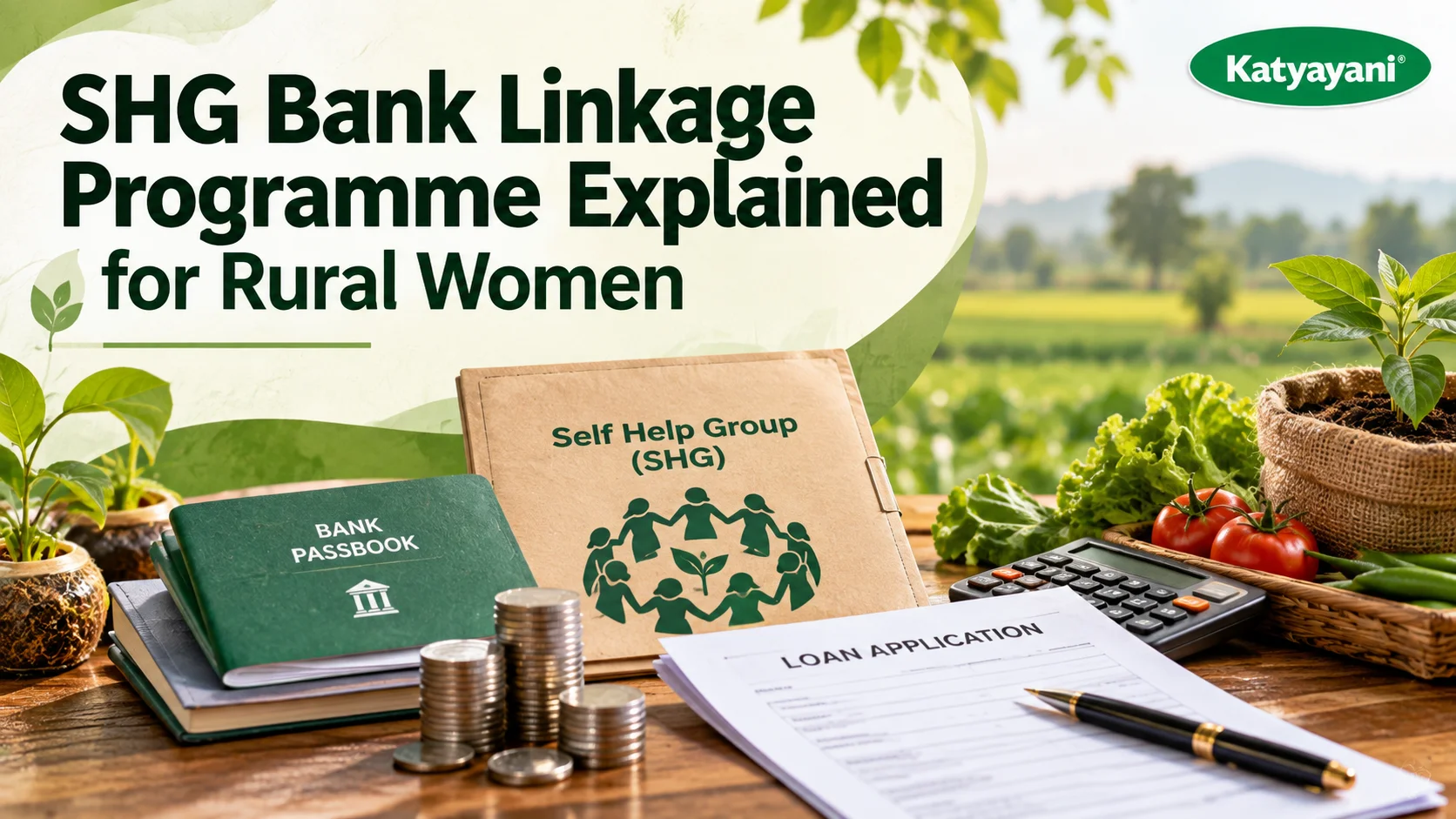
Start with the SHG. It needs ten people, no registration, and no capital. Six months of savings and internal lending gets you to a bank loan, and the details are in SHG bank linkage programme explained.
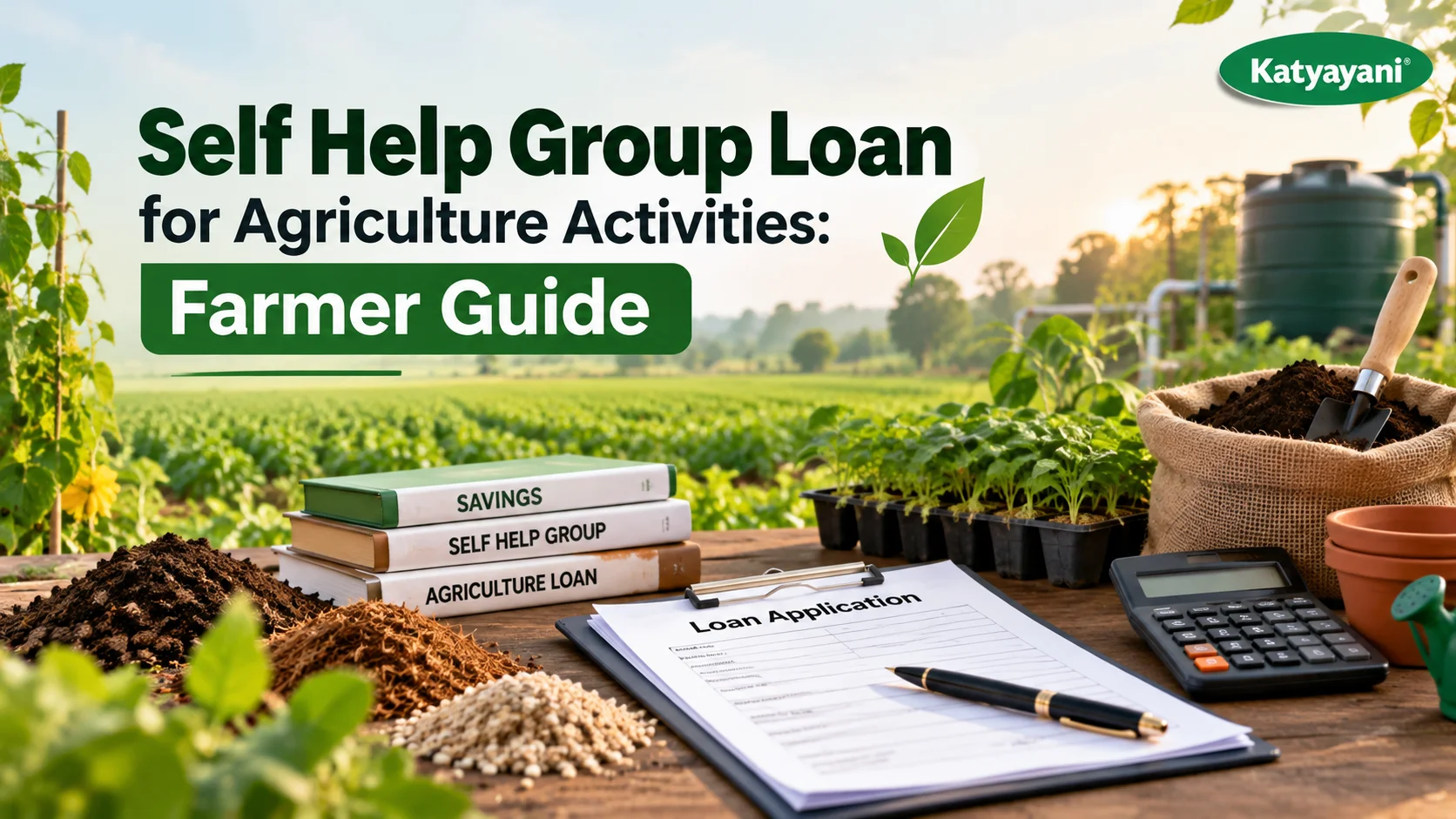
Use the SHG credit for the farm while you learn to run a group. What is allowed and how repayment fits a harvest cycle is covered in self help group loan for agriculture activities.
Move to an FPO when you have 300 farmers who trust each other, a product with a real buyer, and at least one person who can run a business. At that point the credit guarantee and the equity grant become worth the compliance load, and the details are in FPO credit guarantee scheme explained.
Frequently asked questions
What is the difference between an SHG and an FPO?
An SHG is a savings and credit group of 10 to 20 members that needs no registration. An FPO is a registered business with at least 300 farmer shareholders that buys inputs and sells produce in bulk. The SHG addresses credit, the FPO addresses price.
Which is better for farmers, an SHG or an FPO?
Whichever matches your problem. If you cannot get credit, an SHG. If you cannot get a fair price for your produce, an FPO. If your village cannot yet handle company filings and audits, an SHG for now.
Can a member of an SHG also join an FPO?
Yes. There is no rule against it and it is common. Many FPOs were built out of existing SHG federations because those groups already had trust and bookkeeping in place.
Can an SHG be converted into an FPO?
Not directly. They are different legal forms, and an FPO needs at least 300 members against an SHG's 10 to 20. The real path is SHGs forming a village organisation, then a cluster level federation, and then the members registering a producer company separately.
How many members are needed to form an FPO?
At least 300 farmer members in the plains and 100 in North Eastern and hilly areas under the 10,000 FPO scheme. An older SFAC credit guarantee scheme uses a higher figure of 500 shareholders, which is a different scheme.
Can an FPO get more loan than an SHG?
On paper, much more. An FPO project loan can go up to Rs 2 crore with credit guarantee cover against an SHG's Rs 20 lakh collateral-free ceiling. In delivery the gap is narrower, because the average guarantee cover issued was about Rs 24 lakh per FPO as of February 2025.
Is registration compulsory for an SHG?
No. Banks lend to registered and unregistered SHGs. An FPO must be registered, either as a producer company or as a cooperative society.
Do FPO members get a share of the profit?
Yes. FPO members are shareholders and profit is distributed on shareholding, with a cap of 10 per cent equity for any single member. SHG members do not get profit. The interest earned on internal lending stays in the group corpus and grows the group's borrowing power.
Which gives more government support, an SHG or an FPO?
They get different support. An SHG gets a Revolving Fund of Rs 20,000 to Rs 30,000, Community Investment Fund up to Rs 2.5 lakh, and interest subvention taking the rate to 7 per cent up to Rs 3 lakh for women's groups. An FPO gets a matching equity grant up to Rs 15 lakh, management cost support up to Rs 18 lakh over three years, and credit guarantee cover on loans up to Rs 2 crore.
What are the disadvantages of an FPO?
The compliance load is real. Company filings, statutory audit, board meetings, GST returns and professional fees continue whether or not the FPO does business. It needs a paid CEO and an accountant. Many registered FPOs have very little turnover and go dormant once the initial support period ends.
Is a Farmer Producer Company the same as an FPO?
A Farmer Producer Company is one legal form of an FPO, registered under the Companies Act. An FPO can also be a cooperative society. The term FPO covers both.
Can women's SHG members become FPO shareholders?
Yes. As of February 2026, 21.96 lakh of the 56.32 lakh FPO members were women, and 1,175 FPOs had all-women membership.
Sources used
Operational Guidelines, Central Sector Scheme for Formation and Promotion of 10,000 FPOs — https://static.pib.gov.in/WriteReadData/userfiles/FPO%20Scheme%20Guidelines.pdf
PIB, Producer Company registration under Chapter XXIA of the Companies Act 2013, 14 December 2021 — https://www.pib.gov.in/PressReleaseIframePage.aspx?PRID=1781435
PIB, 10,000 FPOs formed, membership and women members, 6 February 2026 — https://www.pib.gov.in/PressReleasePage.aspx?PRID=2224592®=3&lang=1
PIB, 10,000 FPOs achieved, credit guarantee and equity grant figures, 28 February 2025 — https://www.pib.gov.in/PressReleaseIframePage.aspx?PRID=2106913®=48&lang=2
RBI Master Circular on DAY-NRLM, 1 April 2025 — https://rbi.org.in/Scripts/BS_ViewMasCirculardetails.aspx?id=12806
NABARD, SHG-Bank Linkage data as on 31 March 2024 — https://www.nabard.org/content.aspx?id=477
PIB, DAY-NRLM credit and repayment figures, 7 March 2026 — https://www.pib.gov.in/PressReleseDetailm.aspx?PRID=2236243®=48&lang=2
Recommended external anchor links inside the article: "10,000 FPO scheme" to the scheme guidelines PDF, and "Chapter XXIA of the Companies Act 2013" to the PIB release. Nothing else is needed.
| SHG | FPO | |
|---|---|---|
| What it is for | Savings and credit for members | Buying inputs and selling produce as a business |
| Registration | Not required. Banks lend to registered and unregistered groups | Required. Producer Company under Chapter XXIA of the Companies Act 2013, or a cooperative society |
| Members | 10 to 20, minimum 5 in difficult and remote tribal areas | Minimum 300 in the plains, 100 in North Eastern and hilly areas |
| Are members shareholders | No. Members save into a common corpus | Yes. No member may hold more than 10 per cent of equity, and at least half the shareholders must be small, marginal or landless tenant farmers |
| Who typically joins | Mostly women, from similar economic backgrounds | Farmers and producers across a cluster of villages |
| Main activity | Weekly savings, internal lending, then bank credit | Input procurement, aggregation, grading, processing, marketing |
| Credit route | SHG Bank Linkage and DAY-NRLM cash credit limit | Project loan from a bank, backed by credit guarantee |
| How much credit | Up to Rs 20 lakh without collateral, drawing power tied to group savings | Project loan up to Rs 2 crore, guarantee cover 85 per cent up to Rs 1 crore and 75 per cent above |
| Interest | 7 per cent up to Rs 3 lakh for women's SHGs under DAY-NRLM | Bank's normal lending rate. No blanket subvention |
| Grant support | Revolving Fund Rs 20,000 to Rs 30,000, Community Investment Fund up to Rs 2.5 lakh | Matching equity grant of Rs 2,000 per member up to Rs 15 lakh, management cost up to Rs 18 lakh over 3 years |
| Profit | Not profit driven. Interest on internal lending stays in the group | Business profit, distributed on shareholding |
| Compliance | A register, a passbook and honest minutes | Company law filings, statutory audit, board meetings, GST, professional fees |
| Time to first money | Six months of savings, then grading, then first loan | Registration, then a business plan and audited accounts before a bank will lend |
| Who runs it | The members themselves, by turn | A paid CEO and an accountant, with a board of directors |
| Scale | One village | A block or a district |

Leave a Comment