
 10 min read
Short answer
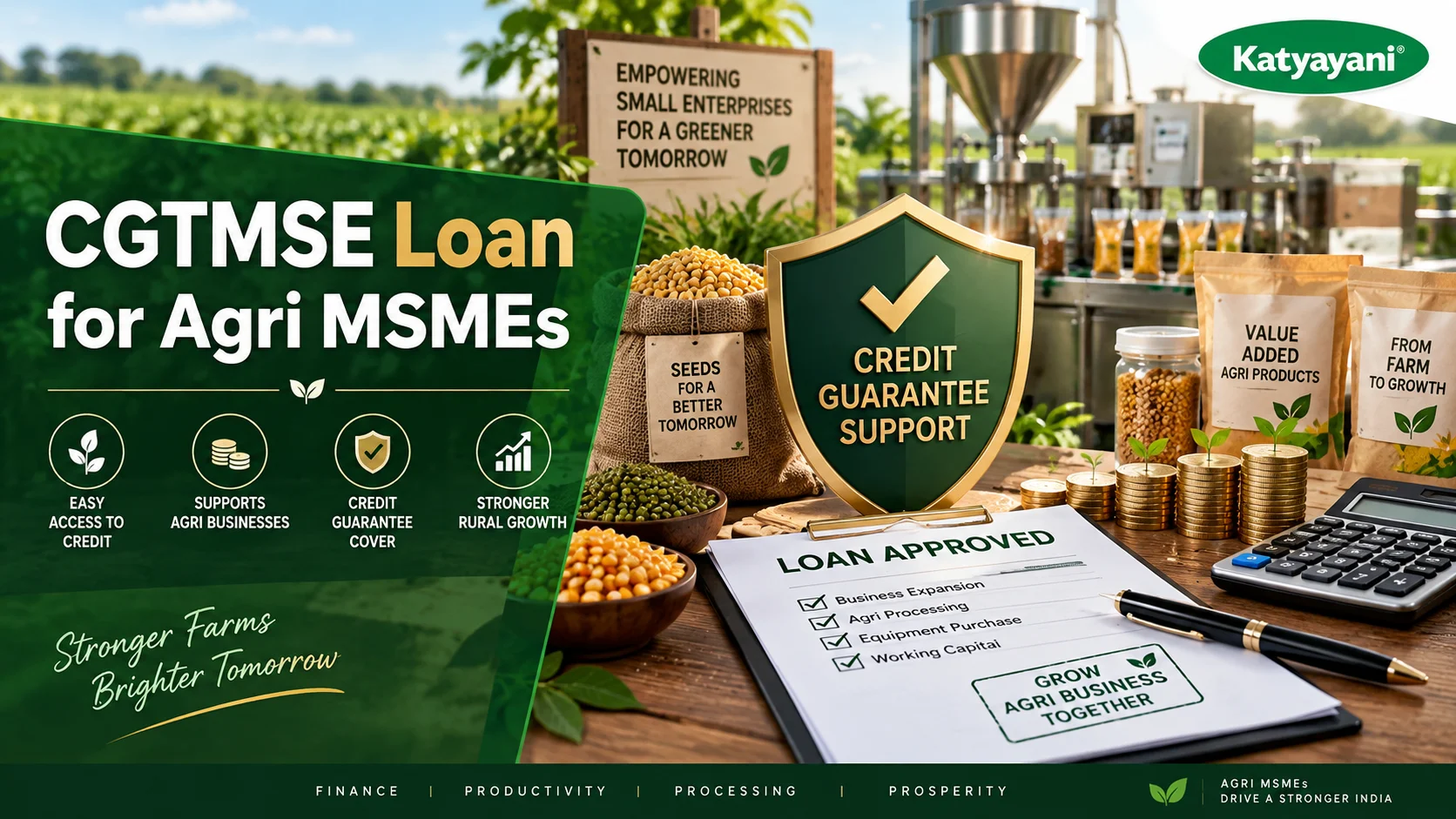
CGTMSE is not for farming. It is for enterprises. If you grow a crop or rear animals, that activity does not qualify. If you process, grade, pack, mill or provide a service to farms, and you are registered on Udyam as a micro or small enterprise, then your unit can get a CGTMSE-backed loan without collateral. The guarantee ceiling is Rs 10 crore since 1 April 2025, and your bank applies for the cover, not you.
Where the line actually sits
Most articles written for farmers skip this, so start here.
CGTMSE covers credit given to Micro and Small Enterprises. An enterprise, in this context, means an activity that can be registered under the MSMED Act on Udyam. And the MSMED Act excludes NIC code 01, which is crop and animal production, apart from a short list of sub-classes.
So the practical rule is this. Growing wheat, paddy, cotton or vegetables is not an enterprise for this purpose. Rearing cattle for milk as a farming activity is not either. But the moment the activity becomes processing, servicing or manufacturing, it comes inside.
Activities that fall inside, taken from the sub-classes listed as eligible for Udyam registration:
Egg production and poultry hatchery operation. Bee keeping and honey production. Silk worm rearing. Operation of agricultural irrigation equipment. Crop preparation and processing after harvest. Seed processing for propagation.
Add to these everything under NIC 10, which is food processing, because that is manufacturing. A flour mill, a dal mill, an oil expeller, a spice grinding unit, a jaggery unit, a pickle or papad unit, a cold storage, a grading and packing house, a cattle feed plant, a custom hiring centre for farm machinery. These are enterprises, and they are the units CGTMSE was built for.
One more exclusion matters here. Loans sanctioned to Self Help Groups are not eligible for CGTMSE cover. If you are looking at group credit, the route is the SHG Bank Linkage Programme instead, which is covered in SHG bank linkage programme explained.
There is a caveat worth stating honestly. CGTMSE's published list of ineligible activities, as reproduced by several member banks, names agriculture alongside Self Help Groups. The Trust has since made educational and training institutions eligible and has opened the scheme to retail and wholesale trade, so parts of that older list have moved. Before you commit money to a project report, ask your branch to check the current CGS-I scheme document and confirm in writing that your activity code is coverable. That single question saves months.
What the guarantee gives you
The cover ceiling was raised from Rs 5 crore to Rs 10 crore with effect from 1 April 2025. Any page still showing Rs 5 crore is out of date, and several pages dated 2026 still show it.
Guarantee coverage differs by who you are and how much you borrow.
Units in Identified Credit Deficient Districts get an extra 5 per cent over the applicable rate. RBI has identified 184 such districts.
The fee, and who pays it
There is an Annual Guarantee Fee. The rates were cut with effect from 1 April 2025.
Discounts of 10 per cent each apply for women entrepreneurs, SC and ST borrowers, persons with disability, Agniveers, North East units, aspirational districts, credit deficient districts and ZED certified units, with a cap on how much can be combined.
Now the part borrower-facing pages leave out. The fee is charged to the bank, and banks in practice pass it on to the borrower. So on a Rs 20 lakh loan you should expect roughly Rs 11,000 a year plus GST added to your cost, on top of interest. Ask for it to be shown separately in the sanction letter so you know what you are paying.
You cannot apply to CGTMSE
There is no borrower application. You go to a bank or an NBFC that is registered with the Trust as a Member Lending Institution, and that lender applies for the cover after it sanctions your loan. If a consultant offers to file your CGTMSE application for a fee, that is not a service that exists.
Two conditions attach to the cover that affect you indirectly. There is a ceiling on the interest rate a lender can charge on a facility that is to be covered, and there is a lock-in period after disbursement before the lender can lodge a claim. Both numbers are set by the Trust's circulars and are revised from time to time, so get the current position from your branch rather than from a blog.
What CGTMSE does not do for you
It protects the bank, not you.
If your unit fails and the loan turns bad, the Trust pays the bank a part of the loss. The Trust does not take over recovery. The bank continues to recover from you and from anything you have pledged. The scheme's own FAQ set addresses this directly, because borrowers assume the opposite.
Two more things can make the cover lapse. If the guarantee fee is not paid on time, cover falls away. Accounts classified as fraud or wilful default cannot be settled.
Hybrid security, when you have something to offer
Many agri units own a shed, a godown or a tractor and assume that offering it means losing the guarantee. That is not correct.
Under the hybrid security model your bank can take partial collateral and still get guarantee cover on the uncovered part of the facility. This often gets a larger sanction than either route alone. It is worth asking about by name, because branches do not always volunteer it.
If your activity is not eligible
Being outside CGTMSE does not leave you without options. Match the route to what you are actually doing.
For crop inputs and seasonal cultivation expenses, the Kisan Credit Card is cheaper and is built for it.
For post-harvest infrastructure such as a warehouse, cold storage, grading unit or primary processing centre, the Agriculture Infrastructure Fund carries an interest subvention and its own credit guarantee.
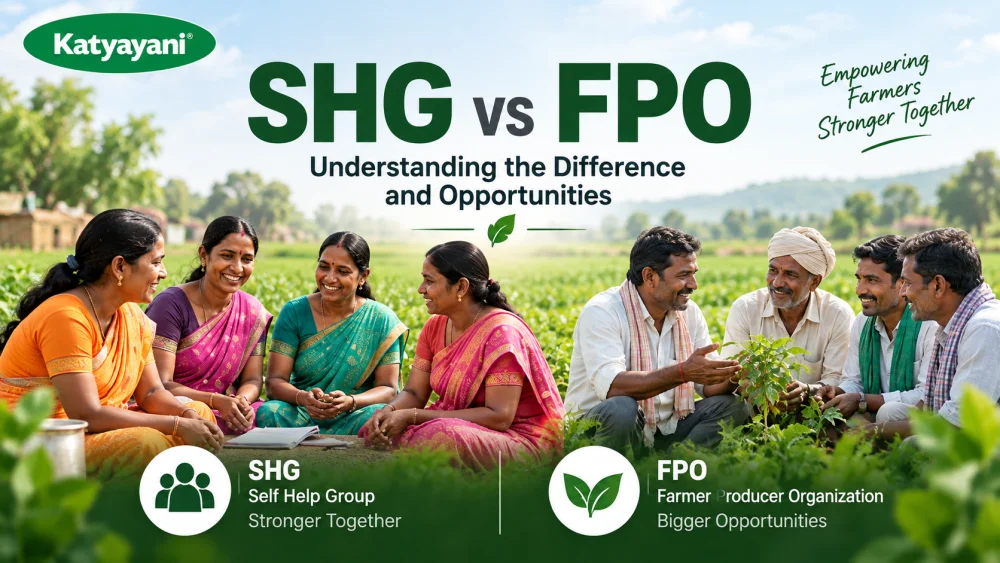
For a group of farmers doing this together, the FPO route has its own guarantee, explained in FPO credit guarantee scheme explained.
For a new small unit where you also want a capital subsidy rather than only a guarantee, look at PMEGP, which is covered in PMEGP loan for agriculture-based businesses.
Before you go to the branch
Get Udyam registration done first, under the correct NIC code for what you will actually do. The code decides eligibility, and changing it later after a rejection wastes a season.
Then carry a project report with your own numbers, not a downloaded template. Banks in agri districts see the same three templates every week and they can tell.
If your loan is above Rs 10 lakh, expect the bank to look at your personal credit record even though the loan is to the unit. That check happens whether or not a guarantee is available.
Frequently asked questions
Is agriculture covered under CGTMSE?
Crop production and animal rearing are not. Those activities fall under NIC code 01, which is excluded from MSME registration apart from a few sub-classes, and CGTMSE only covers Micro and Small Enterprises. Agro-processing, food processing, seed processing, poultry and egg production, bee keeping, sericulture and farm machinery services do qualify. Confirm your specific NIC code with your branch before you apply.
Can a farmer who also runs a processing unit apply?
Yes. The loan has to be for the processing unit, not for the farm. Register the unit on Udyam under the processing activity, keep its accounts separate from the farm, and apply for the unit.
What is the maximum CGTMSE cover in 2026?
Rs 10 crore per borrower, raised from Rs 5 crore with effect from 1 April 2025. The percentage covered depends on your category and loan size, from 75 per cent up to 90 per cent for women entrepreneurs.
Is CGTMSE a subsidy?
No. It is a guarantee. You get a loan and you repay it in full with interest. Nothing is written off. What the guarantee does is let the bank lend without asking you for collateral.
Who pays the annual guarantee fee?
The fee is charged to the lender, and lenders normally pass it on to the borrower. Rates start at 0.37 per cent a year for loans up to Rs 10 lakh. Ask for the fee to be shown separately in your sanction letter.
Can a Self Help Group loan be covered under CGTMSE?
No. Loans sanctioned to SHGs are not eligible. The route for group credit is the SHG Bank Linkage Programme.
What happens if I default on a CGTMSE loan?
The Trust pays the bank part of the loss. The Trust does not take over recovery, so the bank continues to recover from you. The guarantee protects the lender, not the borrower.
Is Udyam registration compulsory?
In practice yes. Udyam registration is what establishes that your unit is a micro or small enterprise, and the NIC code you register under is what decides whether your activity is coverable at all.
Can I offer part collateral and still get the guarantee?
Yes, under the hybrid security model. The bank takes collateral for a part of the facility and takes guarantee cover on the rest. Ask for it by name, because it is not always offered.
CGTMSE, Mudra or PMEGP, which one applies to me?
Mudra suits small loans up to Rs 10 lakh with a different guarantee arrangement. PMEGP gives a capital subsidy for a new unit and is the better fit if you want a grant component. CGTMSE is a guarantee on a bank loan of any size up to Rs 10 crore, with no subsidy attached.
Sources used
CGTMSE Circular 250/2024-25 dated 18 March 2025, guarantee ceiling raised to Rs 10 crore — https://www.dcmsme.gov.in/Circular-No.-2502024-25-5cr-to-10-cr-CGTMSE.pdf
CGTMSE Circular 251/2024-25 dated 18 March 2025, revised Annual Guarantee Fee — https://www.dcmsme.gov.in/Circular-No.2512024-25-reduction-in-AGF.pdf
PIB, Credit Guarantee Scheme for Micro and Small Enterprises, 23 July 2026 — https://www.pib.gov.in/PressReleasePage.aspx?PRID=2288366®=48&lang=1
PIB, Union Budget 2025-26 MSME factsheet, 4 February 2025 — https://www.pib.gov.in/FactsheetDetails.aspx?Id=149117®=48&lang=2
MSME, activities eligible under the MSMED Act 2006 with NIC codes — https://www.msmediagra.gov.in/writereaddata/service_manu_sector_under_MSMED_Act_2006.pdf
Recommended external anchor links inside the article: "raised to Rs 10 crore" to the CGTMSE circular, and "excluded from MSME registration" to the NIC code document. Nothing else is needed.
| Category | Up to Rs 5 lakh | Rs 5 lakh to Rs 50 lakh | Rs 50 lakh to Rs 10 crore |
|---|---|---|---|
| Micro enterprises | 85 per cent | 75 per cent | 75 per cent |
| Women entrepreneurs and Agniveers | 90 per cent | 90 per cent | 90 per cent |
| SC and ST entrepreneurs, persons with disability, aspirational districts, ZED certified | 85 per cent | 85 per cent | 85 per cent |
| North East region, Jammu and Kashmir, Ladakh | 80 per cent | 80 per cent | 75 per cent |
| All others | 75 per cent | 75 per cent | 75 per cent |
| Loan size | Annual guarantee fee |
|---|---|
| Up to Rs 10 lakh | 0.37 per cent |
| Rs 10 lakh to Rs 50 lakh | 0.55 per cent |
| Rs 50 lakh to Rs 1 crore | 0.60 per cent |
| Rs 1 crore to Rs 2 crore | 0.85 per cent |
| Rs 2 crore to Rs 5 crore | 1.00 per cent |
| Rs 5 crore to Rs 8 crore | 1.10 per cent |
| Rs 8 crore to Rs 10 crore | 1.20 per cent |
Leave a Comment