 9 min read
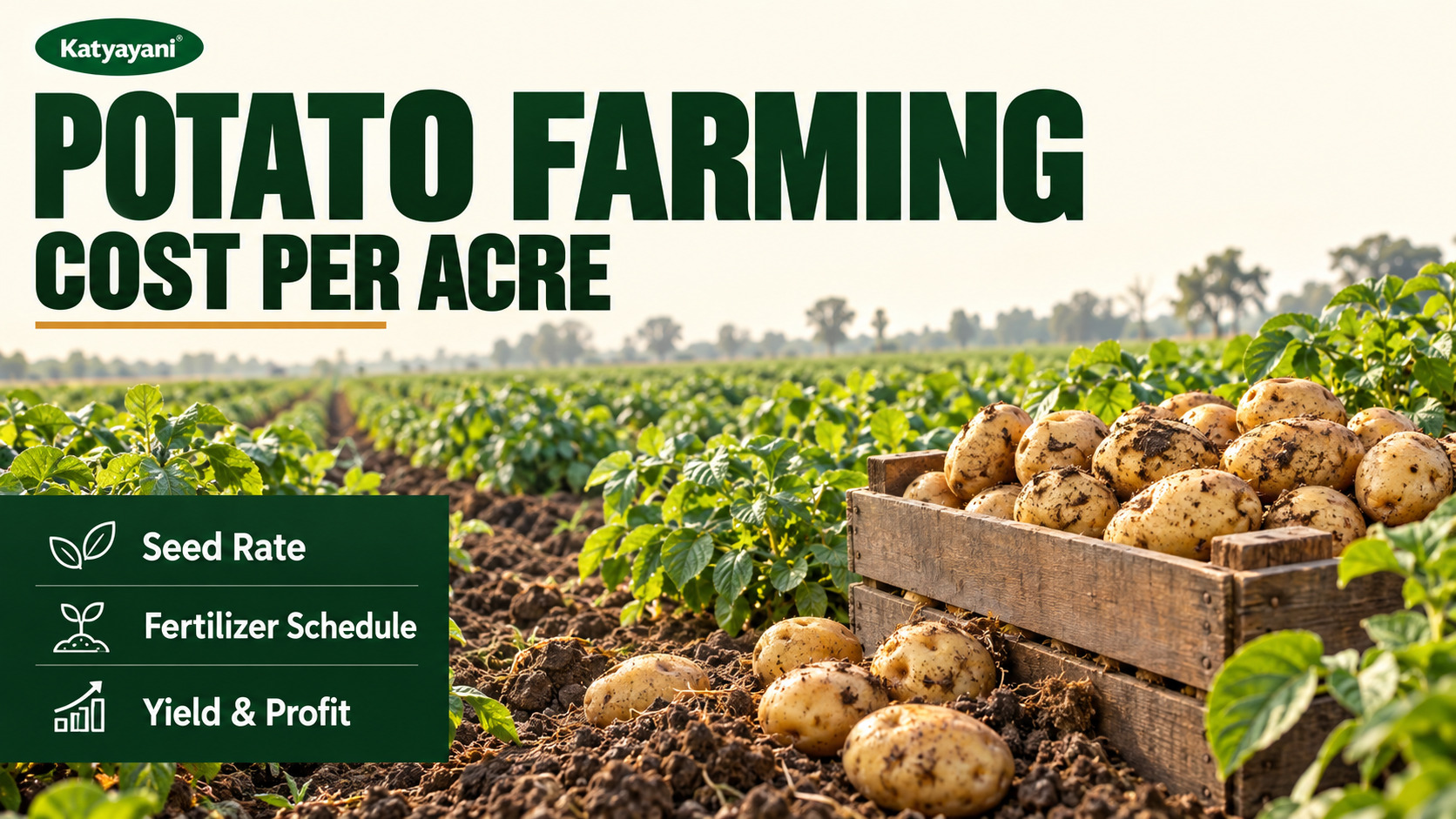
Reported potato cultivation cost ranges from about Rs 32,000 to Rs 1.25 lakh per acre depending on region, seed price and labour. Seed needs about 9 to 10 quintals per acre (25 g tubers at 15 cm spacing). A package of practices lists 150 to 200 quintals per hectare for irrigated improved varieties, or about 61 to 81 quintals per acre.
Potato cultivation cost per acre: what real studies report
Ask ten farmers and you will get ten answers, and the studies agree with them. Seed is usually the biggest single cost, then labour. Here are the published numbers, converted to one acre (1 hectare = 2.47 acres). The spread is wide because of region, seed price, mechanisation and whether family labour is counted.
| Source (region) | Reported cost | Per acre (converted) |
|---|---|---|
| Kangra study, Himachal Pradesh (2022-23) | about Rs 3.08 lakh per hectare | about Rs 1.25 lakh |
| Eastern Uttar Pradesh, Azamgarh (Indian Potato site) | about Rs 78,155 per hectare | about Rs 31,600 |
| Agro Potli 2026 planning guide | Rs 53,000 to 83,000 per acre | Rs 53,000 to 83,000 |
| Krishi Jagran (for 200-250 q/ha yield) | Rs 1.25 to 1.5 lakh per hectare | about Rs 50,600 to 60,700 |
How To Use This: Do not copy any one number. Take the input quantities below, ask your dealer for today's rate for each, and total them yourself. Use the studies above only to sanity-check your total. Test your soil first: see how to read your soil health card.
Inputs per acre (from a package of practices)
The numbers below come from the KVK Chirang package of practices (Assam, rabi season) and are converted to one acre by me. Your state agricultural university may recommend more nitrogen, especially in the plains of North India, so check it. For research-backed varieties and disease notes see ICAR-CPRI.
| Input | Per hectare (source) | Per acre (converted) |
|---|---|---|
| Seed tubers (about 25 g, 15 cm spacing) | 22.5 to 25 quintals | about 9 to 10 quintals |
| FYM (well decomposed) | 10 tonnes | about 4 tonnes |
| Row spacing | 50 cm furrows | 50 cm furrows |
| Irrigations | 3 (25, 60 and 80 days after emergence) | 3 |
Seed rate rises with bigger tubers and wider spacing. Some commercial guides quote higher seed rates for varieties like Kufri Uday in the plains, so confirm with your seed supplier.
Potato fertilizer schedule per acre
The same package gives these rates for irrigated potato. Put the entire dose in the furrow before planting, and cover with a thin layer of soil so tubers do not touch the fertiliser.
| Nutrient | Per hectare (irrigated) | Per acre | As fertiliser per acre (approx) |
|---|---|---|---|
| Nitrogen (N) | 60 kg | about 24 kg | about 54 kg urea |
| Phosphorus (P2O5) | 100 kg | about 40 kg | about 253 kg SSP |
| Potash (K2O) | 100 kg | about 40 kg | about 68 kg MOP |
For rainfed potato the package lowers P2O5 to 50 and K2O to 50 kg per hectare. Where zinc is low, research trials show a basal zinc dose improves yield, and a boron spray can help tuber yield. Short of DAP? See our DAP alternatives guide for SSP and NPK options.
| Need | Katyayani option |
|---|---|
| Potash (sulphate form suits potato) | NPK 00:00:50 potassium sulphate |
| Zinc in zinc-deficient soil | Zinc sulphate |
Read the label for the dose and match it to your soil test. For form and cost, compare in our water-soluble vs granular fertiliser guide. Browse the full NPK fertilizer collection.
How much seed and when to plant
Plant sprouted, healthy, medium tubers (25 to 40 g). Big tubers can be cut into pieces with 2 to 3 eyes. For cut seed, dip the pieces in mancozeb solution (5 g per litre) for about 10 minutes, then dry in shade for 48 hours. The optimum planting time in that package is mid-October to mid-November. In the northern plains local advice varies by variety and temperature, so follow your state calendar. Cold nights are a risk too: see our frost and cold wave protection guide.
How many quintals of potato in 1 acre?
The package lists irrigated yields of 150 to 200 quintals per hectare for improved varieties such as Kufri Chandramukhi, Kufri Jyoti and Kufri Megha (Kufri Megha 175 to 200). Per acre that is roughly 61 to 81 quintals. These are variety trial figures. A farmer's average is usually lower and depends on seed quality, blight control and irrigation timing.
Protect the crop: late blight in short
Late blight can wipe out a field in a week of cool, humid, cloudy weather. The package advises mancozeb 75% at 0.25% (2.5 g per litre) as six sprays at 12-day intervals, or alternating a metalaxyl 8% + mancozeb 64% combination at 2 g per litre with plain mancozeb (three sprays of each). ICAR-linked trials also recommend a mancozeb spray at canopy closure, followed by cymoxanil + mancozeb. For the weather triggers and a full prevention calendar, read our potato late blight control guide. For how to spray well, see fungicide application methods.
| Stage or trigger | Option | Katyayani option |
|---|---|---|
| Prevention at canopy closure, cloudy weather | Mancozeb 75% WP | K-Zeb Mancozeb 75 WP |
| Alternate spray when risk is high | Metalaxyl 8% + Mancozeb 64% WP | Meta-Manco |
| After canopy closure (trial recommendation) | Cymoxanil 8% + Mancozeb 64% WP | Elpi Cymoxanil + Mancozeb |
Do not spray the same fungicide group on every round. Rotating helps avoid resistance. Always follow the label and local advice. Browse the fungicides collection for other options.
Profit per acre: do the sum yourself
Profit = (quintals sold x price per quintal) - total cost. I will not give one profit number because prices swing hard from season to season, and reported costs range from about Rs 32,000 to Rs 1.25 lakh per acre. Use the yield range (61 to 81 quintals per acre for improved irrigated varieties in trials), your realistic farm average and today's mandi rate on Agmarknet. Run three cases: bad, normal and good, and plant only if the bad case is survivable.
Conclusion
Potato rewards good seed, a balanced dose and timely blight sprays. Total your own costs from the input table, check today's mandi price, and plan for a bad season before you plant. When blight weather arrives, follow our late blight control calendar.
Why trust this guide
Written by Team Katyayani, Editorial Team at Katyayani Organics. Cross-checked against published research and university extension programs.

Leave a Comment