Loading…
Loading…
Explore Rabi and horticulture crop guides with practical tips on cultivation, nutrition, pest control, disease management, and better crop growth.
69 articles
 14 min
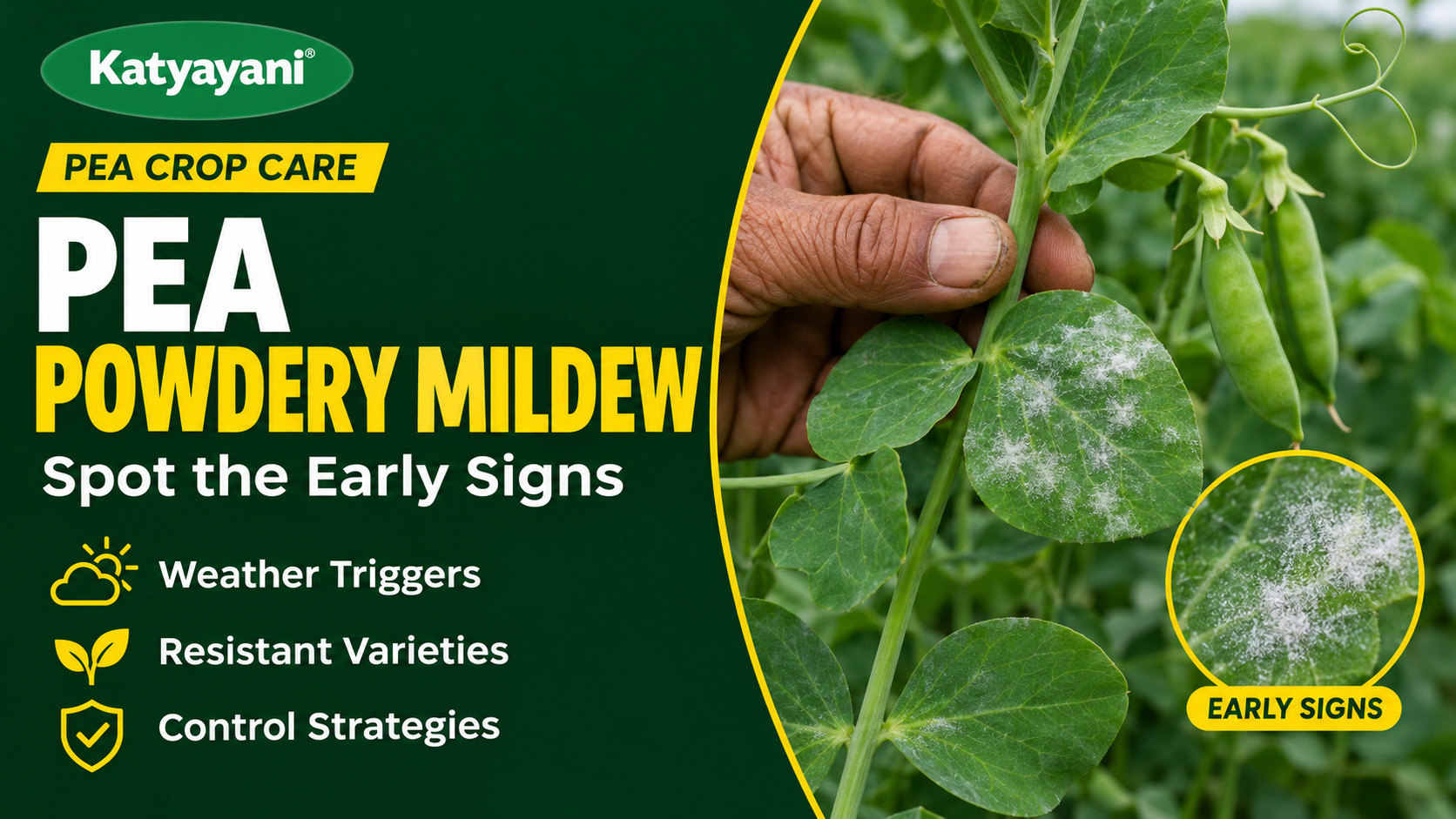
Pea powdery mildew is a fungal disease of pea caused by Erysiphe pisi (older Indian pages write Erysiphe polygoni). The early sign is a white, floury patch on the oldest, lowest leaves, which then spreads to the other leaf side, tendrils, stems and pods. ICAR-IIPR says it can cut field pea yield by up to 80 percent, and a Palampur paper puts garden pea losses at 25 to 50 percent. It favours warm, dry days with cool nights and dew, and late-sown crops suffer most. Choose an early-maturing or tolerant variety, remove old pea residue, and spray at the first white patches, because a fungicide protects the leaf for roughly two weeks and cannot repair a plant that is already white. Always follow the product label and your state advisory.
 16 min
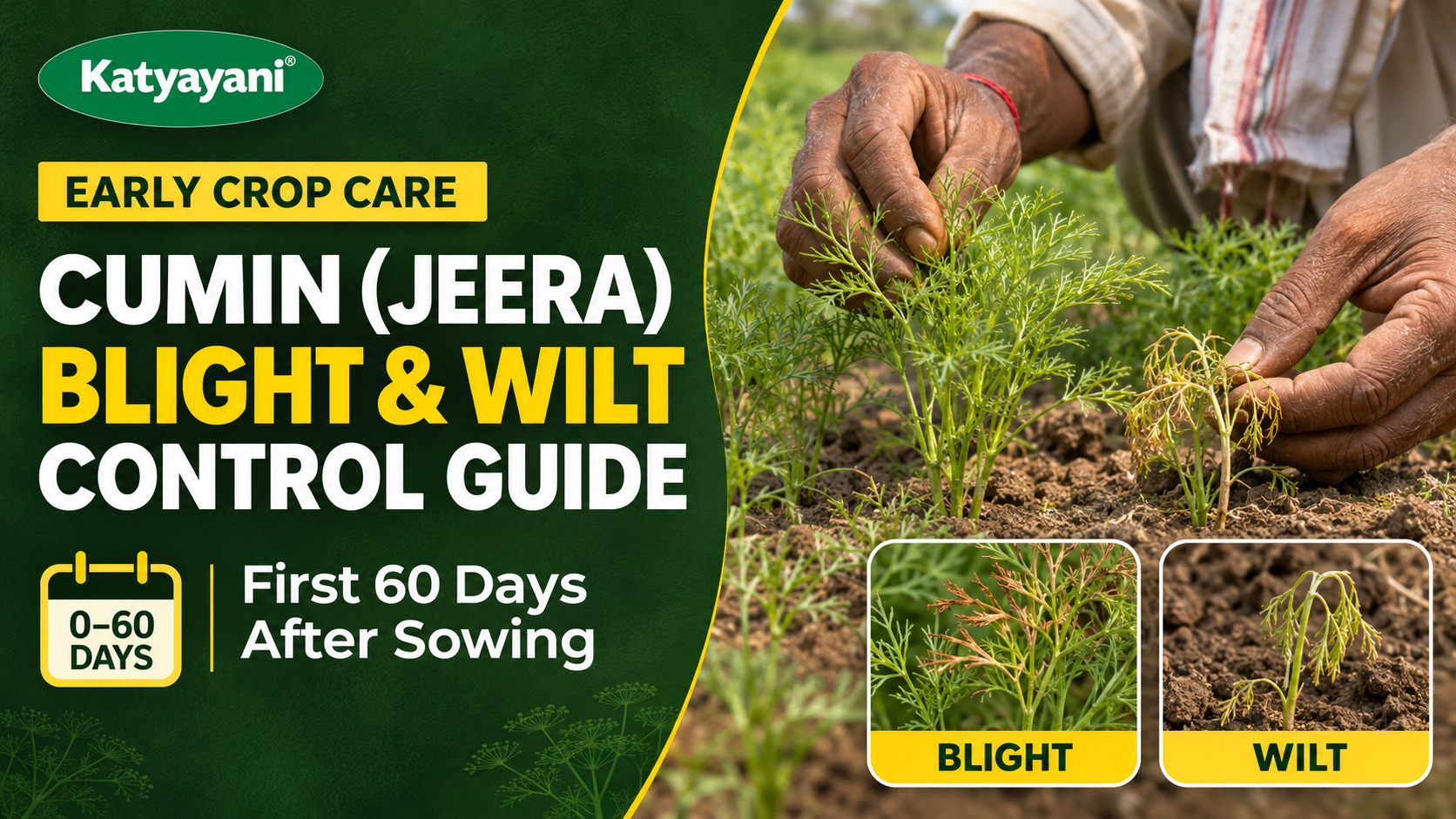
Cumin gets two serious diseases early. Wilt (Fusarium oxysporum f. sp. cumini) lives in the soil and seed and shows from about 30 days after sowing. Blight (Alternaria burnsii) lives on seed and crop debris and needs humid, cloudy weather. In an SDAU Jagudan trial, untreated plots had 24.94 to 33.30 percent wilt at 30 days and 46.84 to 53.16 percent at 60 days, while plots given Trichoderma-enriched farmyard manure stayed at 15.58 to 16.56 percent at 60 days. Published blight spray starts are day 35 (ICAR-IISR integrated module), day 40 (ICAR-IISR booklet, TNAU) and day 45 (ICAR-NRCSS trial, repeated every 15 days). So the first 60 days are the window: rotate and plough in summer, treat the seed, put enriched manure in the soil, sow on time, irrigate on a sensible schedule and watch for the first spots from day 30. Always follow the label and your state advisory.
 15 min
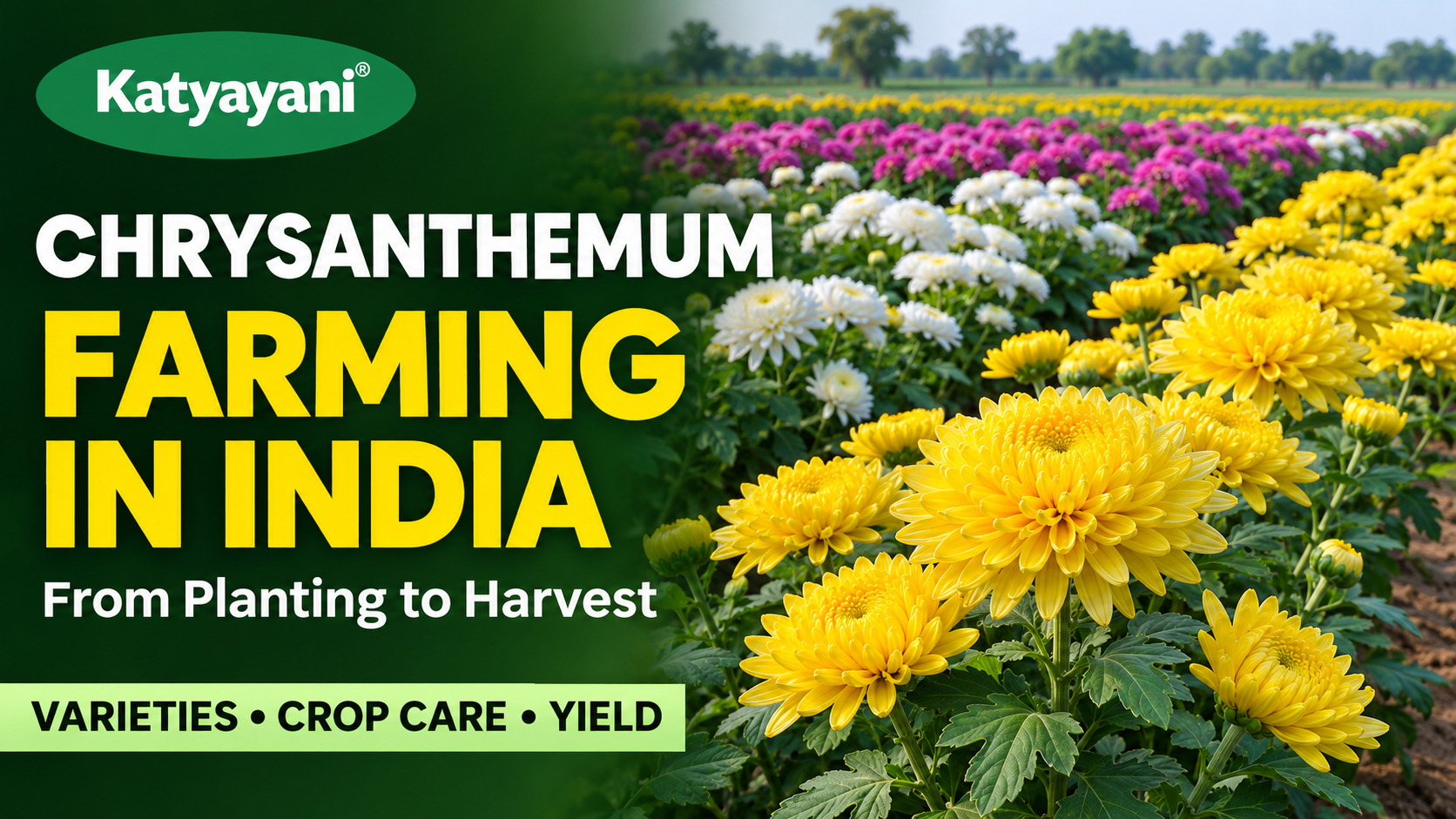
Chrysanthemum (guldaudi, shevanti) is a short-day flower: it makes flower buds when nights lengthen, so most Indian crops bloom in November and December. ICAR describes the uses as cut flowers, loose flowers for garlands and worship, pot plants, exhibition and interior decoration, and garden bedding. Terminal cuttings of 5 to 7 cm are taken from mother plants in mid June to end July and root in 2 to 3 weeks. TNAU plants at 30 x 30 cm, about 111,000 plants per ha, and quotes 20 t per ha from the plant crop. ICAR gives 60,000 to 80,000 cut flowers per acre or 20 to 50 q per acre of loose flowers. Pinch spray types at 4 and 7 weeks, disbud standard types, stake, and keep nights dark and drainage good. Main problems are aphids, thrips, leaf miner, red spider mite, Fusarium wilt, rust and Septoria leaf spot.
 15 min
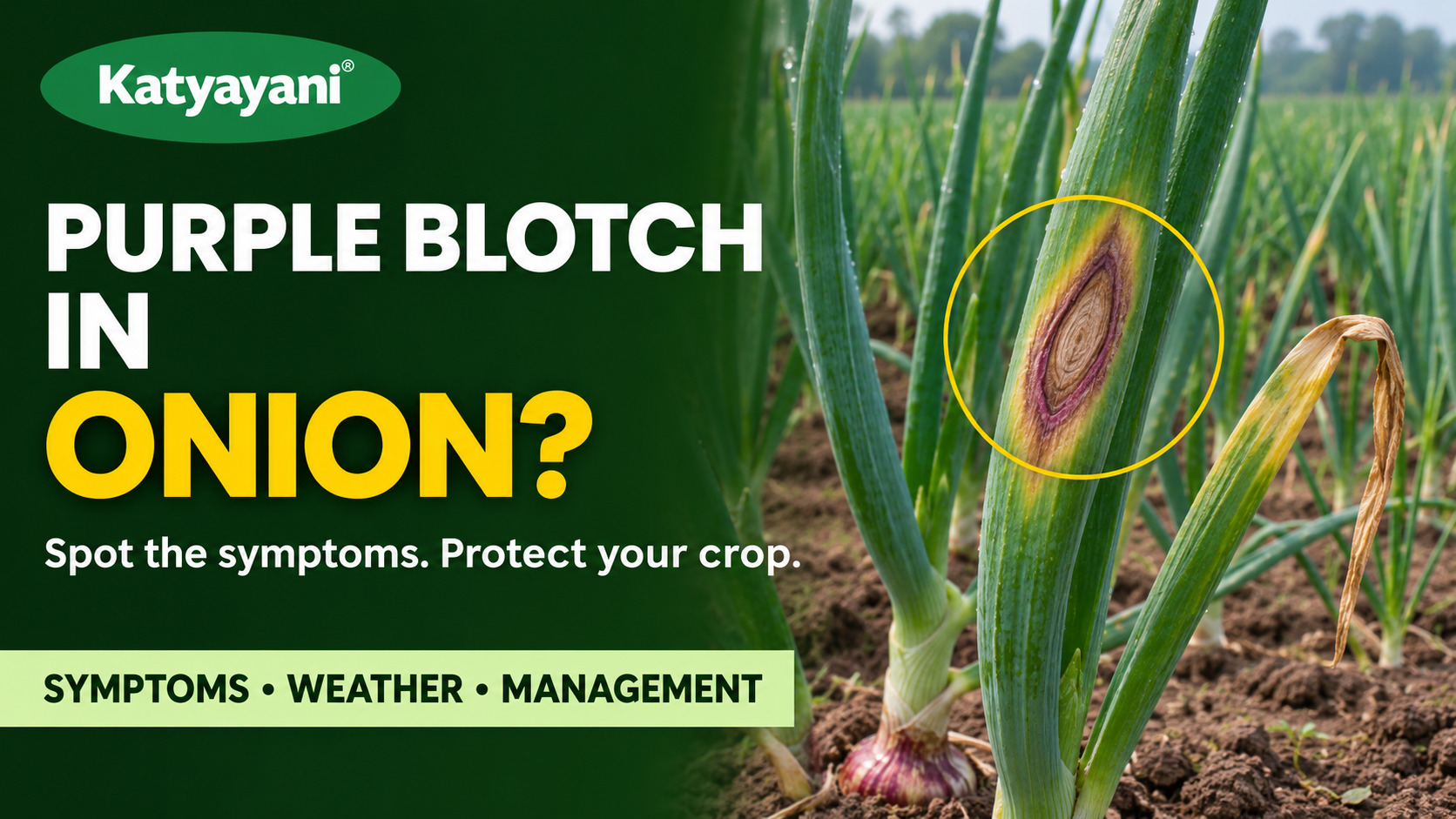
Purple blotch is a leaf disease of onion caused by the fungus Alternaria porri. It starts as small water-soaked spots with a white centre that turn brown and then purple with dark rings, and it can kill leaves and stop bulbs from filling. ICAR-DOGR co-authors cite Indian yield losses of 2.5 to 85 percent. It spreads fastest in warm, humid, wet weather, which is why kharif and late kharif crops suffer most. Thrips feeding wounds help the fungus in. No onion variety is immune: in the ICAR-IARI net-house test none of 34 onion genotypes was resistant. Start protection when the first spots show, because in the ICAR-IARI test the disease rose sharpest one to two weeks after infection and peaked at five weeks. Always read the product label and follow your state advisory.
 16 min
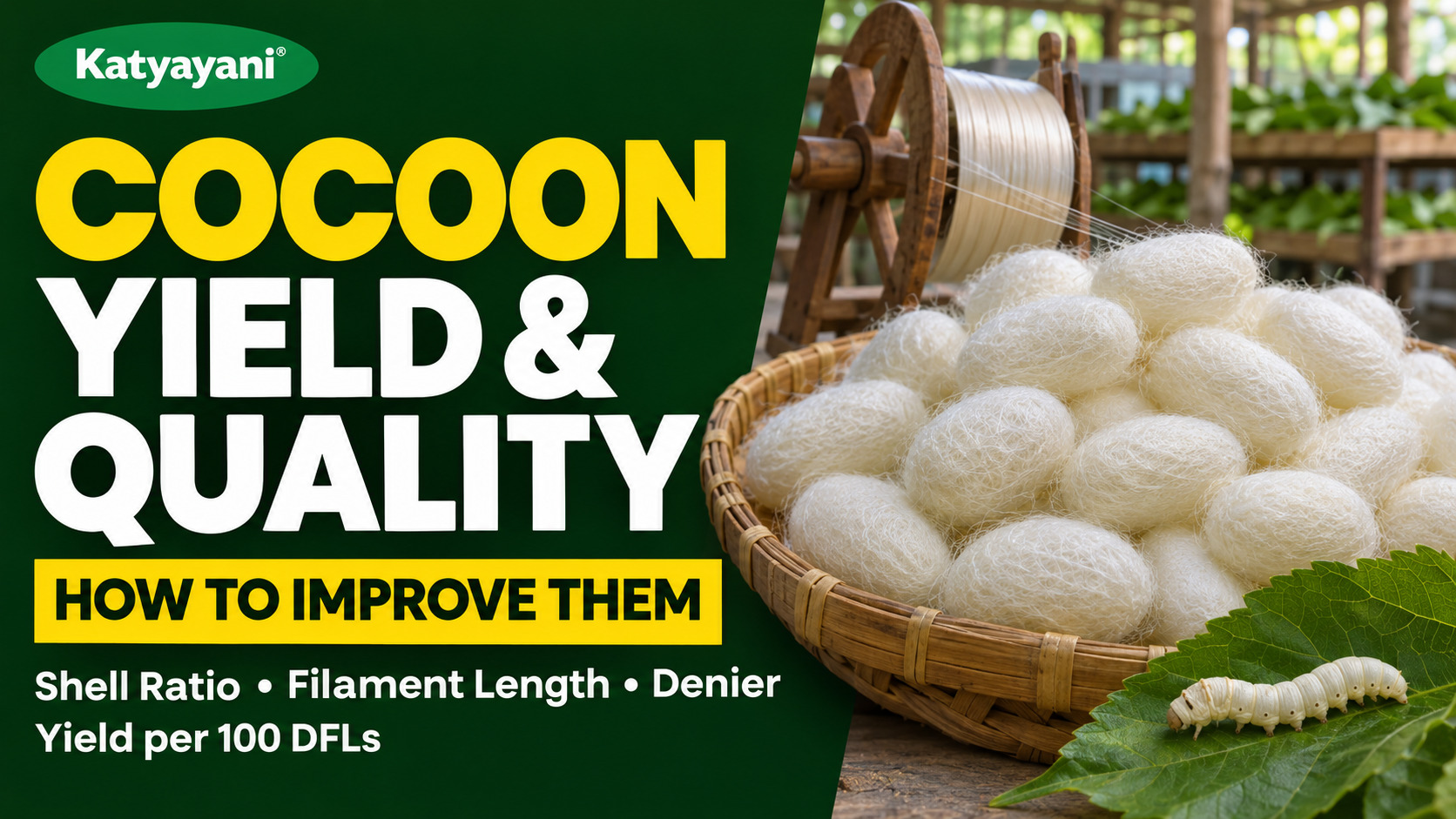
Cocoon quality is judged on weight, shell ratio, filament length, reelability and denier. FAO reports 19 to 25 percent shell in newly evolved hybrids and 600 to 1,500 m of filament, about 80 percent of it reelable. Yield and quality are set by clean disinfection, warm and humid chawki, cooler and drier late age, 1,200 to 1,400 kg of good leaf per 100 DFLs, moult handling, mounting at 27 to 28 degrees C, and sorting out defective cocoons before reeling. Follow your state sericulture department for exact doses.
 14 min
Leek (Allium porrum) is a non-bulbing onion relative grown for its blanched white stem. ICAR-linked authors say commercial leek farming is not practised in India and the crop is mostly a kitchen-garden vegetable, so there is no official Indian package of practices. The two Indian-named cultivars are Palam Paushtik (about 140 to 150 days, 300 to 350 q per ha, per CSKHPKV) and PPL-1. Raise seedlings to pencil thickness, plant them into a trench 10 to 15 cm deep, and hill soil up gradually so 15 to 20 cm of the stem stays white (OMAFRA, Canada). OMAFRA gives 200 to 250 kg N per ha split in three. Leek-specific problems are onion maggot, cutworm, rust, white tip and white rot. Cost and profit per acre could not be sourced for India.
 14 min
Start with oyster (dhingri) mushroom. NIOS calls its method the easiest: no composting, no casing layer, cheap cereal straw, and species that fruit anywhere from below 20 C to about 32 C. You need a clean ventilated room, a sprayer, a thermometer, pasteurised straw, fresh spawn from a trusted lab and polythene bags. Spawn run takes about 2 to 4 weeks in the dark, then bags fruit with fresh air, light and humidity above 85 percent. Run 10 to 20 bags first, log every number, and line up a buyer before the first flush.
 16 min
Choose the growth habit first: determinate tomatoes stay short and give fruit over a shorter window, indeterminate tomatoes need staking and give a long harvest (Assam Package of Practices). There is no single national sowing date; plant so that transplanting falls outside peak heat, frost and the worst leaf-curl months for your area, and follow your state agricultural university or KVK calendar. Raise seedlings for about 25 days (TNAU) under net, plant at 60 x 45 cm (determinate) or 75 x 30 cm (indeterminate) (Assam), stake at 30 days (TNAU) and feed in splits. Keep soil moisture even to avoid blossom end rot and cracking. Watch for fruit borer, Tuta absoluta, whitefly and leaf curl virus, then blights and wilts, and use only sprays registered for tomato by CIB&RC.
 14 min
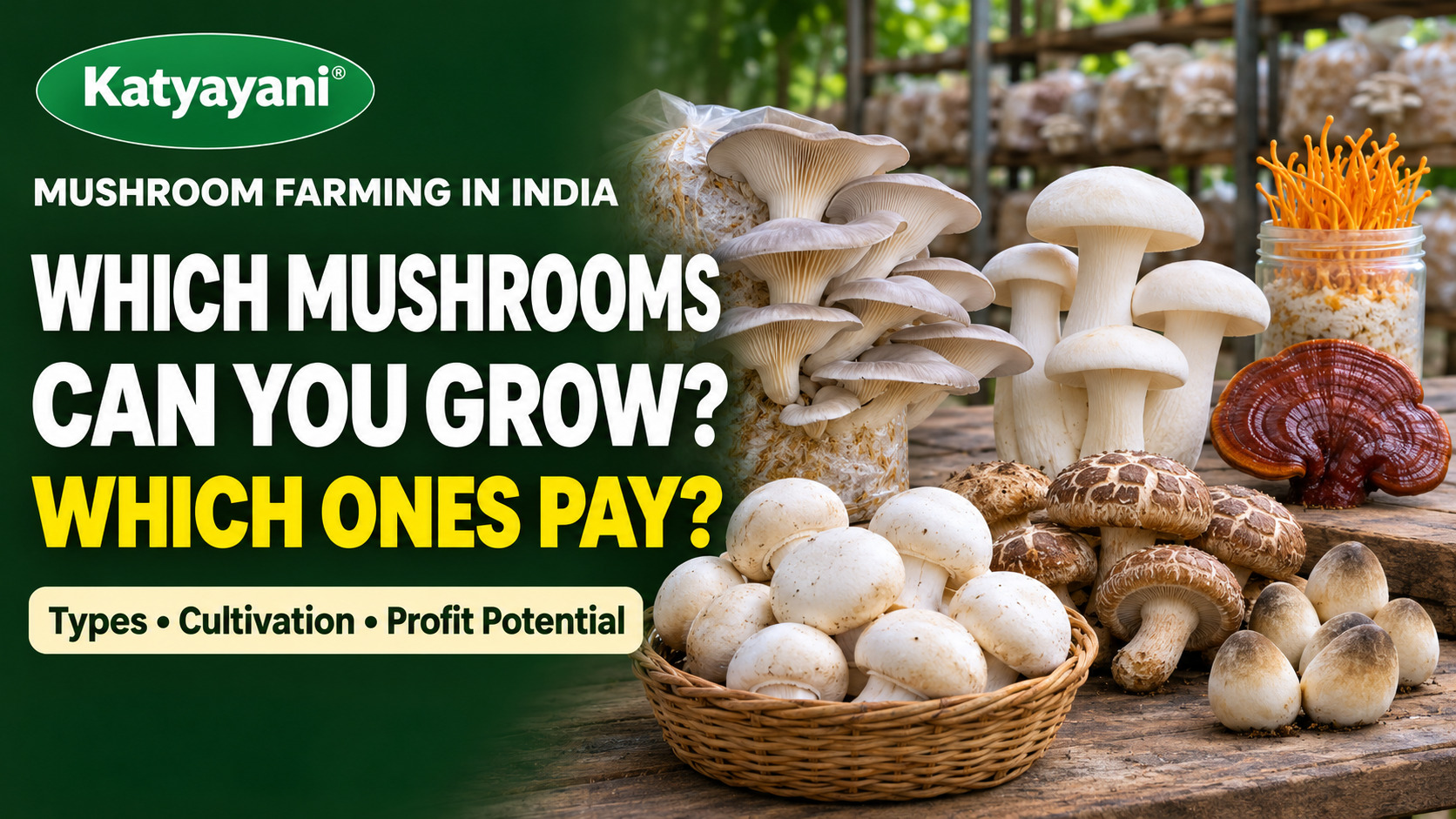
No single mushroom wins everywhere; the room decides. Oyster is the easiest and cheapest to start (no composting, no casing, many species from about 15 to 32 C). Milky is the heat option (30 to 35 C, keeps 3 to 4 days at room temperature). Button needs a cool 16 to 18 C room, compost and fast cooling after picking, so it suits growers who have those. Log your room temperature for a week before choosing. Prices and subsidy rates change: ask your buyer for a written weekly rate and check the official scheme page.
 12 min
India eats and farms five main mushrooms: white button, oyster (dhingri), paddy straw, milky and shiitake. Button is the largest crop, about 73 percent of output in ICAR data, followed by oyster (16), paddy straw (7) and milky (3). Button needs a cool room and compost. Oyster grows on plain straw at 20 to 30 degrees C and is the easiest. Paddy straw and milky suit hot weather. Shiitake and the medicinal types are specialist crops. Never eat a wild mushroom on a guess, because there is no universal rule to tell edible from toxic.
 14 min
Brinjal (baingan) is a warm-season crop that is grown from nursery seedlings. The National Horticulture Board (NHB) gives nursery sowing in the 2nd week of June (kharif), end of September (rabi) and 2nd week of January (summer), with transplanting 4 to 6 weeks later. Seed needed is 250 to 300 g per hectare (about 100 to 120 g per acre). Spacing is 60 x 60 cm for varieties and 90 x 60 cm for hybrids (TNAU). Fertiliser doses differ by source, so base yours on a soil test. Keep the field clean, clip borer-infested shoots every week and avoid planting after tomato, potato or bhendi. Yield is 20 to 30 t per ha as an NHB average (about 8 to 12 t per acre); a 90-grower Akola survey averaged about 6.4 t per acre at a cost of about Rs 61,400 per acre.
 18 min
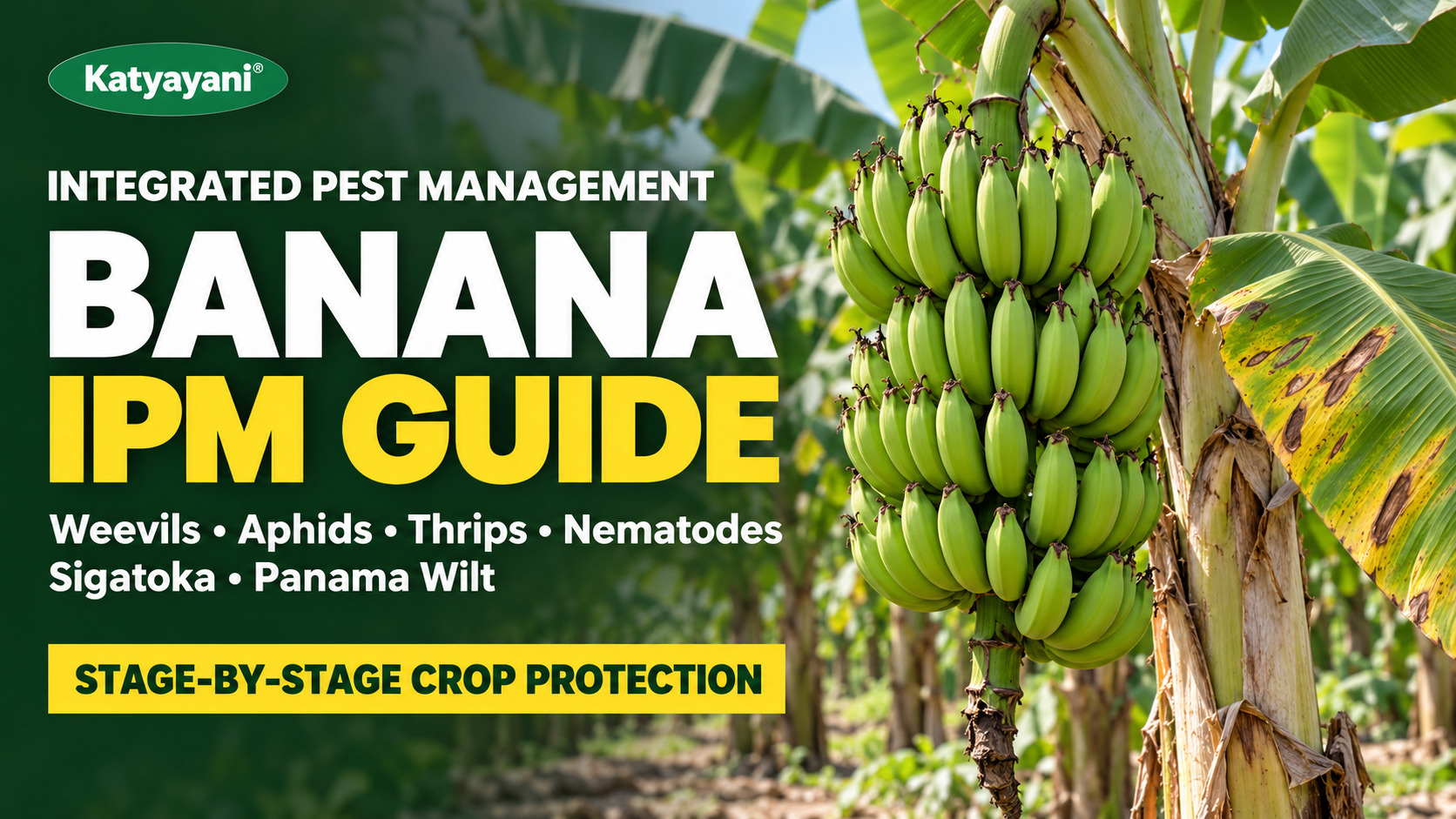
Integrated pest management (IPM) in banana means starting with clean, virus-free planting material, keeping the field sanitary, watching the crop on a schedule, using traps and bio-agents first, and spraying only when scouting shows a real problem.
