Loading…
Loading…
Explore Rabi and horticulture crop guides with practical tips on cultivation, nutrition, pest control, disease management, and better crop growth.
69 articles
 15 min
Beetroot is a cool-season root crop. The sowing month depends on where you farm: September to November in the north Indian plains (ICAR e-Course), July to August in Tamil Nadu (TNAU) and August to January in Kerala (VFPCK). Sources give 5 to 8 kg of seed per hectare (about 2 to 3.2 kg per acre), ridges 30 to 60 cm apart, thinning to one seedling after 20 days to three weeks, and harvest when roots are 3 to 5 cm across at 8 to 10 weeks. Beetroot needs boron; a lack shows as black patches inside the root. Sources give 8 to 12 tonnes per acre as the advisory yield, while a Maharashtra farm survey averaged about 6.3 tonnes per acre.
 26 min
Pomegranate disease management is a package, not a single spray: clean planting material, a rest period, pruning with Bordeaux paste, sanitation, balanced feeding, bio-agents and stage-wise sprays for telya, wilt, fruit spot and anthracnose.
 15 min
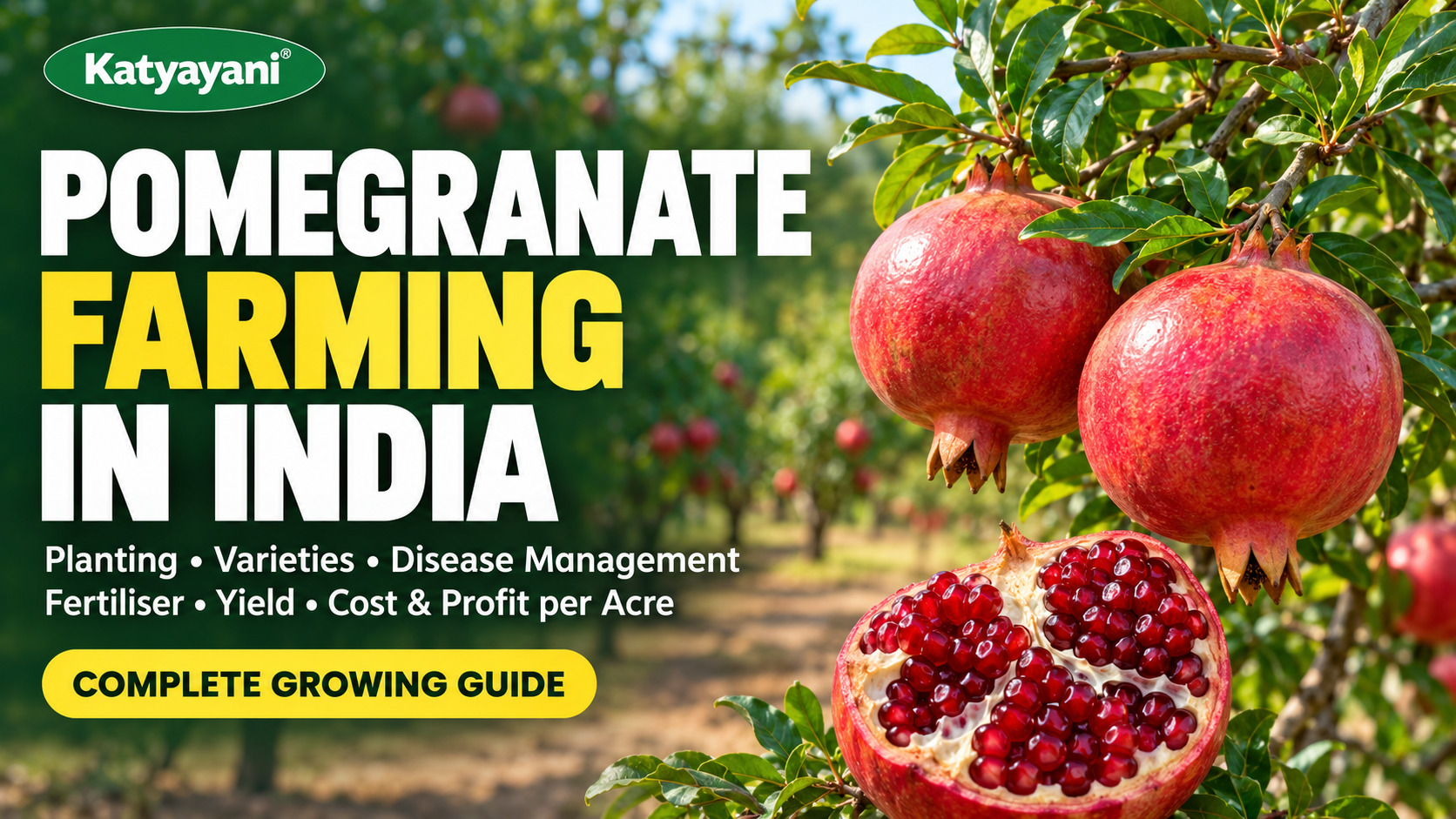
Pomegranate (anar) is a long-term orchard crop. Plant grafted or air-layered, disease-free plants at the start or end of the monsoon (NHB), at 5 x 5 m or 4 x 4 m, which is about 162 or 253 plants per acre. The tree starts bearing from the 4th year (NHB), and a well-developed 8 to 10 year orchard gives 18 to 20 tonnes per hectare, about 7.3 to 8.1 tonnes per acre. Choose one bahar, water evenly, and protect against telya (bacterial blight), wilt and fruit borer. A 2016-17 survey of 36 Ahmednagar growers found a full cost of about Rs 1.25 lakh per acre and a net return of about Rs 1.03 lakh per acre at Rs 40 per kg. Your own price and yield decide the result.
 17 min
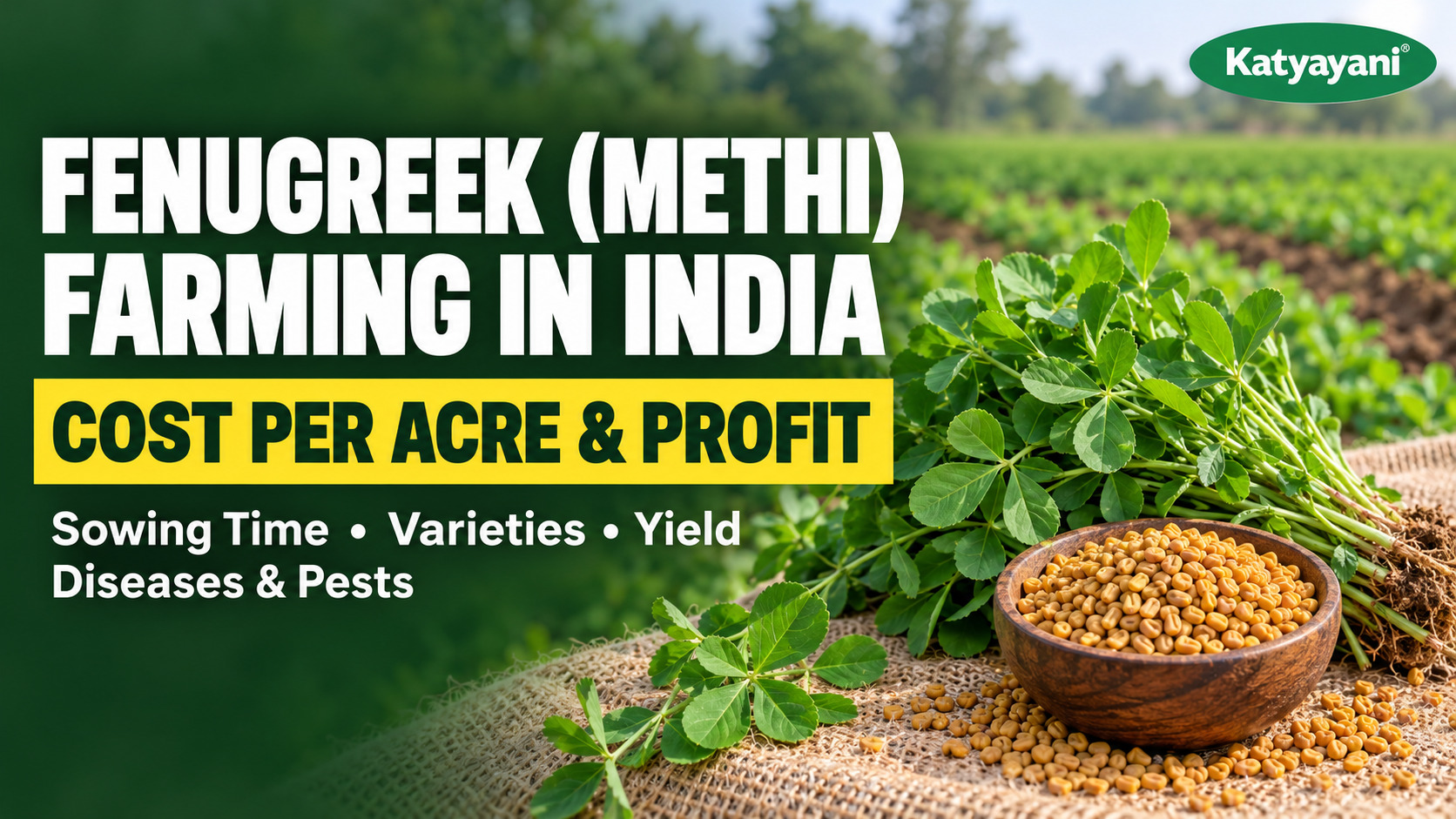
Methi is a cool-season rabi crop. In the plains of north and west India sow from September to November (Rajasthan pan methi: second fortnight of October). Greens are ready in 20 to 25 days; seed in 90 to 100 days (TNAU); kasuri types need 150 to 160 days. Pick the goal first: fresh leaf, dried kasuri leaf or seed. ICAR-NRCSS found dried-leaf pan methi cost about Rs 59,600 per acre and netted about Rs 105,000 per acre at 2020-21 prices; seed methi in Pali gave a benefit-cost ratio of 3.2. Profit is yield times your actual price minus your cost, so check today's mandi rate.
 16 min
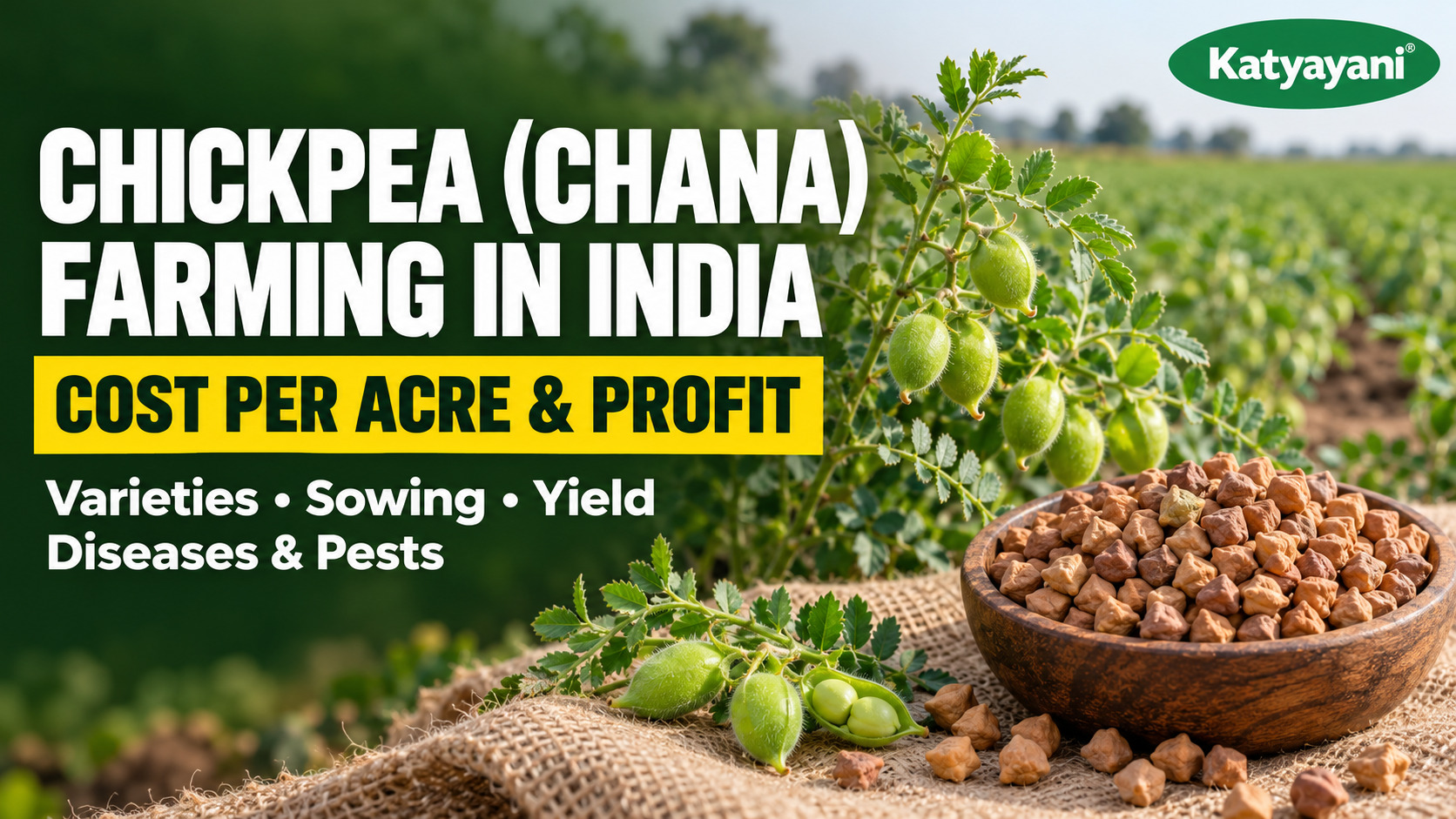
Chana (chickpea, gram) is a cool-season rabi pulse. Sow it in the second fortnight of October to the first week of November where water is available (TNAU); in rainfed Tamil Nadu TNAU gives the last week of September to the first week of October. Use 75-100 kg seed per hectare, which is about 30-40 kg per acre, in rows 30 cm apart with 10 cm between plants. Treat the seed, add a phosphorus-led basal dose, give one irrigation at pod initiation, keep weeds out for the first month and scout for wilt and gram pod borer. A Madhya Pradesh KVK demonstration gave 13.11 quintal per hectare (about 5.3 per acre) against 8.05 on farmers' practice. The MSP for rabi 2027-28 is Rs 5,958 per quintal against an all-India cost of Rs 3,751.
 18 min
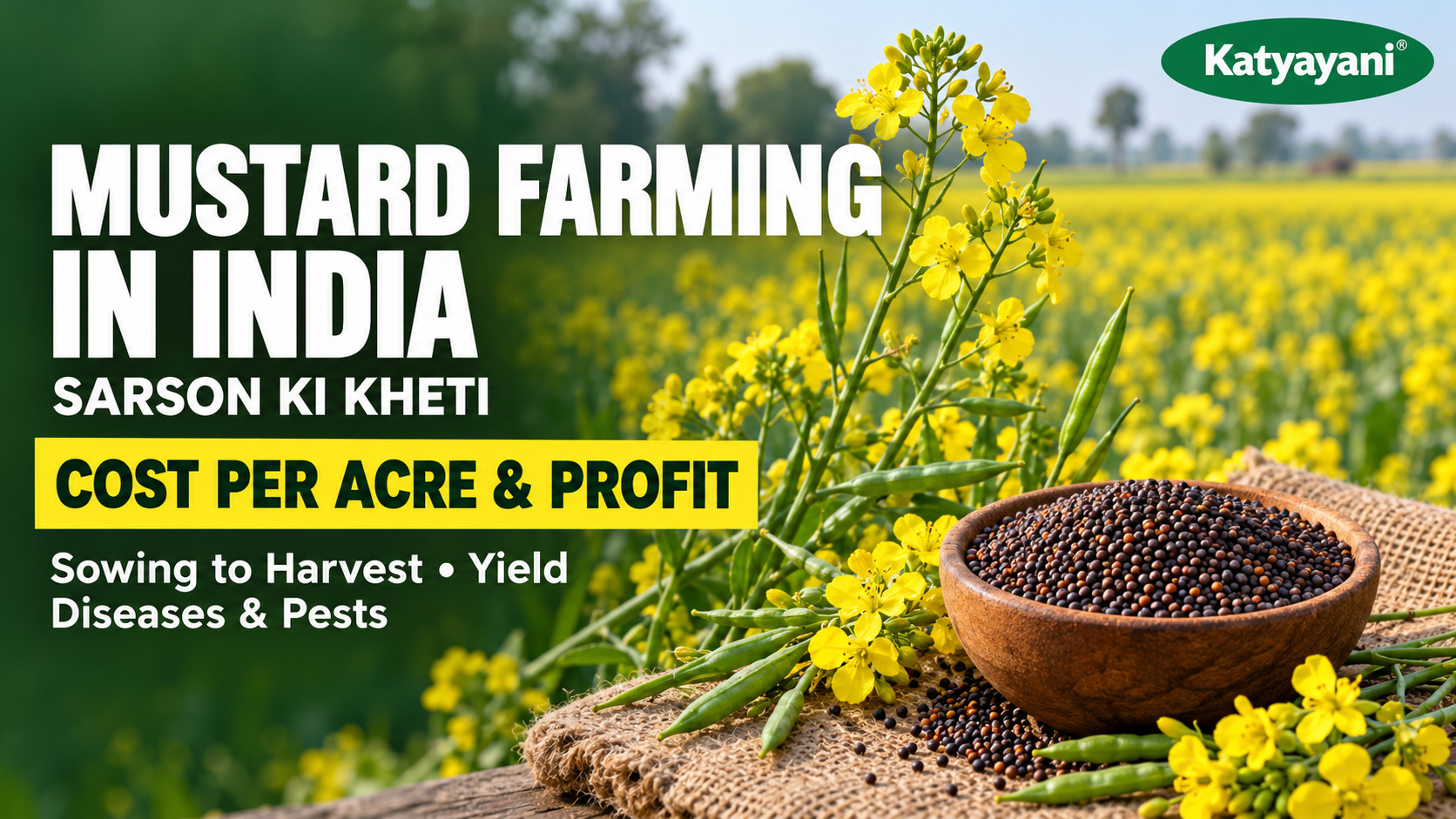
Mustard (sarson, rai) is India's main rabi oilseed. Sow between mid-September and late November, with 10-25 October the best window (ICAR-DRMR). Use about 3-5 kg of seed per hectare, which is about 1.2-2 kg per acre, in rows 45 cm apart. Plan two or more irrigations, weed twice, and watch for aphid from December and white rust in cool, damp weather. The all-India average yield was 1,461 kg per hectare in 2024-25 (about 5.9 quintals per acre); six years of Bharatpur demonstrations averaged 20.98 quintals per hectare (about 8.5 per acre). The MSP for the 2027-28 marketing season is Rs 6,613 per quintal. On the official cost of Rs 3,367 per quintal, a 7 quintal acre leaves roughly Rs 23,000, but your own bill and your mandi price decide the real figure.
 15 min
Linseed (alsi) is a cool-season rabi oilseed. Sow it as soon as the seedbed has moisture, finishing rainfed sowing by 15 November, in lines 25 to 30 cm apart with about 8 to 12 kg of seed per acre (ICAR-AICRP). Treat the seed first. In KVK demonstrations with the full package, farmers got about 3 to 6 quintals per acre at a total cost of about Rs 6,500 to Rs 7,300 per acre; the national average is only about 1.6 to 2.2 quintals per acre. Linseed is not on the central MSP list, so work out your break-even price and check your local mandi before sowing. The main field problems named by ICAR sources are rust, wilt, Alternaria blight, powdery mildew, bud fly and Cuscuta.
 15 min
Barley (jau) is a low-input rabi cereal. In the north-western plains, ICAR sources give 1 to 25 November for timely irrigated sowing (1 to 25 December if late) at 100 kg seed per hectare, about 40 kg per acre, in rows 18 to 23 cm apart. Treat the seed against smut, give 2 to 3 irrigations (3 for malt barley), and choose a variety for your zone. Trials give about 20 quintal per acre; the national average is nearer 11 quintal. Choose malt barley only if a buyer is waiting.
 14 min
Zucchini (summer squash, chappan kaddu) grows well in India, mainly as a winter crop in the north plains: ICAR-IIVR says sow 20 October to 10 November (also first half of February), and harvest starts about 55 days after sowing. It is a bush plant, so it needs no support. Winter yield is 25-40 tonnes per hectare, about 10-16 tonnes per acre; spring-summer yield is only 8-10 tonnes per hectare. The ICAR-IIVR study works out to about Rs 57,000 cost and Rs 1.76 lakh net profit per acre, but that assumes 32 t/ha sold at Rs 18/kg. Check your live mandi price before you plan on those numbers.
 14 min
Radish (mooli) is ready in 25 to 65 days. In the north Indian plains sow from 1 September to 1 December; in the hills from June to September; in the south the best time is April to June (NHB). Choose the variety for the month, for example Pusa Chetki for summer and Pusa Himani for December to February. Use light sandy loam with pH 6.0 to 7.0, 4 to 5 kg seed per acre, well-rotted FYM and, per NHB, about 20 to 40 kg nitrogen, 40 kg P2O5 and 20 kg K2O per acre. NHB gives 10 to 14 tonnes per acre for tropical types. Profit depends on your mandi price, so work out your break-even first.
 14 min
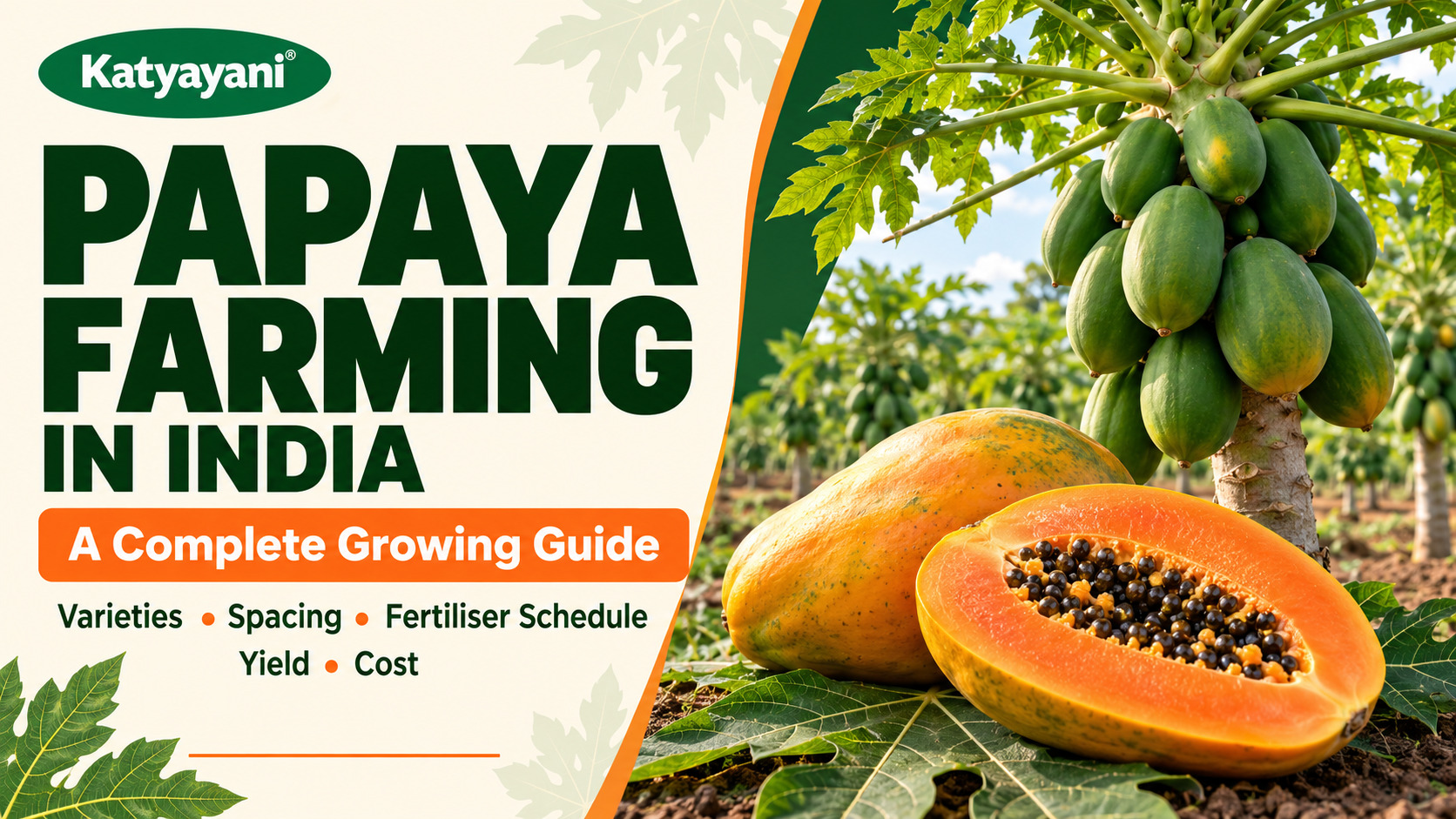
Papaya is a fast-bearing fruit crop. The ICAR e-course says the first fruits come 12 to 14 months after planting, and plants give a good crop for only about 2 years (NHB puts the economic life at 3 to 4 years). Plant in a frost-free, well-drained field: February to March, June to July or October to November (NHB), or the start of the south-west monsoon in most parts (ICAR e-course). At the usual 1.8 m by 1.8 m spacing you get about 1,250 plants per acre (our calculation). Sex shows only at flowering, 4 to 5 months after planting, so keep extra seedlings per pit and remove surplus males. Watch for papaya ring spot virus (spread by aphids, no cure) and waterlogging. Costs, yields and prices vary too much for one figure, so work out your own with local rates.
 11 min
Papaya has no cure for its two worst diseases, ring spot virus and leaf curl virus. For these, management means clean seedlings, removing sick plants early and keeping aphids and whiteflies away. Foot rot and damping off come from wet soil and are best stopped by drainage, ring irrigation and seed or soil treatment before planting. Anthracnose and powdery mildew show on fruit and leaves and need clean orchards plus timely sprays. Integrated Disease Management (IDM) means doing all of these together, so you spray less and lose fewer plants. Use only products registered for papaya on the label (check CIB&RC), and confirm any dose with your horticulture officer.
