Loading…
Explore organic and bio-input products from Katyayani Organics to support plant growth, improve soil health, and promote sustainable farming. Find the right solutions for your crops.
25 articles
 17 min
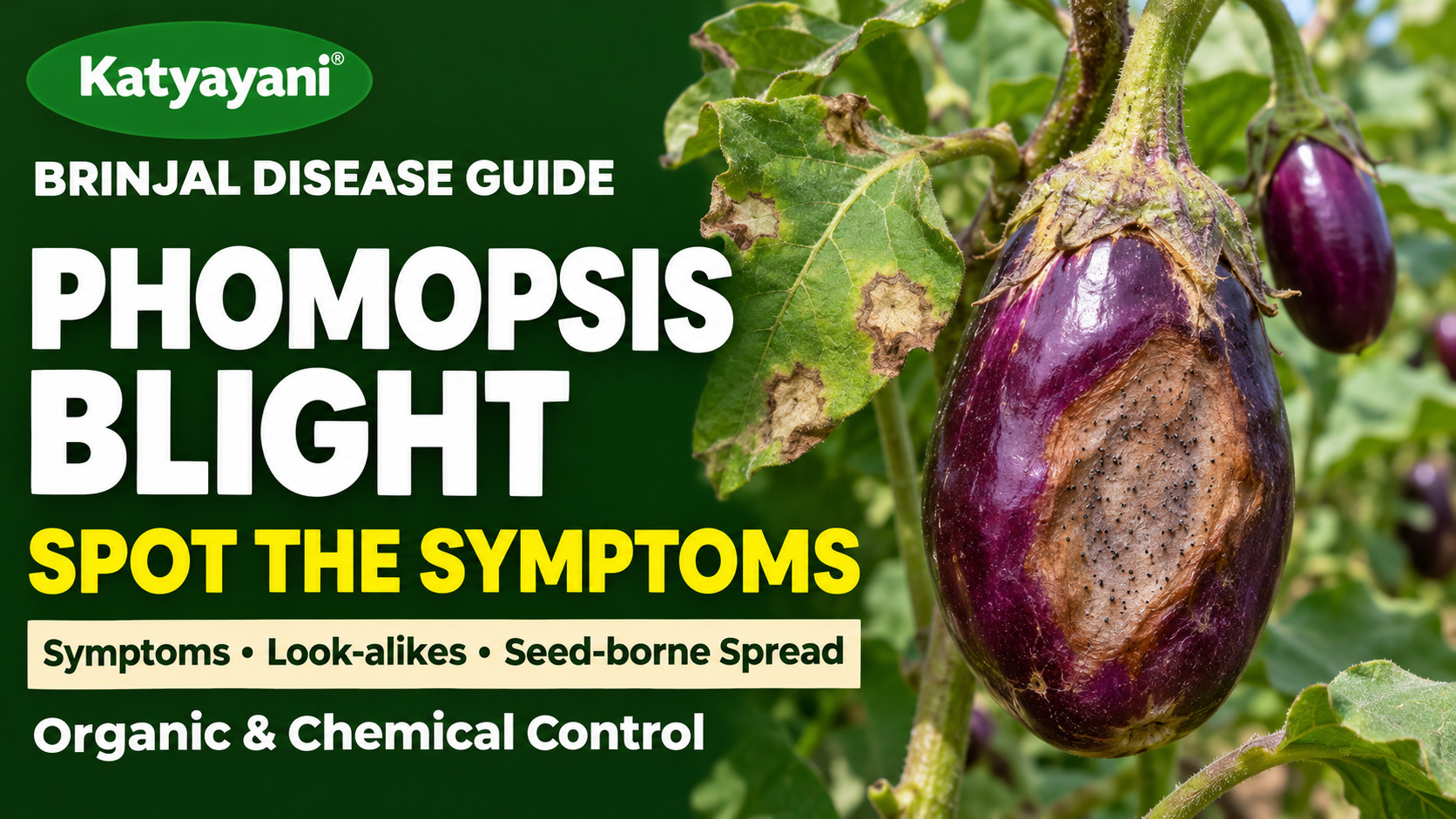
Phomopsis blight (Phomopsis vexans) shows as irregular brown spots with dark margins on brinjal leaves, petioles and stems that join into blight, and as sunken spots on fruit that turn soft, then black and mummified. The fungus lives in seed, crop debris and soil, so start clean: healthy seed, hot water or labelled seed treatment, a fresh nursery bed, removal of infected debris, crop rotation, wider spacing and irrigation timed so leaves dry fast. Trichoderma and Pseudomonas are used preventively at seed, root and soil stage. When spots spread, use a fungicide registered for brinjal on the CIB&RC list, at the label dose, and follow the pre-harvest interval on the pack.
 17 min
A plant growth promoter is any input sold to push growth, rooting, flowering, fruit set or stress tolerance. In practice the label covers three different things: plant growth regulators (hormone-type chemicals such as gibberellic acid and NAA, registered by CIB&RC under the Insecticides Act, 1968), biostimulants (seaweed, humic and fulvic acid, amino acids, regulated under the Fertiliser (Control) Order, 1985) and beneficial microbes (biofertilisers and PGPR bacteria). They work differently, carry different over-use risks and need different paperwork. Use them on a healthy crop at the right stage, at label dose, and never as a replacement for nutrition, water or pest control.
 11 min
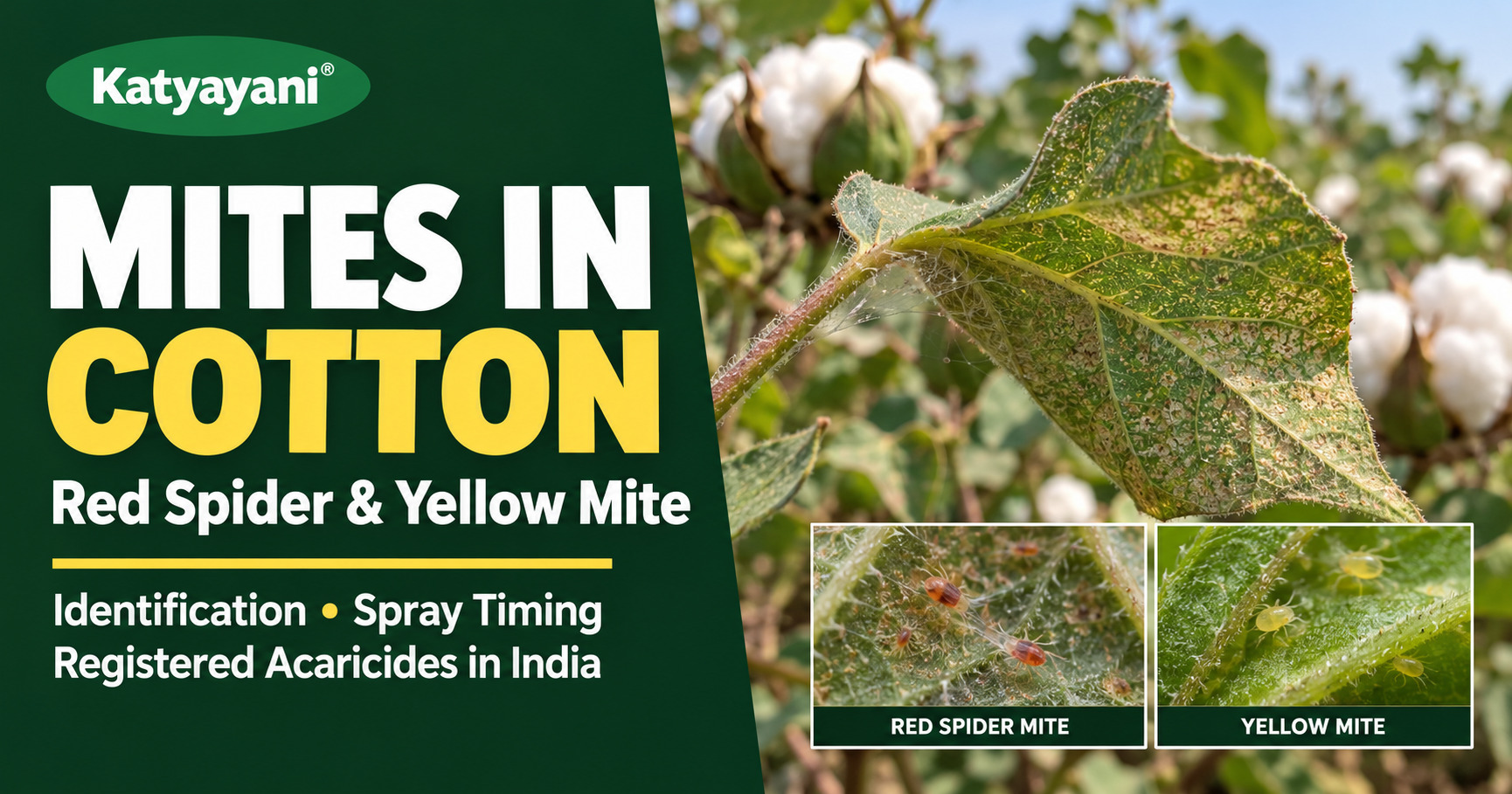
Cotton mites are tiny sucking pests that live on the underside of leaves. The red spider mite (Tetranychus) causes pale speckles that turn bronze or red, with fine webbing. The yellow or broad mite (Polyphagotarsonemus latus) makes young top leaves curl, harden and stay small. Check leaf undersides with a 10x lens, scout twice a week in hot, dry spells and act only when mites are spreading, not on a few plants. In the CIB&RC list (up to 30 September 2025) only two single-ingredient acaricides have a cotton row that names mites: spiromesifen 22.9 percent SC and fenpyroximate 5 percent EC. Rotate, spray the leaf underside with 500 litres of water per hectare, and avoid pyrethroid and similar sprays that kill the mites' natural enemies and make mites flare.
 13 min
Choose the sprayer by the job, not the price. TNAU lists a battery knapsack at about 1.5 hectares a day and a petrol knapsack power sprayer at 3 to 4 hectares a day. Use a flat fan nozzle for broadcast herbicide, a hollow cone nozzle where spray must reach under leaves (many insecticides and fungicides), and a flood jet for high rates. Read the label for water per acre, calibrate with plain water on a marked strip, spray in calm cool hours, wear the protection the label asks for, and clean the tank, hose and nozzle after every product. Drone spraying has its own national rules: check the label, CIB&RC and DGCA first.
 10 min
Biopesticides are pesticides made from natural materials: living microbes such as Bacillus thuringiensis (Bt), Trichoderma and Beauveria, plant-based compounds such as neem, and natural chemicals such as pheromones. EPA groups them into three classes: biochemical, microbial and plant-incorporated protectants. They are usually less toxic and more specific than chemicals, but slower, shorter-lived and best used within IPM.
 16 min
The soil microbiome is the whole community of microscopic life in soil (bacteria, archaea, fungi, protists, viruses, and small animals like nematodes) together with their genes. A gram of healthy topsoil commonly holds 100 million to 1 billion culturable bacteria, and far more kinds than that when counted by DNA. These organisms recycle nutrients, build soil crumbs, store carbon and compete with disease organisms. Adding organic matter, keeping roots and residue in the soil, and not over-using nitrogen are the best supported ways to feed them.
 6 min
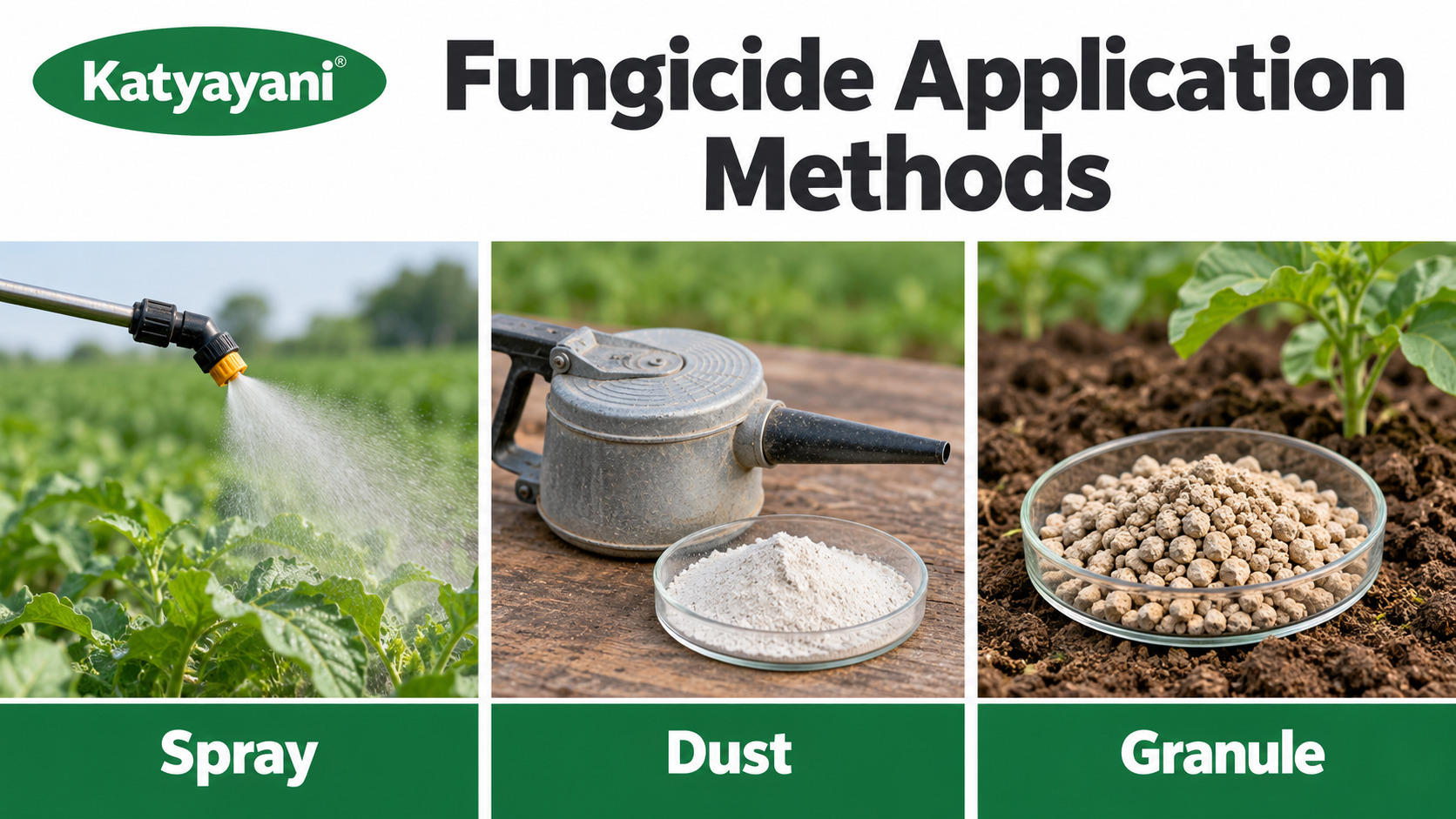
Match the method to where the disease lives. Use foliar spray for leaf diseases, seed treatment and soil drench for root and seed-borne diseases, and granules in the furrow at planting.
 12 min
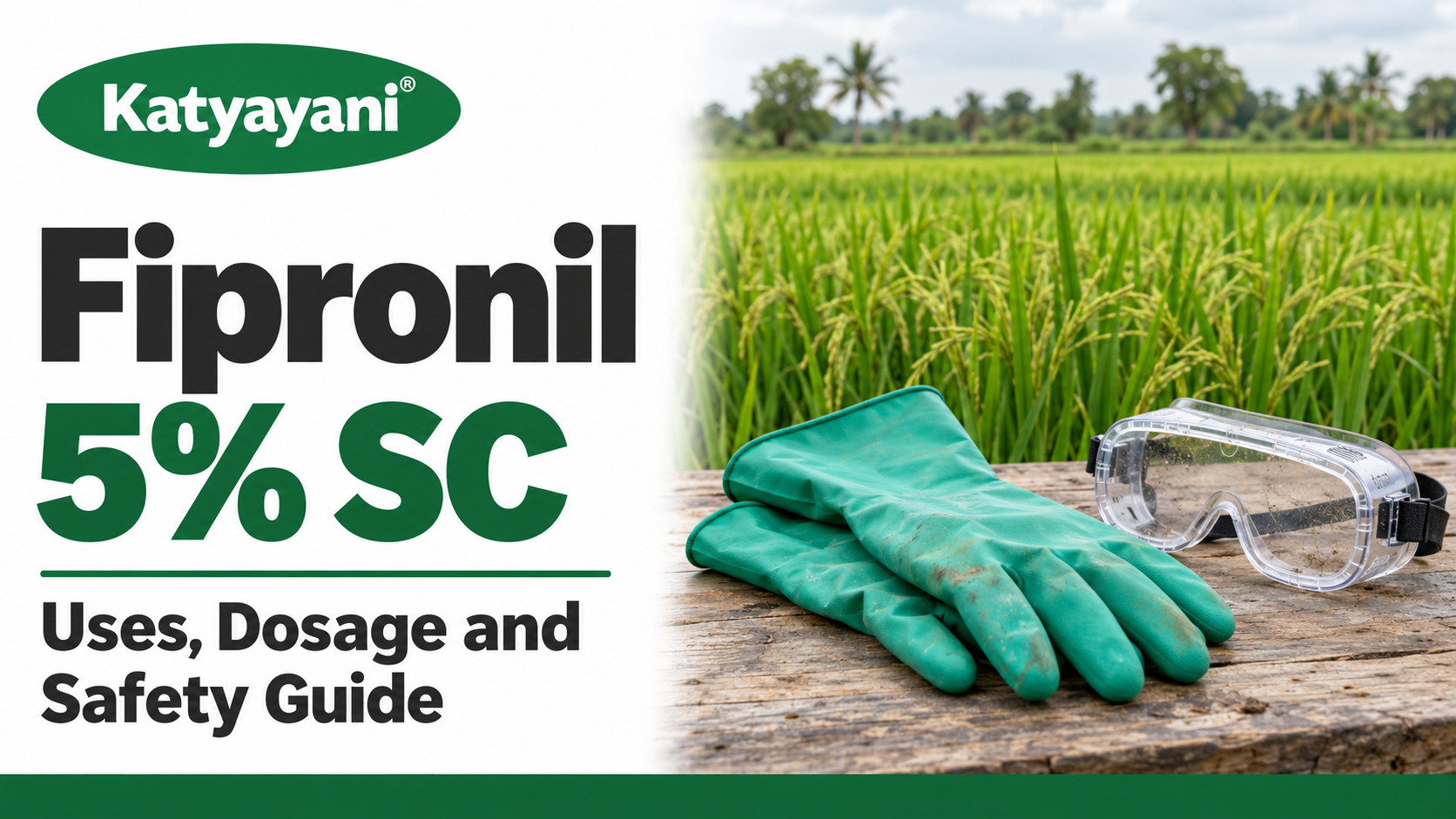
Fipronil 5% SC is a phenylpyrazole insecticide. The CIB&RC list shows it for rice (stem borer, hoppers, gall midge), cabbage (diamondback moth), chilli (thrips, aphids, fruit borers), sugarcane (early shoot and root borer) and cotton (aphid, jassid, thrips, whitefly, bollworms). Printed doses are 800 to 2,000 ml per hectare in 500 litres of water, which is roughly 320 to 810 ml per acre. Waiting periods range from 6 days in cotton to 270 days in sugarcane. It is not listed for termites or household use. Fipronil is highly toxic to bees and fish. Always follow your own pack label.
 6 min
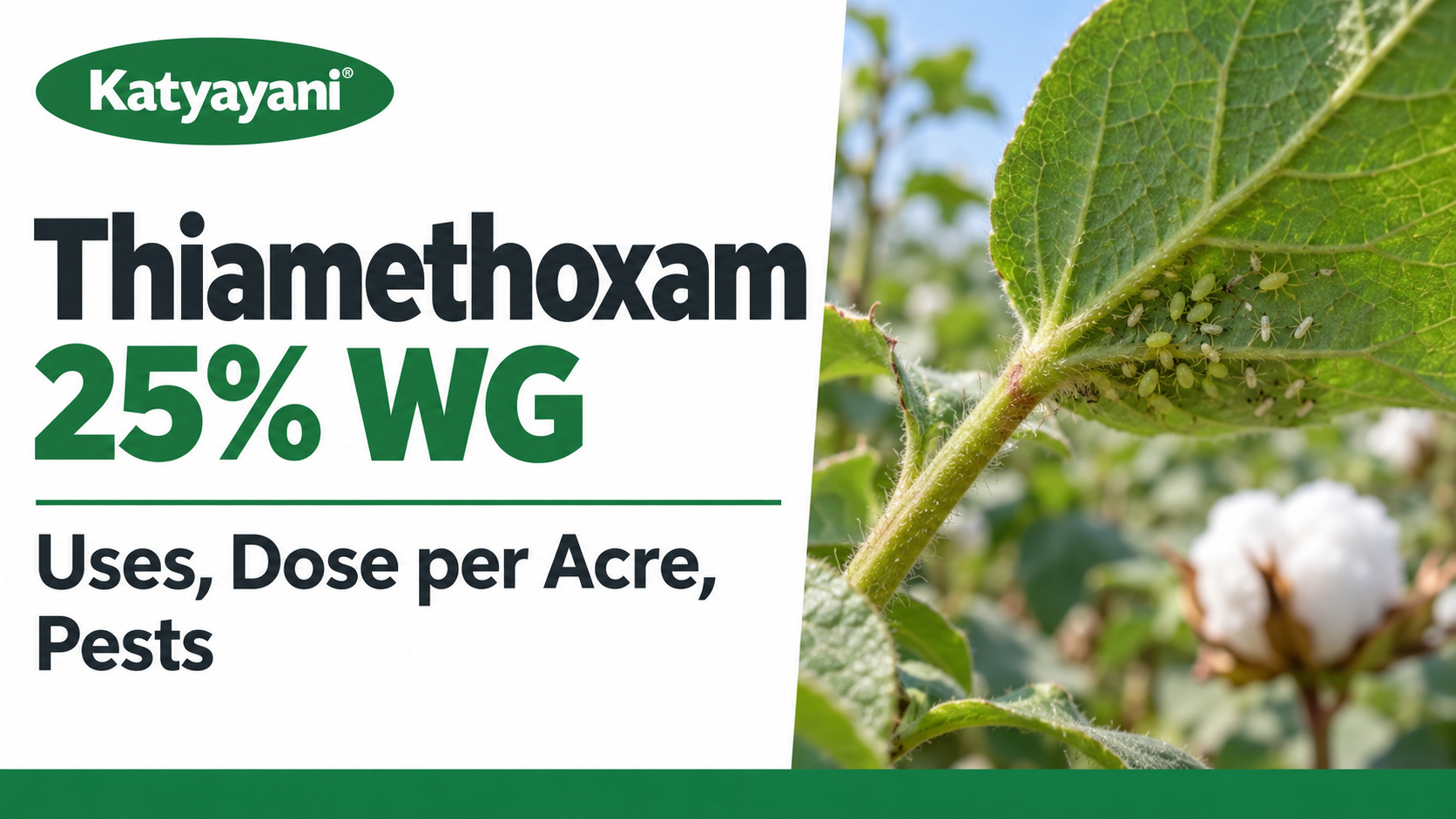
Thiamethoxam 25% WG is a systemic insecticide for sucking pests like aphids, jassids, whitefly, thrips and hoppers. Common foliar dose is 40-80 g per acre in 150-200 litres of water.
 11 min
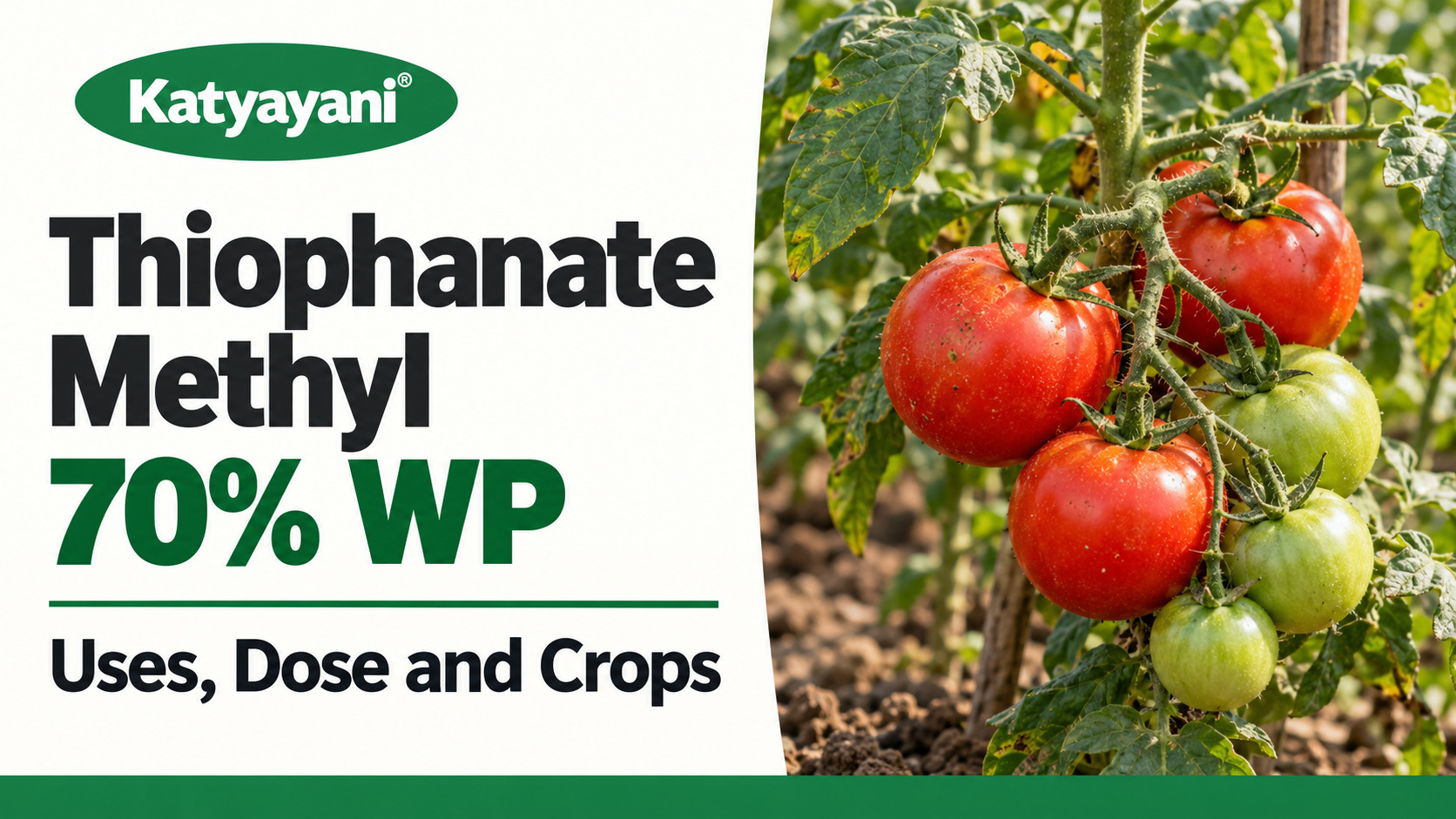
Thiophanate methyl is a fungicide of the benzimidazole family (FRAC group 1). In the official CIB&RC list, the 70% WP formulation is printed for papaya powdery mildew, apple scab, tomato ring rot, bottle gourd anthracnose, grapes, rice blast and sheath blight, cotton Alternaria leaf spot and grey mildew, and soybean anthracnose (pod blight). The usual figure is 715 g of product per hectare in 750 to 1000 litres of water (about 289 g per acre, our calculation), with a waiting period from 1 to 47 days depending on the crop. For any crop or disease not in the list, check the label and the CIB&RC registration before you spray.
 12 min
For chana, use a Rhizobium culture whose label names chickpea or gram. TNAU says one 200 g packet of carrier culture, mixed in 200 ml of rice kanji, treats 10 kg of seed. Dry the seed in shade for about 30 minutes and sow within 24 hours. PSB can be mixed with Rhizobium. Put any fungicide on first and the biofertilizer last, because TNAU says bacterial cultures must not be mixed with fungicide, insecticide, herbicide or fertiliser. Liquid products use much smaller volumes, so follow the label. Biofertilizer supports a fertiliser plan; it does not replace a soil test.
 5 min
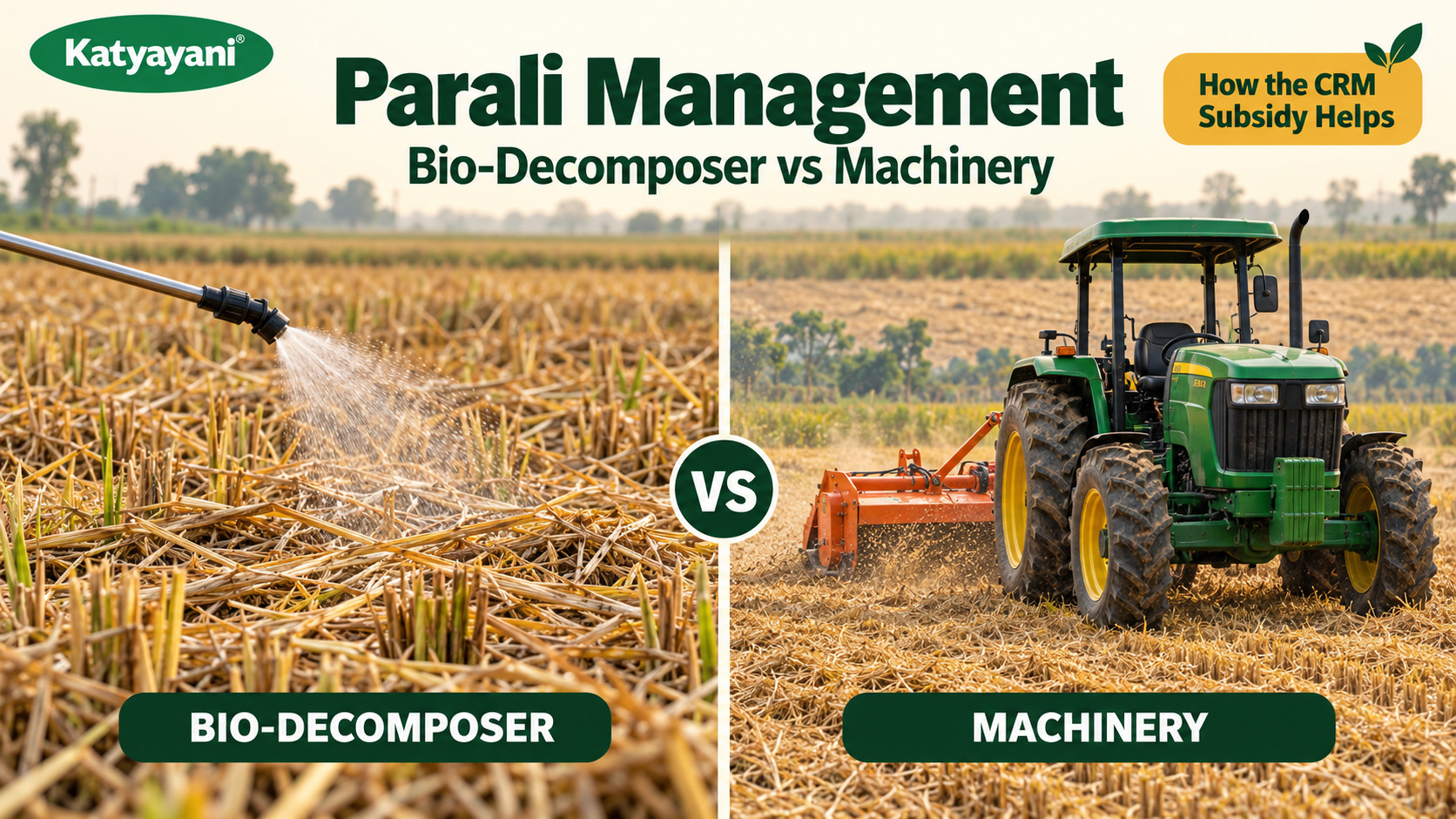
For parali management, a bio-decomposer such as the ICAR-IARI PUSA decomposer suits farmers who have 20 to 25 days before wheat sowing and can keep the field moist. If the gap is shorter, a Happy Seeder or Super Seeder is the faster option, and the CRM scheme pays 50% of machine cost to individual farmers and 80% to CHCs.