Loading…
Loading…
Explore guides on agri business, licenses, registrations, and compliance requirements.
22 articles
 18 min
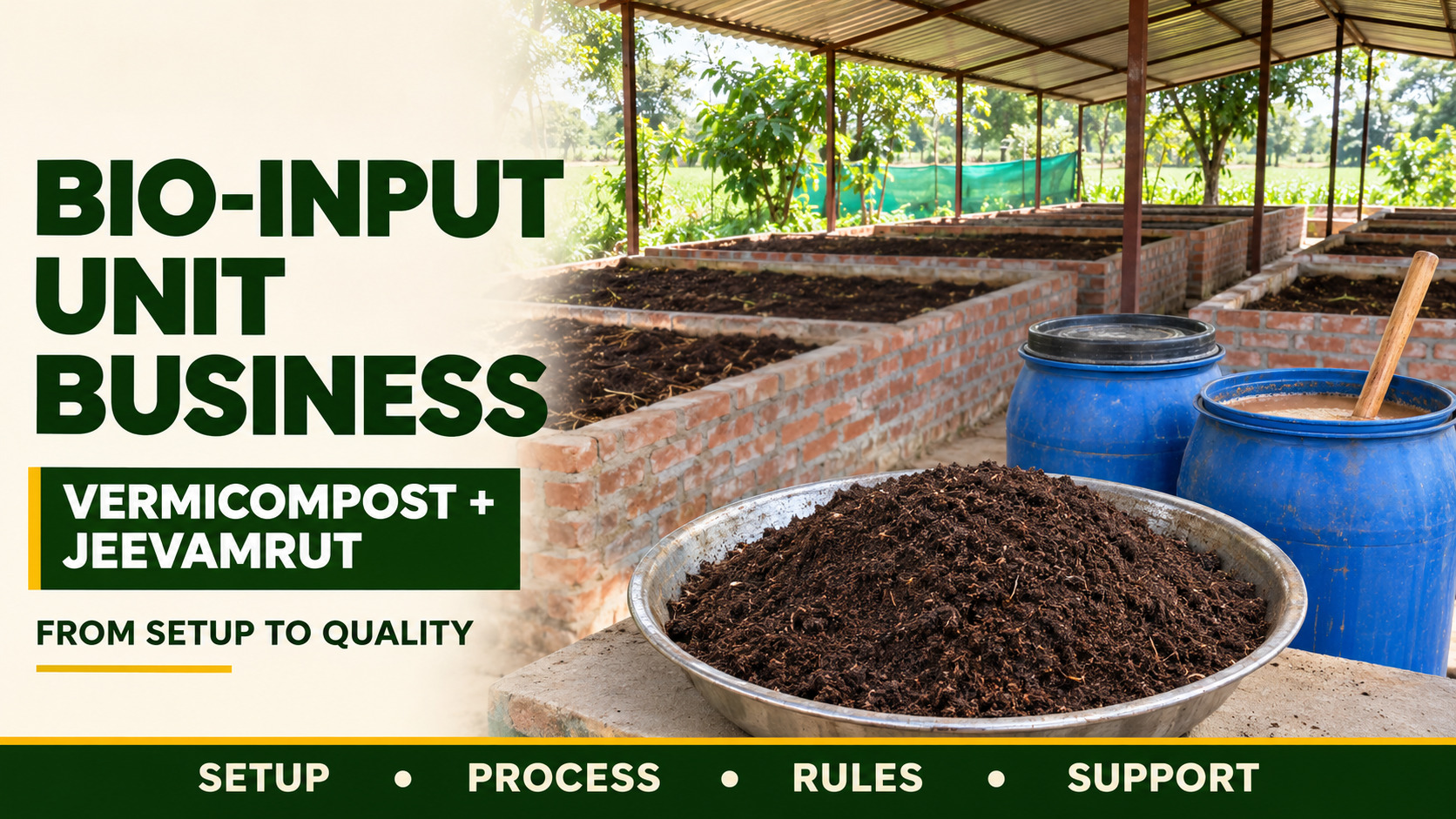
A bio-input unit makes vermicompost or jeevamrut from cow dung, plant waste and worms and sells it nearby. Under the National Mission on Natural Farming a Bio-input Resource Centre gets Rs 1 lakh in two tranches of Rs 50,000, but shed and rent are not covered, and the guideline names natural farming inputs, not vermicompost. Vermicompost sold in packs must meet the FCO standard: 15 to 25 percent moisture and at least 18 percent organic carbon in the copy we read. Start with worm beds in a shaded shed, a cow-dung supply and a buyer list.
 15 min
CIB&RC registration is the central permission, under the Insecticides Act, 1968, that every pesticide needs before it is made, imported or sold in India. Section 9(3) is regular registration, Section 9(3B) is a provisional two-year registration for a product new to India, and Section 9(4) gives a second applicant a certificate for an already registered product on the same conditions. Applications go online on the CROP portal, where the registration fee set by the Rules is paid.
 16 min
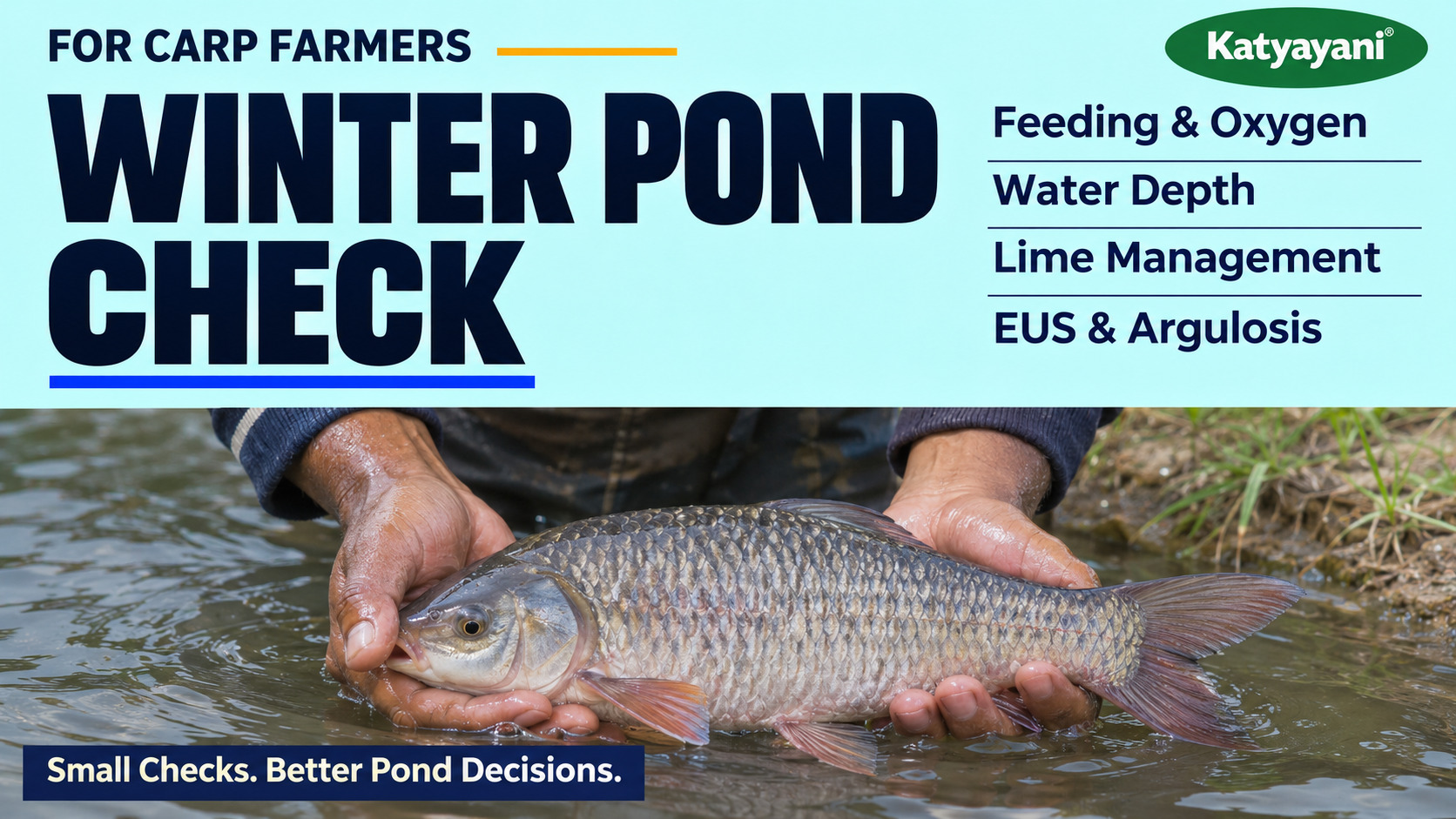
In winter, keep pond water about 6 feet deep so fish can rest in the warmer bottom layer. When water falls below 15 C add tube well water at dusk, cut feed by 25 to 75 percent as it gets colder, and stop feed below 10 C, as GADVASU advises. Stop manure and urea or DAP, aerate in the early hours and on cloudy days, and lime only after a pH check. Fin rot, gill rot, ulcers (EUS) and fish lice (argulosis) are the winter diseases, and ICAR links EUS deaths to crowded, poor-quality ponds in winter. Harvest fish above 500 g before the cold deepens.
 18 min
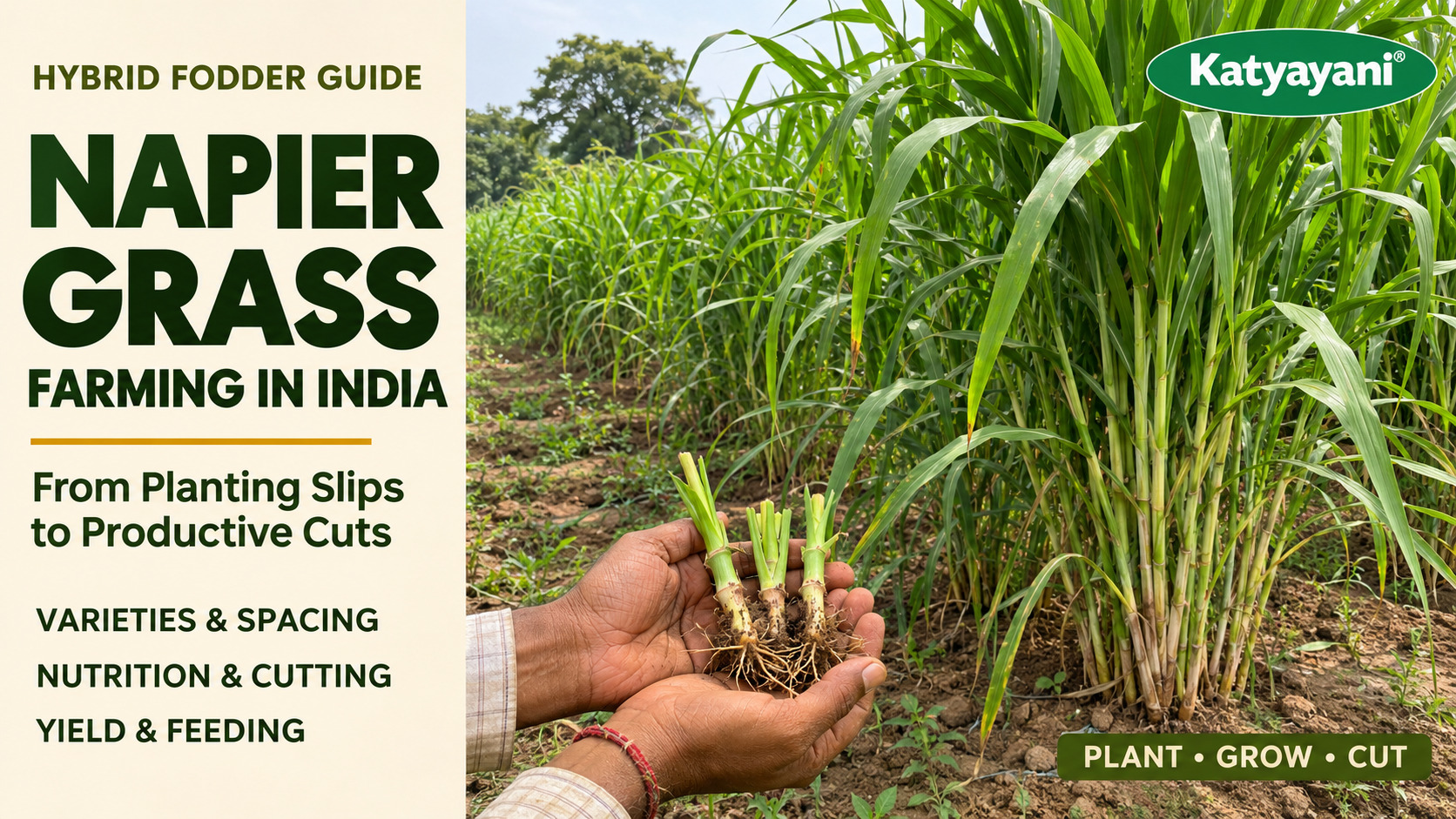
Hybrid Napier (Napier bajra hybrid) is a perennial, sterile fodder grass planted from rooted slips or two-budded stem cuttings, not seed. TNAU gives 33,333 slips or cuttings per hectare at 60 x 50 cm, 25 t FYM and NPK 75:50:40 kg per hectare at planting, 75 kg N at 30 days and 75 kg N after every cut. The first cut comes at 75 to 80 days (TNAU) or 60 to 65 days (ICAR-NDRI), then every 40 to 45 days, leaving a 5 to 8 cm stubble. Official yields range from 100 to 450 t green fodder per hectare per year depending on variety, climate and feeding. It needs irrigation, hates waterlogging, goes dormant below 15 degrees C, and carries 3 to 6 percent oxalate, so feed it with legumes and calcium.
 17 min
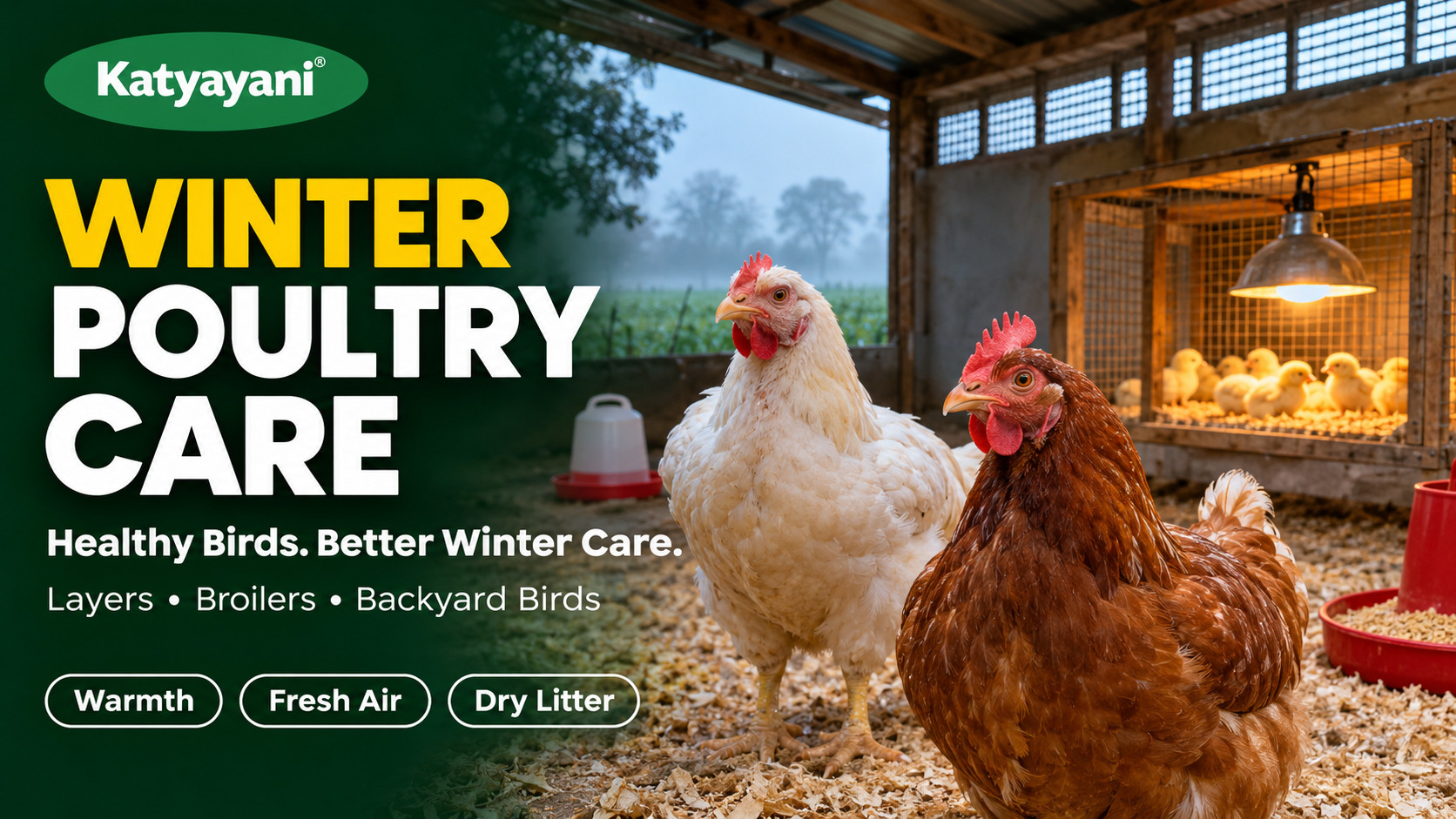
In winter, keep day-old chicks at about 35 C (95 F) at chick level in week 1 and cut about 5 F each week, as TNAU and the Hy-Line breeder guide show. Close the sides with curtains but leave an opening near the ceiling, as GADVASU advises, because wet litter and ammonia hurt more than cold air. Add litter depth, keep feeders full and water unfrozen, give laying hens about 16 hours of light, and give the Ranikhet booster before the cold starts. Watch the birds: huddling means cold, panting means hot.
 12 min
DAESI stands for Diploma in Agricultural Extension Services for Input Dealers. MANAGE, Hyderabad, runs it through State Agricultural Management and Extension Training Institutes (SAMETIs) and nodal training institutes, to turn practising input dealers into para-extension professionals. Per the MANAGE page, it is open to practising dealers and aspirants who have at least appeared for the 10th class examination. It runs for 48 weeks, with weekly contact classes in physical mode on Sundays or market holidays. Karnataka has two state nodal bodies, SAMETI (South) at UAS Bengaluru and SAMETI (North) at UAS Dharwad. The MANAGE course pages I read do not say DAESI is a pesticide licence qualification, so ask your licensing office what it accepts. For payment, batch dates and seats, check the current MANAGE page and SAMETI.
 19 min
A carbon credit is a certificate for one tonne of carbon dioxide equivalent that a project has removed or avoided, checked by a third party. A single small farm rarely earns from it alone. Farmers join group projects run by a company, FPO or NGO. As of the 21 July 2026 Lok Sabha answer, only two agriculture methodologies are approved under the government CCTS offset route (livestock manure methane, and improved rice management), and the government says no farmer income assessment has been done. Payment depends on credits issued, price and deductions, and can take years. Never pay an upfront fee to join.
 11 min
OEM agrochemical manufacturing means a factory makes a product to your specification and you sell it as your own. Private label usually means you take a ready formulation the factory already sells and put your brand on it. In India the key question is the same for both: who holds the CIB&RC registration and the state manufacturing licence. The label must name the true manufacturer in both models.
 14 min
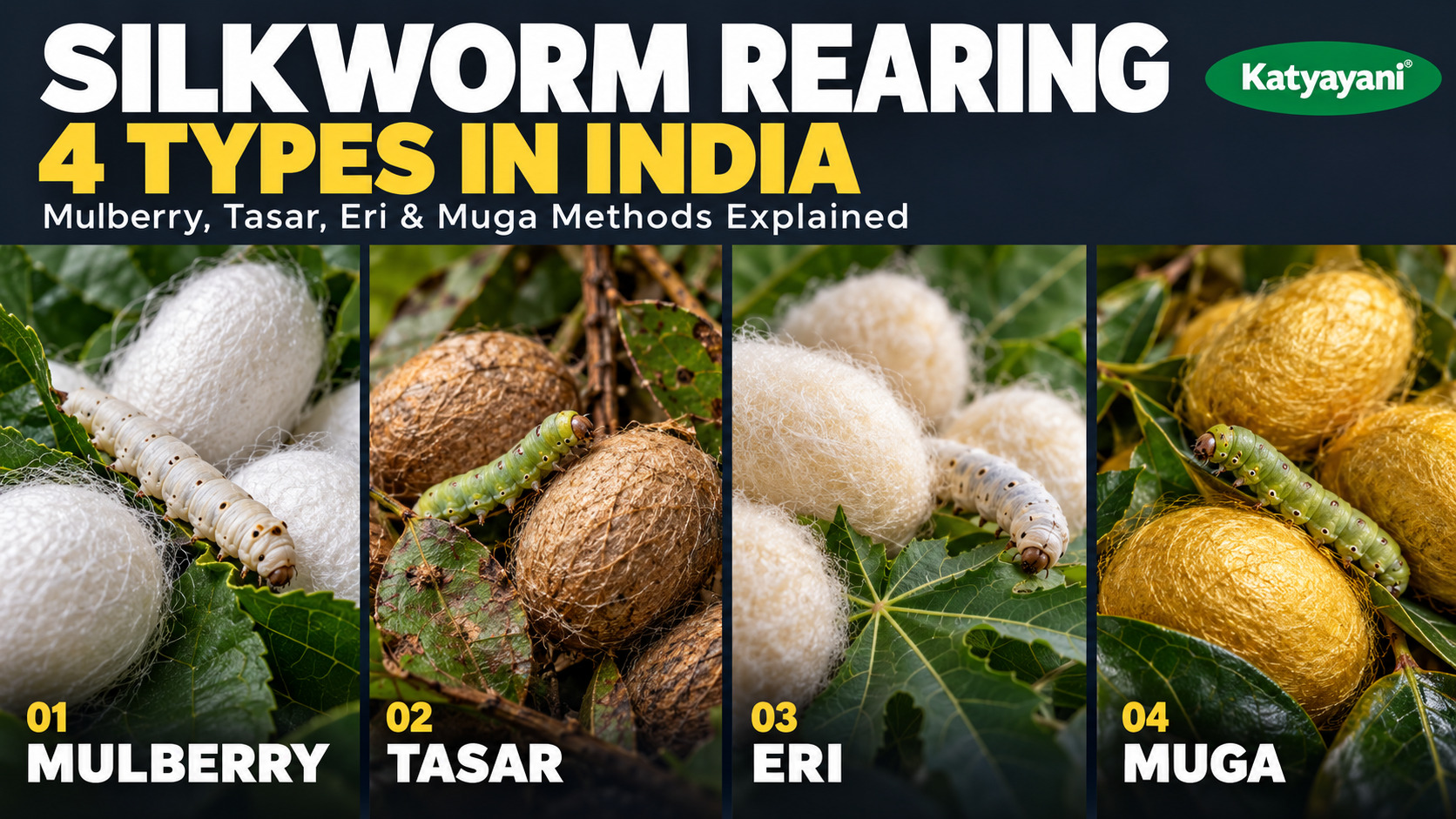
India has four main silk groups: mulberry, tasar, eri and muga. Some lists count five, because oak tasar is counted apart from tropical tasar. Mulberry (Bombyx mori) is fully domesticated and reared indoors on mulberry leaves. Eri is reared indoors, mainly on castor. Tasar and muga are reared outdoors on trees, so weather and predators matter more. Mulberry rearing runs in two stages: chawki (young worms) and late-age rearing. TNAU advises a rearing house at 26 to 28 degrees C and 60 to 70 percent humidity. Get training and disease-free layings from the sericulture department before investing.
 16 min
Contract farming is farming done under an agreement signed before the crop is grown: a buyer (the sponsor) agrees to buy the produce, and the farmer agrees to grow it to a set quality, quantity and delivery date. Price may be fixed or formula-based, and the buyer often supplies seed, inputs and advice. FAO describes five models.
 12 min
Agribusiness is the whole business system around agriculture: supplying inputs such as seed and fertiliser, farming, then storing, processing, transporting, financing and selling farm produce. Farming is one link in it. The term is credited to Harvard Business School professors John Davis and Ray Goldberg (1957). A seed company, a cold store, a dal mill and a farmer group that sells in bulk are all agribusinesses. In India, support includes the Agriculture Infrastructure Fund (interest subvention of 3 percent a year on loans up to Rs 2 crore) and the PMFME scheme for micro food processing. Check the official portals for current rules.
 17 min
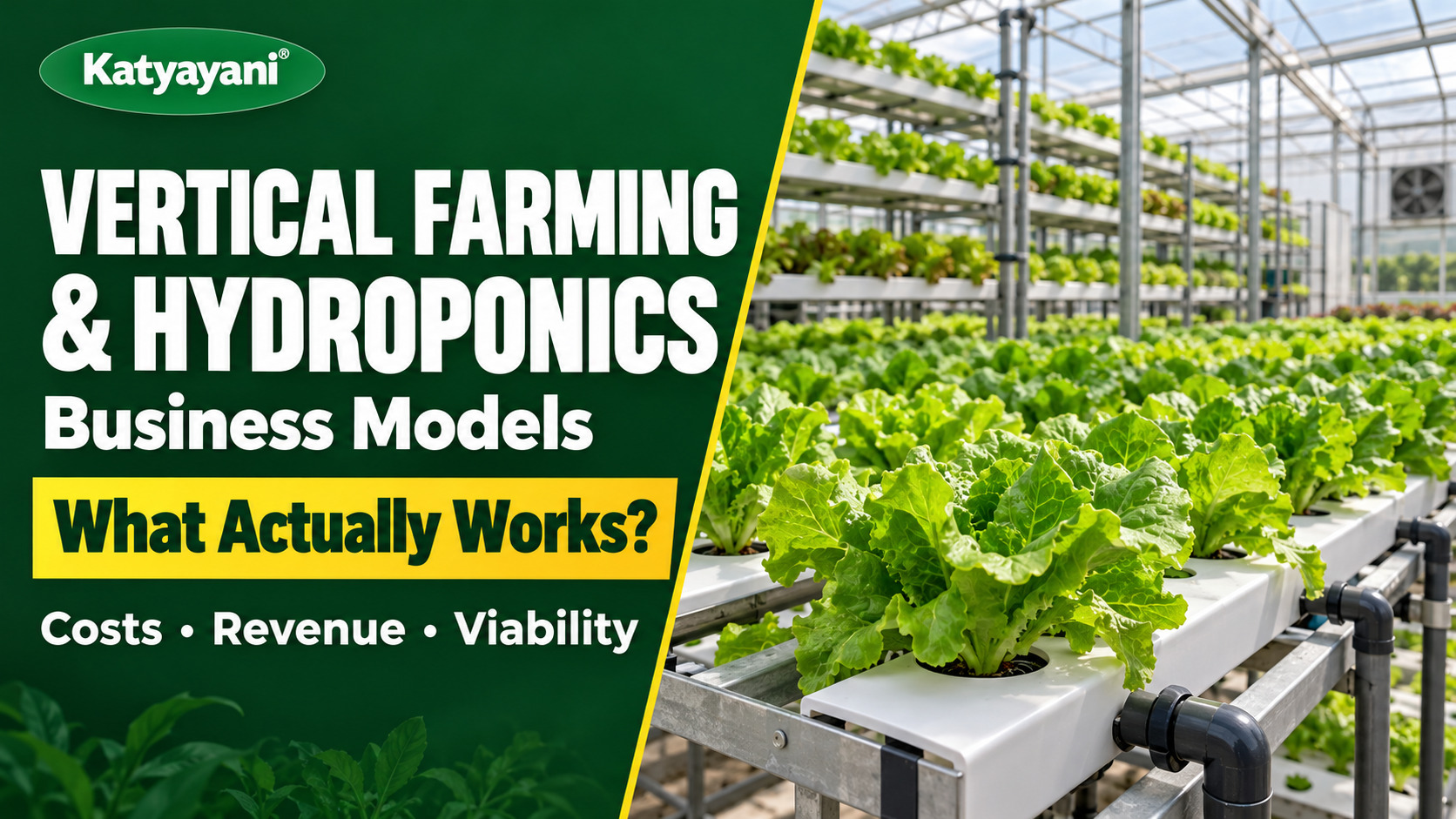
Vertical farming grows crops in stacked layers under artificial light, usually in water-based systems called hydroponics. It can give many times the yield per square metre, but it uses far more electricity per kilogram than field or greenhouse growing. Several heavily funded companies, including Plenty, Bowery and AeroFarms, went bankrupt or shut down. An Indian study of 23 polyhouse hydroponic farms found profit on paper, but its price data conflict, so no income figure is safe to promise.
