
 18 min read
The International Year of the Woman Farmer 2026 is a UN year. The UN General Assembly declared it in resolution A/RES/78/279, adopted on 2 May 2024, and invited FAO, with the other Rome-based UN agencies, to run it; FAO launched it in Rome on 4 Dec 2025. FAO says it aims to raise awareness of women in agrifood systems and push for policies and investment, and it reports that women were 42% of the world agrifood workforce in 2023. In India, MoSPI data for 2022-23 show 76.2% of rural female workers in agriculture, and PIB lists schemes for women: DAY-NRLM and MKSP, Namo Drone Didi, women-friendly farm tools, and farm credit through the Kisan Credit Card.
What is the International Year of the Woman Farmer 2026?
The International Year of the Woman Farmer 2026 (IYWF 2026) is a United Nations observance that puts the work of women in food and farming in front of governments and the public for one year. FAO says it spotlights the roles women play across agrifood systems, from production to trade, which often go unrecognised.
One detail helps readers a lot. FAO defines women farmers as "all women working in agrifood systems in different capacities across all segments of value chains." So the Year is not only about a woman who owns a field. It covers the woman who sows and weeds on a family plot, the labourer who harvests, the SHG member who runs a processing unit, and the woman who sells vegetables in the mandi. See the FAO Year page.
FAO also says the Year fits with the UN Decade of Family Farming 2019 to 2028. Think of it as a spotlight inside a longer programme. The spotlight lasts one calendar year. The work behind it, such as land rights, credit and training, is meant to last longer.
| Question | Short answer | Source |
|---|---|---|
| What is it? | A UN international year, 2026, for women working across agrifood systems | FAO Year page |
| Who is a "woman farmer" here? | All women working in different capacities across all segments of value chains | FAO Year page |
| Which bigger programme does it fit with? | UN Decade of Family Farming 2019 to 2028 | FAO Year page |
| Who runs it? | FAO, with the other Rome-based UN agencies, as the resolution invites | FAO newsroom, 2 May 2024 |
Who declared 2026 the International Year of the Woman Farmer, and when?
The UN General Assembly declared it in resolution A/RES/78/279, adopted on 2 May 2024 at its 78th session. FAO says the United States proposed it and that it was adopted by consensus. The resolution invites FAO, working with the other Rome-based UN agencies, to help carry out and mark the Year.
The UN document says the resolution was adopted at the 77th plenary meeting on 2 May 2024, without reference to a Main Committee (draft A/78/L.59). It decides "to declare 2026 the International Year of the Woman Farmer", asks FAO to report to the General Assembly at its eighty-second session, and says the costs should be met through voluntary contributions. The UN text does not name the proposer; the United States detail comes from the FAO newsroom item of 2 May 2024, which also welcomed the decision.
The launch came later. FAO held the official opening ceremony at its Rome headquarters on 4 December 2025, in hybrid format, co-hosted with Jordan and Ireland, during the 179th session of the FAO Council. FAO's event page says it was meant to bring together Members, UN entities, women farmers' networks and other stakeholders. See the FAO opening ceremony page.
What are the goals and the theme of the Year?
FAO's Year page gives three aims: raise awareness of what women do in agrifood systems and the problems they face, encourage policies and investment that back them, and build links among existing international efforts. It also says the Year promotes action to close gender gaps and improve women's livelihoods. It states no single slogan theme.
The challenges named on the FAO Year page are land tenure, money, technical limits, and poor access to services and education. In plain words: many women work the soil but do not hold the land papers, cannot easily get a loan, and miss the training that reaches men first. FAO also says women farmers typically work smaller plots than men.
Some pages show a "theme" for the Year. I did not find one on the FAO Year page, so I do not print one. India's main Year-linked event in the PIB backgrounder had its own title: "Driving Progress, Attaining New Heights" (see the India section below). That is a conference title, not the title of the global Year.
| Goal in FAO's words (shortened) | Our plain-words reading |
|---|---|
| Raise awareness of women's roles and challenges | Counting unpaid and informal farm work, and listening to women farmers |
| Encourage policies and investments | Credit, inputs, land papers and extension that reach women |
| Promote synergies among initiatives | Schemes, banks, research bodies and groups working together |
| Close gender gaps, improve livelihoods | Equal yield, equal pay, safer work and better income |
How many women work in farming and food systems worldwide?
FAO's Year page says women made up 42% of the global agrifood workforce in 2023. In a 2024 newsroom item, FAO quoted its report The Status of Women in Agrifood Systems and gave 39% for women in the global agricultural labour force. The two numbers measure slightly different groups, so do not mix them.
The first figure counts the whole agrifood workforce, which includes processing, trade and services along the chain. The second counts agricultural labour. A reader who writes "42%" should say "agrifood workforce, 2023". A reader who writes "39%" should say "agricultural labour force, FAO report". Both are on FAO pages: Year page and 2024 newsroom item.
There is a further number in the 2024 item: a rise of 1 degree Celsius in the long-term average temperature is linked to a 34% drop in the income of female-headed households compared with male-headed ones, in an analysis covering 24 countries across five world regions. Think of a household where the woman runs the farm alone. A hotter year hits her income harder than it hits the neighbour's.
How big is the gender gap on farms, in pay and in heat stress?
FAO's Year page gives four hard numbers. Women-managed farms produce 24% less than men-managed farms of the same size. Each day of extreme heat cuts the value of women farmers' crops by 3% relative to men. Women in agrifood wage jobs earn 78 cents for each dollar men earn. Unpaid care work adds at least USD 10.8 trillion a year.
The page adds promises that sit on the other side of the gap. Closing the gaps in farm productivity and wages could raise global GDP by USD 1 trillion and reduce food insecurity for 45 million people. Targeted action for rural women could raise incomes for 58 million more people and boost resilience for 235 million. It also says that cutting gender gaps in employment, education and income could remove 52% of the food insecurity gap. These are FAO estimates; the Year page does not name the report for each one.
| Gap | FAO figure | Year / source note |
|---|---|---|
| Land productivity (same farm size) | Women-managed farms produce 24% less | FAO Year page; year not stated there |
| Extreme heat, each day | Value of women farmers' crops falls 3% relative to men | FAO Year page; year not stated there |
| Wage jobs in agrifood systems | 78 cents for each dollar men earn | FAO Year page; year not stated there |
| Unpaid care work by women and girls | At least USD 10.8 trillion a year to the global economy | FAO Year page; year not stated there |
| Prize for closing productivity and wage gaps | Could raise global GDP by USD 1 trillion | FAO Year page; estimate |
The ICAR Gender Strategy repeats the 24% gap and cites FAO 2023 for it, so you may say "FAO, 2023" for that one figure when you cite the ICAR document.
What share of India's women work in agriculture?
MoSPI's Women and Men in India 2023, using the PLFS 2022-23 survey, shows 76.2% of rural female workers in agriculture, against 49.1% of rural male workers. The ICAR Gender Strategy, citing PLFS 2023-24, gives 76.9% of rural female workers. Roughly three in four rural working women are in agriculture.
The MoSPI table is worth reading in full because it shows the other side. In rural India, 49.1% of men work in agriculture, but 19.0% work in construction, while only 4.2% of rural women do. In urban India, agriculture is only 4.7% of male workers and 11.7% of female workers. The MoSPI text says three-fourths of rural female workers and half of rural male workers are in agriculture. The table is on the MoSPI page.
| Group | Share working in agriculture | Survey and source |
|---|---|---|
| Rural women | 76.2% | PLFS 2022-23, MoSPI Women and Men in India 2023 |
| Rural men | 49.1% | PLFS 2022-23, MoSPI Women and Men in India 2023 |
| Urban women | 11.7% | PLFS 2022-23, MoSPI Women and Men in India 2023 |
| Urban men | 4.7% | PLFS 2022-23, MoSPI Women and Men in India 2023 |
| Rural women (another reading) | 76.9% | PLFS 2023-24 as cited in ICAR Gender Strategy (2025) |
| Rural men (another reading) | 59.8% | PLFS 2023-24 as cited in ICAR Gender Strategy (2025) |
The ICAR strategy adds two details about crop production, including horticulture: women account for 31% of the rural workforce there, spend an average of 274 minutes a day on it (men 330 minutes), and contribute 27.2% of its output. It cites Kumar et al. 2022 and NSO 2020 for this. It also says women's share in crop production is 90% and above in Nagaland, Meghalaya, Assam, Arunachal Pradesh, Sikkim and Bihar, and lower in Punjab (10.1%), Maharashtra (36.1%) and Rajasthan (38.4%), citing ICAR-CIWA 2024.
Why do the official numbers for women in Indian farming differ?
They differ because of the survey year, the age group counted, and whether the figure is a share of women workers or a share of all farm workers. PIB says 80% of rural women are in agriculture and allied sectors. MoSPI says 76.2%. ICAR says 76.9%. All three describe the same truth: most rural working women farm.
Here is a simple rule when you write or speak. Name the source and the year every time. Say "76.2% of rural female workers, PLFS 2022-23, MoSPI" instead of "80% of women farm". The PIB backgrounder of 23 March 2026 says that 80% of rural women are engaged in agriculture and allied sectors, of whom 33% are agricultural labourers and 48% are self-employed farmers. See the PIB backgrounder.
There is one more trap. A number such as "women are 42% of the workforce" sounds like an Indian figure but is FAO's world figure for 2023. And "46.1% of the total workforce is in agriculture and allied activities" is the PLFS 2023-24 figure for men and women aged 15 and above, quoted in the ICAR strategy. Mixing a world number with an Indian number is the most common error in Year articles.
| Statement you may see | What it really measures | Source and year |
|---|---|---|
| 80% of rural women in agriculture and allied sectors | Rural women; 33% labourers, 48% self-employed | PIB backgrounder, 23 Mar 2026 |
| 76.2% of rural female workers in agriculture | Rural female workers | MoSPI, PLFS 2022-23 |
| 76.9% of rural female workers in agriculture | Rural female workers | ICAR Gender Strategy, PLFS 2023-24 |
| 42% of the workforce | World agrifood workforce, not India | FAO Year page, 2023 |
How much farmland do women hold in India?
The ICAR Gender Strategy says that, in the Agriculture Census 2015-16, women were 13.98% of operational landholders, up from 12.79% in 2010-11, and men were 86.02%. Of the holdings operated by women, individually or jointly, 72% were marginal, with an average size of 0.35 ha.
What does that mean for a woman farmer? The ICAR text says that even when women legally own land, they often face restrictions in accessing credit, technical knowledge and inputs. It adds that limited land ownership reduces their bargaining power, constrains decision-making and hinders long-term planning, and that poor asset ownership limits credit support, particularly in the absence of male counterparts.
The census counts "operational landholders", which includes owned, leased, joint and share-cropped land. So 13.98% is not the share of land ownership by title. It is the share of operational holders who are women. Always write it that way. The source is the ICAR Gender Strategy, which in turn cites the Agriculture Census 2015-16.
| Item | Figure | Source |
|---|---|---|
| Women among operational landholders, 2010-11 | 12.79% | ICAR Gender Strategy citing Agriculture Census |
| Women among operational landholders, 2015-16 | 13.98% | ICAR Gender Strategy citing Agriculture Census 2015-16 |
| Men among operational landholders, 2015-16 | 86.02% | ICAR Gender Strategy citing Agriculture Census 2015-16 |
| Women-operated holdings that are marginal | 72% | ICAR Gender Strategy citing Agriculture Census 2015-16 |
| Average size of a women-operated holding | 0.35 ha | ICAR Gender Strategy citing Agriculture Census 2015-16 |
What has India done for the Year so far?
India hosted the Global Conference on Women in Agri-Food Systems (GCWAS-2026) in New Delhi from 12 to 14 March 2026 at the ICAR Convention Centre. PIB says over 700 participants came, and the Year was the setting. The conference title was "Driving Progress, Attaining New Heights". PIB also published a backgrounder on 23 March 2026.
According to the PIB backgrounder, the conference brought together scientists, policymakers, industry leaders, entrepreneurs, women farmers, start-ups and students. It had a Women Farmers' Forum, a Youth Forum and an exhibition of women-oriented technologies and start-up ideas. Its aim was to produce recommendations, global best practice and a roadmap for fairer agri-food systems. The write-up is the PIB backgrounder of 23 March 2026.
People also ask which State has declared 2026 a year of agriculture. Madhya Pradesh has. A PIB release of the Ministry of Agriculture and Farmers Welfare (11 Apr 2026) on the Advanced Agriculture Festival in Raisen quotes the Chief Minister saying the state government has proclaimed the entire year as "Kisan Kalyan Varsh", the Year of Farmers' Welfare. News reports use other spellings, such as Krishak Kalyan Varsh. It is a State programme and is separate from the UN Year of the Woman Farmer.
Which government schemes help women farmers in India?
The PIB backgrounder of 23 March 2026 lists schemes with a woman angle: the Agriculture Infrastructure Fund, Agricultural Marketing Infrastructure, SMAM custom hiring, Namo Drone Didi, DAY-NRLM with MKSP, the Modified Interest Subvention Scheme through the Kisan Credit Card, ATMA, PM-Kisan, the Pulses Mission, and the 10,000 FPO scheme.
Some schemes reserve a share for women. The Department of Agriculture said in 2021 that guidelines of its beneficiary-oriented schemes ask States and agencies to spend at least 30% on women farmers (PIB, 30 Jul 2021). The Pulses Mission guidelines, as quoted by PIB in 2026, say States must allot at least 20% of funds to women farmers. Others, such as AMI, give women a higher subsidy rate.
| Scheme | What it offers women farmers (as the source states) | Figure and source |
|---|---|---|
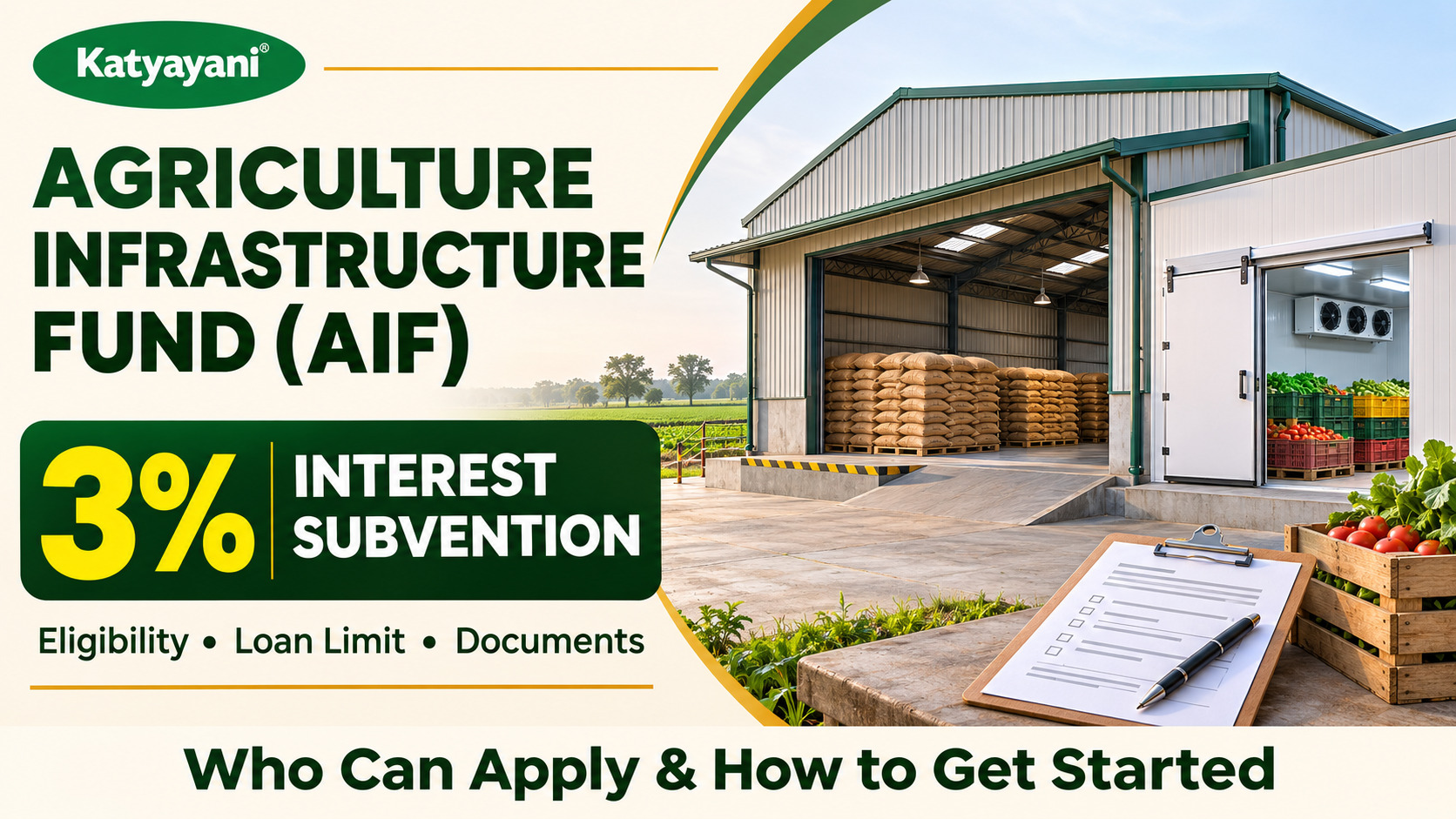
| Agriculture Infrastructure Fund (AIF) | Loans for farm-gate storage and post-harvest assets, with special emphasis on women farmers; interest subvention of 3% a year on loans up to Rs 2 crore for up to 7 years; maximum interest rate 9% | 8,190 projects worth Rs 2,377 crore sanctioned to women (PIB backgrounder, count dated 28 Feb 2025 in the text) |
| Agricultural Marketing Infrastructure (ISAM/AMI) | Godown and warehouse subsidy of 33.33% for women farmers, SC/ST promoters, FPOs and farmers in North-Eastern and hilly regions, against 25% in plains | 10,631 storage projects for women beneficiaries since inception, as on 31 Jan 2026 (PIB backgrounder) |
| SMAM custom hiring centres | Help to set up custom hiring centres; 50% assistance up to Rs 5 lakh for drones for small, marginal, SC/ST, North-Eastern and women farmers | PIB backgrounder, 23 Mar 2026 |
| Namo Drone Didi | 80% central assistance up to Rs 8 lakh on a drone package for women SHGs | Rs 1,261 crore outlay (PIB, 24 Mar 2026) |
| DAY-NRLM and MKSP | SHG credit, training and farm livelihoods for women | 10.08 crore women in 92.30 lakh SHGs (PIB, 11 Aug 2026) |
| Kisan Credit Card with MISS | Loans up to Rs 3 lakh at 7% with 1.5% subvention to lenders; awareness drives for women; collateral-free limit raised from Rs 1.6 lakh to Rs 2 lakh from 1 Jan 2025 | PIB backgrounder, 23 Mar 2026 |
| ATMA | Training, demonstrations and Farm Women Food Security Groups (Rs 25,000 each for training, publications and inputs) | 11.61 lakh women trained in 2025-26 up to 28 Feb 2026 (PIB backgrounder) |
| PM-Kisan | Rs 6,000 a year in three instalments of Rs 2,000 for landholding farmer households | 2,15,47,095 women in the 22nd instalment (as on 17 Mar 2026); around 25% of benefits go to women (PIB backgrounder) |
| Pulses Mission (Dalhan Aatmanirbharta) | States to allot at least 20% of funds to women farmers | Outlay Rs 11,440 crore, 2025-26 to 2030-31 (PIB backgrounder) |
| 10,000 FPO scheme | At least one woman on every FPO board; many all-women FPOs | 1,175 FPOs with 100% women shareholders (PIB backgrounder, as of 28 Feb 2026) |
The how-to steps for most of these sit in other posts on this site. For the umbrella list see agriculture subsidy schemes in India. For the PM-Kisan instalment checks see PM-Kisan instalment status. For the pulses angle, the live post on the Dalhan Aatmanirbharta Mission explains the mission itself.
How do DAY-NRLM, SHGs, MKSP and Krishi Sakhis help a woman farmer?
DAY-NRLM, run by the Ministry of Rural Development, organises rural women into self-help groups and backs them with credit, training and livelihoods. PIB reports that 10.08 crore women are in 92.30 lakh SHGs. MKSP is its sub-scheme for women in farming. Krishi Sakhis are trained women who advise farmers in the village.
PIB (4 Aug 2026) states the aim of MKSP as making systematic investments that raise women's participation and productivity in agriculture and build agriculture-based livelihoods. By June 2025 the mission had supported 4.62 crore Mahila Kisans in agro-ecological practices, including 2.09 crore trained in livestock management, with over 3.50 lakh community resource persons such as Krishi Sakhis, Pashu Sakhis, Van Sakhis and Matsya Sakhis, as the backgrounder says (PIB backgrounder). For the mission itself, read PIB, 4 Aug 2026.
The 11 Aug 2026 PIB reply adds three useful points. Women SHGs can get collateral-free loans from scheduled commercial banks and cooperative banks under RBI and NABARD guidelines. The Lakhpati Didi count has reached 3.46 crore; the Lakhpati Didi initiative aims to help SHG members reach an annual income of Rs 1 lakh or more. A 3ie impact study (2025), which covered about 23,000 households in 9 States across rounds in 2019 and 2024, found household income up by 9.5% in NRLM blocks. See PIB, 11 Aug 2026.
Krishi Sakhis deserve a closer look because they are women farmers who train as para-extension workers. The backgrounder says the Ministry of Agriculture and the Ministry of Rural Development have jointly planned to train 70,000 Krishi Sakhis in phases, who then run awareness sessions in SHGs, schools, Anganwadis, panchayats and village organisations on natural farming and soil health. For how SHG credit and bank links work, read the SHG bank linkage programme and SHG loans for women farmers.
| DAY-NRLM result (FY 2022-23 to 2024-25) | Figure |
|---|---|
| Women farmers trained in agro-ecology and livestock management | 2.58 crore |
| Community resource persons such as Pashu Sakhis trained | 2.50 lakh |
| Krishi Sakhis trained as Drone Sakhis | 503 |
| SHG women trained in natural farming | 70,021 |
| Women-led producer companies promoted under the FPO scheme | 800 |
Source for the table: the PIB backgrounder of 23 March 2026.
How can a woman farmer get a loan or a Kisan Credit Card?
A woman farmer has three official routes. She can borrow as an SHG member through a collateral-free SHG loan. She can apply for a Kisan Credit Card, where PIB says loans of up to Rs 3 lakh carry a 7% rate with 1.5% subvention to lenders. And she can use AIF for farm-gate storage and similar assets.
On the KCC route, the PIB backgrounder says awareness drives for women farmers are run by banks, State and Central governments, the RBI, NABARD and platforms such as the Kisan Rin Portal. It also says the collateral-free credit limit rose from Rs 1.6 lakh to Rs 2 lakh from 1 January 2025. The card itself and how to apply are in the KCC scheme post. How the effective 4% rate is built is in the MISS post.
On the SHG route, PIB (11 Aug 2026) says women SHGs avail collateral-free loans from commercial and cooperative banks under RBI and NABARD guidelines. A practical walk-through is in SHG loans for women farmers. On the AIF route, the loan covers individual farmers and farmer collectives, and the backgrounder gives the 9% ceiling and the 3% subvention on loans up to Rs 2 crore for up to seven years.
| Route | Official detail | Where to read more |
|---|---|---|
| SHG loan | Collateral-free loans for women SHGs under RBI and NABARD guidelines | SHG loans for women farmers |
| Kisan Credit Card | Up to Rs 3 lakh at 7%, 1.5% subvention to lenders; collateral-free limit Rs 2 lakh from 1 Jan 2025 | KCC scheme |
| AIF | Max 9% interest, 3% subvention on loans up to Rs 2 crore for up to 7 years | PIB backgrounder |
What is Namo Drone Didi, and how does a women SHG get a drone?
Namo Drone Didi is a Central Sector scheme that gives drones to selected women SHGs so they can offer spraying services to farmers. PIB (24 Mar 2026) gives an outlay of Rs 1,261 crore for 2023-24 to 2025-26, with central assistance of 80% of the package cost, up to Rs 8 lakh.
The package, per PIB, includes a basic drone with spray assembly for liquid fertilisers and pesticides, four spare battery sets, a spare propeller set, a nozzle set, chargers, 15 days of drone pilot training, drone assistant training, one year of insurance, two years of annual maintenance and applicable GST. Cluster Level Federations can raise the balance as a loan under the Agriculture Infrastructure Fund, with 3% interest subvention. See PIB, 24 Mar 2026.
Numbers differ between sources, and you should know why. The backgrounder of 23 March 2026 says the scheme will provide 15,000 drones from 2023-24 to 2025-26. For 2023-24 it says 1,094 drones were distributed through Lead Fertilizer Companies, with 500 provided under the scheme, and the 24 Mar 2026 release also says 500 drones were given by lead fertiliser companies that year. That release adds that a study by ADRTC Bangalore found the drones widened the SHGs' work into modern farming. The notices I opened run to 2025-26, and I did not find a later extension notice.
PIB (24 Mar 2026) says the 15-day drone pilot training includes compulsory training for the drone pilot licence, preparation for flying, and minor repair and maintenance. For the wider drone subsidy picture, including the SMAM route, read the drone subsidy post.
How do all-women FPOs help women farmers?
A Farmer Producer Organisation is a collective of farmers who produce, process and sell together. PIB says every FPO under the 10,000 FPO scheme has at least one woman on its board, and as of 28 Feb 2026 there were 1,175 FPOs with 100% women shareholders and 1,084 with 50% to 99% women members.
The reason this matters is bargaining power. The average women-operated holding is only 0.35 ha (ICAR Gender Strategy), a small lot to sell alone, and a collective can pool produce; that is our reading of why women-led FPOs matter. The PIB backgrounder names Odisha, Jharkhand, Bihar, Maharashtra and Telangana as leading States in all-women FPOs. The scheme has a budget outlay of Rs 6,865 crore up to 2027-28, with Rs 481.38 crore released as equity grants to 7,041 FPOs and Rs 712.16 crore of credit guarantee cover given to 2,761 FPOs.
If your group is deciding between an SHG and an FPO, read SHG vs FPO for farmers. For the loan guarantee side, see the FPO credit guarantee scheme. The data is from the PIB backgrounder.
Which tools and training cut drudgery for women farmers?
ICAR-CIWA in Bhubaneswar develops and tests women-friendly tools. PIB lists a pedal-operated coconut dehusker, a groundnut decorticator-cum-stripper, a maize dehusker-cum-sheller, improved manual disc ridgers, an easy harvest bag, a fertiliser trolley and a vegetable plucker. Four FMTTI centres train women to run machines used in custom hiring centres.
Drudgery is not a soft word. It means slow, painful work that eats a woman's day. The ICAR strategy says women-friendly tools and implements to reduce drudgery are a priority intervention. The PIB backgrounder says ICAR-CIWA also developed modules on natural farming, homestead farming, mushroom cultivation, dairy, backyard poultry and value addition. The four FMTTIs are at Budni (Madhya Pradesh), Hisar (Haryana), Anantapur (Andhra Pradesh) and Biswanath Chariali (Assam).
Training reaches women through ATMA and MANAGE. ATMA supports Farm Women Food Security Groups, each with Rs 25,000 for training, publications and essential inputs, with at least two groups formed per block each year, and it reports 9.93 lakh women trained in 2024-25 and 11.61 lakh in 2025-26 up to 28 Feb 2026. MANAGE Hyderabad says 61,496 women took part in its programmes since 2020. All of this is in the PIB backgrounder.
| Tool or programme | Who runs it | What it does |
|---|---|---|
| Pedal-operated coconut dehusker | ICAR-CIWA (field-tested) | Listed in the PIB backgrounder among tools field-tested to ease women's workload |
| Improved manual disc ridger | ICAR-CIWA (field-tested) | Listed in the PIB backgrounder among tools field-tested to ease women's workload |
| Easy harvest bag, apron-type collection bag | ICAR-CIWA (field-tested) | Listed in the PIB backgrounder among tools field-tested to ease women's workload |
| Farm Women Food Security Groups | ATMA | Kitchen garden, backyard poultry, goat, mushroom, dairy; Rs 25,000 per group |
| FMTTI training | Budni, Hisar, Anantapur, Biswanath Chariali | Teaches women to run custom hiring centre machines |
What steps can a woman farmer take now?
Start with what is closest. Join or strengthen an SHG, get your name and holding on the record, apply for a Kisan Credit Card, register for PM-Kisan if your household holds cultivable land, ask for ATMA or Krishi Sakhi training, and look at a women-led FPO. Each step has an official scheme behind it.
- Join an SHG under DAY-NRLM. PIB (11 Aug 2026) says 92.30 lakh SHGs exist, and women SHGs can get collateral-free bank loans.
- Check whose name is on the land record. The Agriculture Census 2015-16 counted only 13.98% of operational holders as women (ICAR Gender Strategy). PM-Kisan also verifies land records digitally (PIB backgrounder).
- Apply for a Kisan Credit Card. The backgrounder says the collateral-free limit is Rs 2 lakh from 1 Jan 2025. Steps are in the KCC post.
- Self-register on PM-Kisan if your household holds cultivable land. The backgrounder says registration is through the PM-Kisan portal, the mobile app and CSCs, with land records digitally verified and money sent to an Aadhaar-seeded bank account.
- Ask for training. ATMA runs Farm Women Food Security Groups, and the Krishi Sakhi programme trains women as para-extension workers.
- Look at your nearest FPO or all-women FPO. At least one woman must sit on every FPO board under the 10,000 FPO scheme.
- If your SHG wants a service business, read the Namo Drone Didi package and the loan route through AIF.
Natural farming and beekeeping also have women-focused parts. NBHM has a dedicated focus on training women in beekeeping, as the backgrounder says. Read the live posts on the natural farming mission subsidy and NBHM subsidy.
What blocks women farmers, and how can families, FPOs and dealers help?
The ICAR strategy names the barriers: unequal access to land, credit, inputs, technology, extension, markets and schemes; wage gaps despite the Equal Remuneration Act 1976; and thin decision power. It adds that in a 2025 study 81.67% of respondents named poor internet connectivity as a barrier to digital extension, and 80% named low literacy.
The study is Challa 2025 as cited in ICAR's strategy; ICAR does not give its sample size here, so treat it as an example and not a national count. Our own suggestions for families, FPOs and shops are simple and low cost. Put the woman's name on the card, the bank account and the land record where the law allows. Ask her opinion when you choose inputs, because she often applies them. Hold training at village timing, near her work, with the tools she will really use.
For input dealers the message is practical. Women are actively engaged in sowing, transplanting, weeding and harvesting (ICAR Gender Strategy), so they often handle the inputs you sell. Give advice in the local language, explain the dose and the waiting period in words, and keep safety tips short. The ICAR strategy says to engage women leaders and volunteers at all stages of extension, so involve them when you hold a village meeting.
| Barrier (ICAR Gender Strategy) | A practical response in this post |
|---|---|
| Land: women 13.98% of operational holders | Check the record; use SHG and FPO membership where land is not in her name |
| Credit | SHG loan, KCC, AIF through a women-led group |
| Extension and technology | ATMA groups, Krishi Sakhis, FMTTI and CIWA tools |
| Markets | Women-led FPOs; AMI godown subsidy of 33.33% for women farmers |
| Decision making | Joint plans; the AICRP-WIA 2024 centres in 12 States reported 59.5% to 73.27% participation in decisions on production and post-production |
How can you check any claim about the Year yourself?
Open the source and read the line. For world facts, use the FAO Year page and the FAO newsroom item. For Indian figures, use MoSPI for survey shares, ICAR for research and land data, and PIB for scheme counts. Always copy the date next to the number, because scheme counts change every few months.
Here is a short habit that saves you from errors. First, ask whether the number is world or India. Second, ask which year it describes. Third, ask what it counts: workers, landholders, households or beneficiaries. A figure such as "2,15,47,095 women in the 22nd PM-Kisan instalment" counts beneficiaries on one date. A figure such as "13.98%" counts operational holders in a census year. They answer different questions, and you should never put them in one sentence as if they were the same thing.
Also watch for words such as "up to" and "at least". The 30% rule for women in DA&FW schemes is "at least 30%" of expenditure, not a promise that every scheme gives women 30%. The Namo Drone Didi subsidy is "up to Rs 8 lakh", not a flat Rs 8 lakh. The AMI godown subsidy of 33.33% is a rate for women and some other groups, not a payment on its own. Reading these small words keeps your article, your speech or your application honest.
Conclusion
The International Year of the Woman Farmer 2026 was declared by the UN General Assembly in resolution A/RES/78/279 on 2 May 2024 and launched by FAO in Rome on 4 December 2025, with the other Rome-based agencies. Its numbers tell one story: most rural women in India work in agriculture, but they hold little land in their own name and face gaps in credit, tools and training. The official routes are clear: SHGs and DAY-NRLM, the Kisan Credit Card, AIF, ATMA training, women-led FPOs, farm tools from ICAR-CIWA and Namo Drone Didi. Always quote a number with its source and year, and use the Year as a reason to claim what is already on offer.

Leave a Comment